

Schedule Appointment


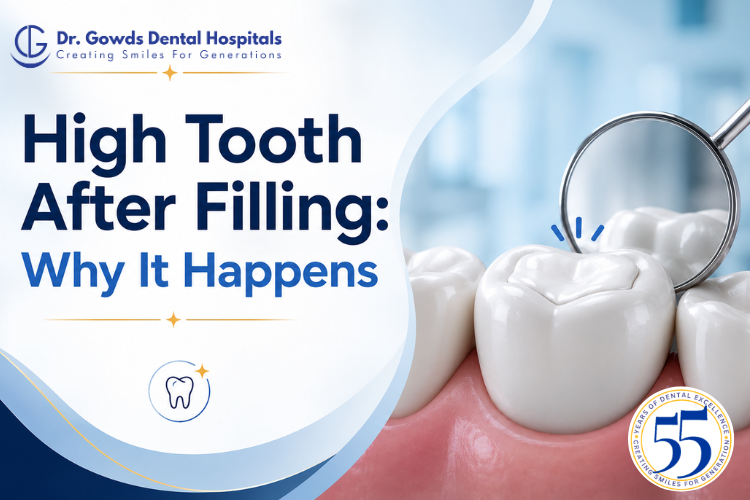
A High Tooth After Filling occurs when a dental filling or crown sits slightly higher than your natural bite, causing that tooth to contact the opposing teeth before the others do. This uneven bite pressure can make the tooth feel uncomfortable, sensitive, or painful while chewing. Although mild awareness of a new filling or crown is normal for a day or two, a tooth that continues to feel “too high” should be evaluated by a dentist. A simple bite adjustment is often all that’s needed to restore comfort and prevent unnecessary stress on the tooth.
At Dr. Gowds Dental Hospitals, our restorative dentists carefully check your bite after every filling and crown placement to ensure your teeth come together naturally and comfortably.
A High Tooth After Filling means that the restored tooth is slightly taller than it should be.
When you bite down, this tooth makes contact before your other teeth. Instead of your bite pressure being evenly distributed, the treated tooth absorbs more force than normal.
This can happen after:
Even a very small difference in height can make your bite feel unusual because your teeth are extremely sensitive to pressure.
Yes—to a certain extent.
Immediately after receiving a filling or crown, it is common for the tooth to feel slightly different.
This may be due to:
However, if the tooth continues to feel noticeably higher after the numbness wears off, it may indicate a High Tooth After Filling that requires adjustment.
Several factors can cause a High Tooth After Filling.
The most common cause is that the filling material extends just a little above the natural biting surface.
Even fractions of a millimeter can affect your bite.
A dental crown is custom-made to fit your tooth.
Occasionally, small adjustments are needed after cementation to ensure it matches your natural bite perfectly.
When your mouth is numb, it becomes difficult to judge whether your bite feels completely normal.
Although dentists carefully check the bite before you leave, minor adjustments are sometimes needed once the numbness disappears.
Minor inflammation after dental treatment may temporarily change the way your bite feels.
As healing occurs, this sensation often improves.
Some patients unconsciously bite differently after dental treatment because they are trying to avoid discomfort.
This temporary change may make the tooth seem higher than it actually is.
Common signs include:
These symptoms usually indicate that your bite should be evaluated.
Yes.
Ignoring a High Tooth After Filling may place excessive pressure on the treated tooth.
Possible complications include:
Fortunately, these problems are often preventable with a simple adjustment.
Treatment for a High Tooth After Filling is usually quick and painless.
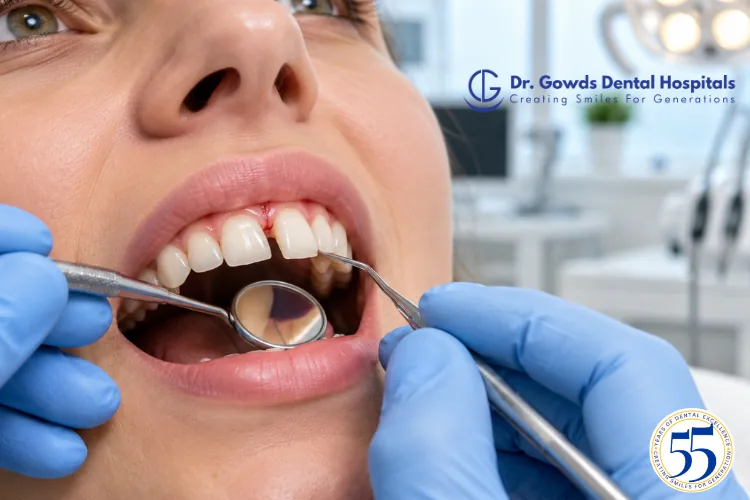
The dentist carefully reshapes the high areas of the filling or crown using fine dental instruments.
Very small amounts of material are removed until your bite feels balanced.
After adjustment, the restoration is polished to restore a smooth finish.
Your dentist will ask you to bite several times to confirm that all teeth meet evenly.
A High Tooth After Filling is a common and easily correctable problem that occurs when a filling or crown slightly alters your natural bite. Although mild awareness of a new restoration is normal, persistent discomfort, uneven biting, or pain while chewing should not be ignored.
Fortunately, treatment is usually quick, painless, and highly effective. A simple bite adjustment can restore proper function, relieve discomfort, and protect both the treated tooth and your jaw joints from unnecessary stress.
If your tooth still feels high after a filling or crown, schedule a consultation at Dr. Gowds Dental Hospitals. Our experienced dental team can evaluate your bite, make precise adjustments, and ensure your restoration feels comfortable and functions naturally.
Visit us at-
Dr gowds dental hospital Nanakramguda
Dr gowds dental hospital Gachibowli
Dr gowds dental hospital madhapur
Yes. Mild awareness is common immediately after treatment, but if the tooth continues to feel higher after the numbness wears off, it may need a bite adjustment.
Dentists use articulating paper to identify high contact points and gently reshape the filling or crown until your bite feels even and comfortable.
Small high spots may wear slightly over time, but if the tooth causes pain or changes your bite, professional adjustment is recommended instead of waiting.
Yes. An uneven bite can place excessive pressure on one tooth and strain the jaw muscles and temporomandibular joint (TMJ), leading to discomfort.
Most bite adjustments are completed in 5 to 15 minutes and provide immediate relief without the need for anesthesia in most cases.
 Gachibowli Branch