

Schedule Appointment


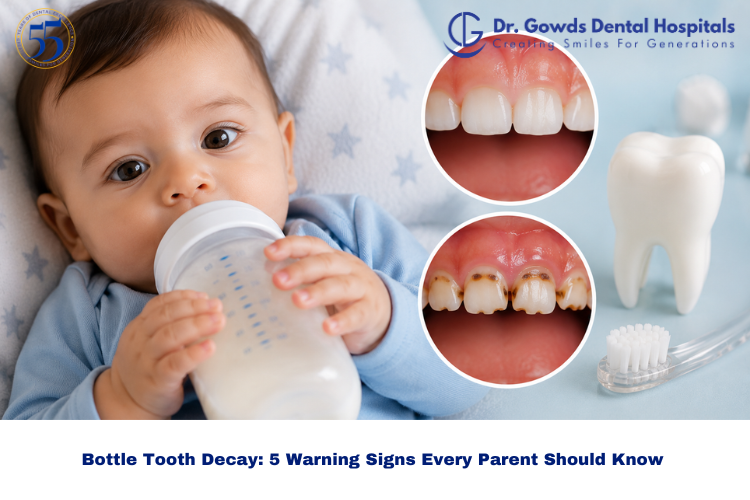
Bottle tooth decay is a form of early childhood tooth decay that occurs when an infant’s teeth are frequently exposed to sugary liquids such as milk, formula, juice, or sweetened drinks for extended periods, especially during sleep.
Also known as early childhood caries or nursing bottle syndrome, bottle tooth decay can develop soon after baby teeth erupt and may lead to pain, infection, difficulty eating, and long-term dental problems if left untreated.
Medically Reviewed by: Prof. Dr. Snigdha Gowd, MDS (Orthodontics & Dentofacial Orthopaedics)
At Dr. Gowds Dental Hospitals, pediatric dental specialists emphasize early prevention because bottle tooth decay is largely preventable with proper feeding habits and oral care.
Bottle tooth decay is a condition that affects infants and young children when harmful bacteria in the mouth feed on sugars from drinks and produce acids that attack tooth enamel.
The condition most commonly affects:
If untreated, decay may spread rapidly to other teeth and significantly impact a child’s oral development.
The condition gets its name because it is often linked to prolonged bottle feeding.
When babies fall asleep with a bottle containing:
the liquid pools around the teeth for extended periods.
During sleep, saliva production decreases, allowing sugar and bacteria to remain on the teeth longer and increase the risk of decay.
Bottle tooth decay is one of the most common chronic childhood health conditions worldwide.
Many parents assume baby teeth are temporary and therefore less important.
However, healthy primary teeth play a crucial role in:
Protecting baby teeth is essential for long-term dental health.
The primary cause is repeated exposure to sugars.
Common sources include:
The longer sugars remain on the teeth, the higher the risk of decay.
One of the biggest risk factors is putting a baby to bed with a bottle.
During sleep:
This creates an ideal environment for tooth decay.
Many parents do not realize that oral care should begin before all teeth erupt.
Failure to clean an infant’s mouth regularly allows plaque and bacteria to accumulate.
Poor oral hygiene significantly increases the risk of early childhood caries.
Frequent feeding throughout the night without cleaning the mouth afterward can increase decay risk.
This applies to both bottle feeding and prolonged breastfeeding when oral hygiene is neglected.
The bacteria responsible for tooth decay can be transmitted from parents or caregivers to infants.
This may occur through:
Reducing bacterial transmission helps protect developing teeth.
Many parents do not notice the condition until significant damage has occurred.
Early signs may include:
The earliest visible sign is often chalky white areas near the gumline.
These spots indicate enamel demineralization.
As decay progresses, teeth may develop:
Small holes may appear on the tooth surface.
These cavities can rapidly enlarge if left untreated.
Children may show discomfort while eating or drinking.
Advanced decay may irritate surrounding gum tissues.
Bottle tooth decay typically affects:
The upper front teeth are most vulnerable because they are directly exposed to pooled liquids.
These teeth often show the earliest signs of decay.
If feeding habits continue, decay can spread to several teeth simultaneously.
Interestingly, lower front teeth are often less affected because the tongue and saliva provide some protection.
Some parents assume baby teeth will eventually fall out and therefore do not require treatment.
This is a misconception.
Untreated bottle tooth decay can cause:
Severe cavities can become painful.
Dental infections may develop and spread.
Children may avoid food because of discomfort.
Missing or damaged teeth can affect speech development.
Early loss of baby teeth may lead to alignment problems.
Severe decay can affect the development of permanent teeth.
Treatment depends on the severity of the condition.
For very early enamel damage, professional fluoride applications may help strengthen teeth.
Small cavities may be restored with tooth-colored fillings.
Extensively damaged baby teeth may require crowns to restore function and protect the tooth.
If decay reaches the nerve, pediatric pulp treatment may be necessary.
Severely damaged teeth that cannot be saved may require removal.
Preventive care remains the best approach.
Never put your baby to sleep with:
If a bottle is needed, use water.
Use a soft, clean cloth to gently wipe your baby’s gums after feeding.
Once the first tooth appears:
Avoid unnecessary juice and sweetened beverages.
Water should be the primary drink between meals.
Most children should begin transitioning from bottles around 12 months of age.
The first dental visit should occur:
Early dental guidance helps prevent future problems.
Bottle tooth decay is one of the most common yet preventable childhood dental problems.
Frequent exposure to sugary liquids, bedtime bottles, poor oral hygiene, and prolonged feeding habits can significantly increase the risk of early childhood caries.
The good news is that simple preventive measures—such as proper oral hygiene, limiting sugary drinks, and scheduling early dental visits—can dramatically reduce the risk of tooth decay in infants.
If you notice white spots, discoloration, or cavities in your child’s teeth, an evaluation at Dr. Gowds Dental Hospitals can help protect their smile and support lifelong oral health.
Visit us at-
Dr gowds dental hospital Nanakramguda
Dr gowds dental hospital Gachibowli
Dr gowds dental hospital madhapur
Bottle tooth decay is a type of early childhood tooth decay caused by frequent exposure to sugary liquids such as milk, formula, or juice, especially during sleep.
Bottle tooth decay can begin soon after the first baby teeth erupt, often between 6 months and 3 years of age.
Prolonged nighttime breastfeeding without proper oral hygiene may contribute to tooth decay, particularly after teeth erupt.
Avoid bedtime bottles with sugary liquids, clean your baby’s mouth regularly, start brushing early, and schedule routine dental checkups.
Yes. Baby teeth support eating, speech development, facial growth, and proper eruption of permanent teeth. Protecting them is essential for long-term oral health.
 Gachibowli Branch