

Schedule Appointment


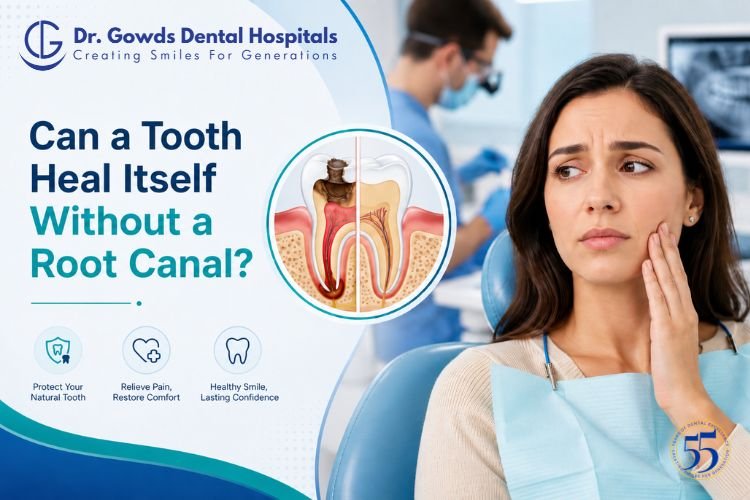
Can a tooth heal itself? The answer depends on the extent of the damage. Minor enamel changes and temporary tooth sensitivity may improve with proper oral care, but an infected or damaged dental pulp cannot heal on its own. Once bacteria reach the inner pulp of a tooth, root canal treatment is usually the only way to eliminate the infection and save the natural tooth.
At Dr. Gowds Dental Hospitals, experienced endodontists use advanced diagnostics and modern root canal techniques to preserve natural teeth whenever possible, helping patients avoid unnecessary extractions while restoring long-term oral health.
One of the most common questions dentists hear is, “Can a tooth heal itself?” Many people hope that tooth pain will disappear naturally or that antibiotics alone can solve the problem. While some mild dental issues can improve, serious tooth infections require professional treatment.
A tooth has three main layers:
Enamel can undergo limited remineralization in the early stages of decay with fluoride and good oral hygiene. However, once bacteria reach the dental pulp, the body cannot repair or regenerate the damaged tissue. This is why the answer to “Can a tooth heal itself?” is often no when the pulp is infected.
There are situations where a tooth can recover without needing a root canal.
These include:
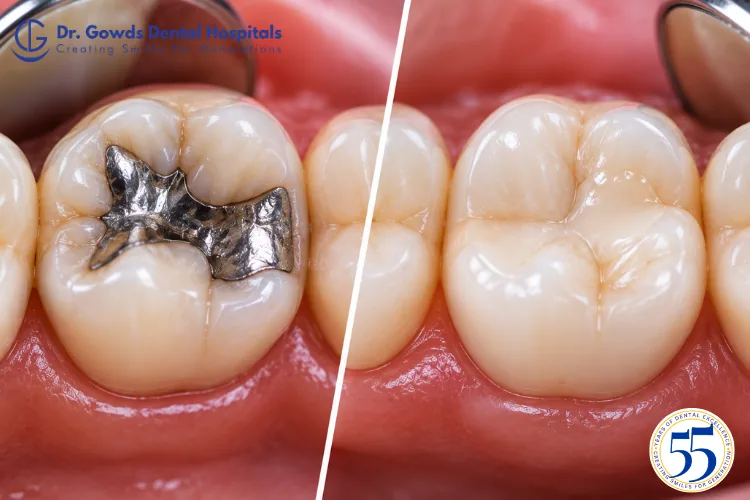
In these cases, professional cleaning, fluoride treatment, dental fillings, or improved oral hygiene may solve the problem.
However, if pain becomes persistent or infection reaches the pulp, a tooth cannot heal itself without professional dental care.
Many misconceptions prevent patients from seeking timely treatment.
Fact: Pain may disappear because the nerve has died—not because the tooth has healed. The infection often continues to spread silently.
Fact: Antibiotics may temporarily reduce swelling but cannot remove infected tissue trapped inside the tooth. Root canal treatment removes the source of the infection.
Fact: Modern root canal procedures are performed using local anesthesia and advanced rotary technology, making treatment comfortable for most patients. In fact, root canal treatment relieves pain rather than causing it.
Fact: Saving your natural tooth is usually the preferred choice because it maintains normal chewing, bite alignment, and jawbone health.
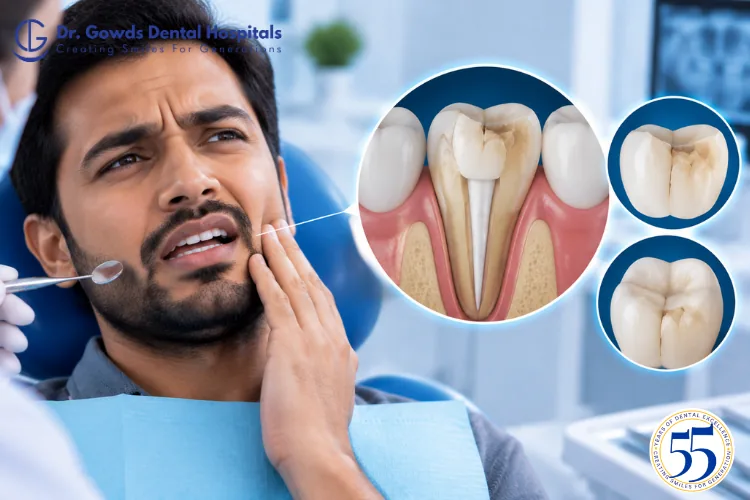
If you are wondering, “Can a tooth heal itself?”, these warning signs indicate you should see a dentist as soon as possible:
Ignoring these symptoms increases the risk of a dental abscess and possible tooth loss.
So, can a tooth heal itself? The answer depends on the cause of the problem. Minor enamel damage and temporary sensitivity may improve with proper care, but once the dental pulp becomes infected, the tooth cannot repair itself naturally. Waiting too long can lead to severe pain, infection, and even tooth loss.
If you are experiencing persistent tooth pain, swelling, or sensitivity, don’t rely on home remedies alone. A timely evaluation at Dr. Gowds Dental Hospitals can determine whether your tooth can be treated conservatively or if root canal treatment is needed to save it.
Visit us at-
Dr gowds dental hospital Nanakramguda
Dr gowds dental hospital Gachibowli
Dr gowds dental hospital madhapur
No. If the dental pulp is infected or irreversibly damaged, a tooth cannot heal itself and root canal treatment is usually required to save it.
Antibiotics may temporarily control the spread of infection, but they cannot remove infected pulp inside the tooth. Professional dental treatment is still necessary.
Persistent tooth pain, prolonged sensitivity, swelling, pain while chewing, tooth discoloration, or an abscess are common signs that a root canal may be needed.
Whenever possible, saving your natural tooth with root canal treatment is the preferred option because it maintains normal function, bite alignment, and jawbone health.
Ignoring an infected tooth can lead to worsening pain, abscess formation, bone loss, spread of infection, and eventual tooth loss. Early treatment offers the best outcome.
 Gachibowli Branch