

Schedule Appointment


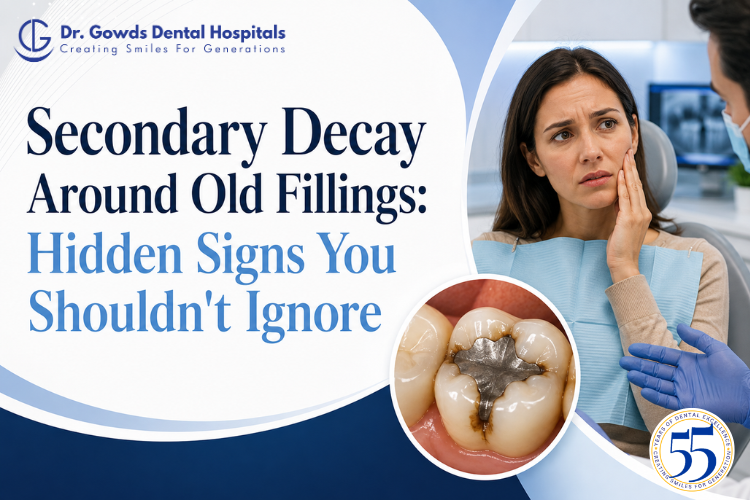
Secondary Decay Around Old Fillings refers to new tooth decay that develops at the edges of an existing dental filling. Unlike the original cavity that was treated, this is a new area of decay caused by bacteria entering small gaps between the filling and the tooth or accumulating around worn or damaged restorations. Over time, fillings can wear, crack, or lose their seal, allowing plaque and bacteria to penetrate the margins of the restoration. Early diagnosis through regular dental examinations helps prevent further damage and preserves more of the natural tooth.
At Dr. Gowds Dental Hospitals, digital diagnostics and comprehensive restorative evaluations help identify secondary decay early, allowing timely treatment before it progresses.
When a cavity is treated, the decayed portion of the tooth is removed and replaced with a dental filling.
Although fillings restore the tooth, they do not make it immune to future decay.
Secondary Decay Around Old Fillings occurs when a new cavity develops along the margin where the filling meets the natural tooth.
Dentists may also refer to this condition as:
It is one of the most common reasons why existing fillings need to be replaced.
Many people assume that once a filling is placed, that tooth can never develop another cavity.
In reality, fillings protect the area they restore, but the surrounding natural tooth remains vulnerable to plaque and bacteria.
New decay develops when bacteria attack healthy tooth structure next to the restoration.
Several factors can contribute to Secondary Decay Around Old Fillings.
Dental fillings experience constant chewing forces.
Over time they may:
These changes create areas where plaque can accumulate.
As fillings age, tiny gaps may develop between the restoration and the tooth.
These microscopic spaces allow:
to enter areas that cannot be cleaned effectively.
Even an excellent filling cannot prevent plaque accumulation if brushing and flossing are inadequate.
Persistent plaque around filling margins significantly increases cavity risk.
Frequent intake of sugary foods and drinks provides bacteria with a constant source of fuel.
The resulting acids gradually dissolve enamel surrounding the filling.
Patients who clench or grind their teeth place additional stress on restorations.
This may accelerate wear or contribute to small fractures around filling margins.
Teeth with large restorations have less remaining natural tooth structure.
These teeth may be more susceptible to marginal breakdown over time.
Reduced saliva decreases the mouth’s natural ability to neutralize acids and wash away bacteria.
Patients with dry mouth often have a higher risk of recurrent decay.
Yes.
Although patients often say they have a “cavity under a filling,” the decay usually begins at the edge of the filling before extending beneath it.
If bacteria enter through a marginal gap, the decay may spread underneath the restoration while remaining invisible from the outside.
No.
Many fillings remain functional for years when:
Age alone is not a reason to replace a filling.
Dentists recommend replacement only when there is evidence of failure or new decay.
Early secondary decay often causes no symptoms.
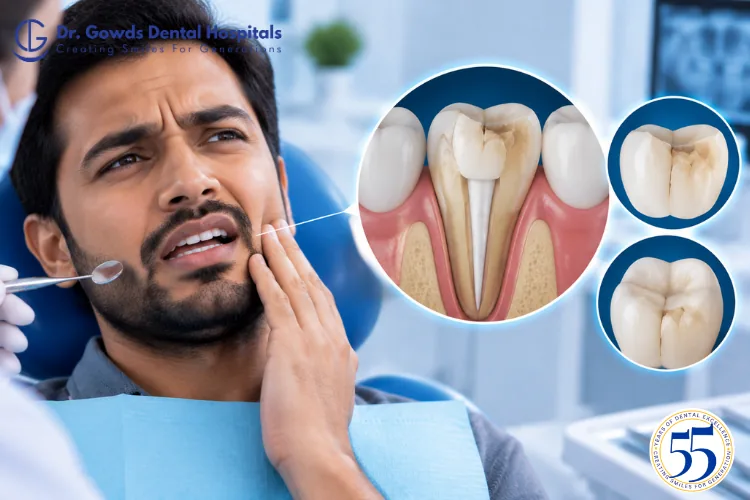
As the cavity progresses, you may notice:
Sometimes secondary decay is discovered during a routine dental examination before symptoms appear.
It depends on the extent of the decay.
Very small defects may occasionally be repaired.
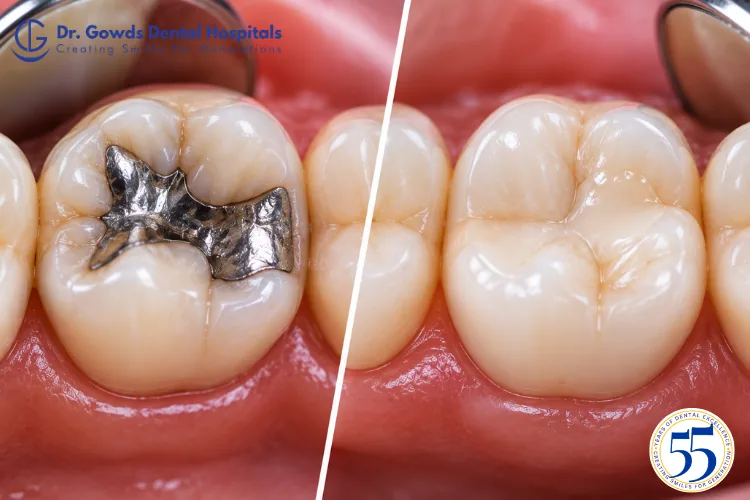
However, if decay has spread around or beneath the restoration, the existing filling usually needs to be removed.
The dentist then:
If a significant amount of tooth structure has been damaged, your dentist may recommend:
These custom restorations provide greater strength than large fillings while preserving healthy tooth structure.
When extensive damage weakens the tooth, a crown may provide long-term protection and restore function.
If the decay reaches the dental pulp, Root Canal Treatment may be necessary before restoring the tooth.
Secondary Decay Around Old Fillings is a common reason why dental restorations eventually need replacement. While fillings restore damaged teeth, they cannot prevent new decay from developing if bacteria accumulate around worn or damaged margins. Regular dental examinations, good oral hygiene, and timely replacement of failing restorations play a key role in protecting your teeth and avoiding more complex treatments.
If you have an old filling that feels rough, sensitive, or painful, or if it has been several years since your last dental examination, consult the experienced team at Dr. Gowds Dental Hospitals. Early detection allows smaller problems to be treated before they compromise the health of the tooth.
Visit us at-
Dr gowds dental hospital Nanakramguda
Dr gowds dental hospital Gachibowli
Dr gowds dental hospital madhapur
Secondary Decay Around Old Fillings is new tooth decay that develops along the edges of an existing dental filling due to bacterial plaque and breakdown of the restoration margin.
Yes. Bacteria can enter through small gaps around aging or damaged fillings, allowing decay to spread beneath the restoration.
Dentists diagnose secondary decay through clinical examinations, digital dental X-rays, and careful assessment of the restoration’s condition.
No. Fillings are replaced only when they show signs of failure, wear, cracks, leakage, or recurrent decay.
Maintaining good oral hygiene, flossing daily, reducing sugar intake, attending regular dental check-ups, and replacing damaged restorations when recommended can help reduce the risk of secondary decay.
 Gachibowli Branch