

Schedule Appointment


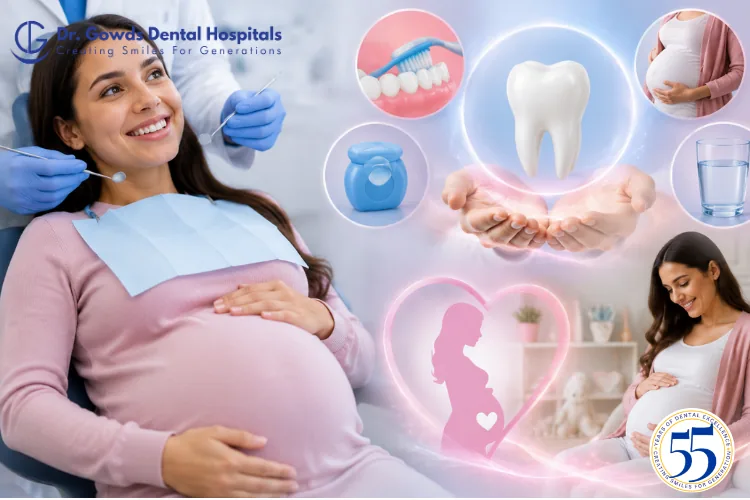
Pregnancy brings many changes to the body, and the mouth can experience changes too. Hormonal fluctuations can make the gums more sensitive to plaque, increasing the likelihood of swelling, tenderness, or bleeding. Changes in eating patterns, morning sickness, dry mouth, and other pregnancy-related factors can also influence oral health.
This makes dental care during pregnancy an important part of maintaining overall well-being.
Pregnancy does not mean that dental visits should be avoided. In fact, maintaining good oral hygiene and addressing dental problems promptly can help prevent minor concerns from becoming more complicated.
At Dr Gowds Dental Hospitals, pregnant patients can receive dental guidance based on their individual oral health needs and stage of pregnancy. Preventive care, professional assessment, and appropriate treatment can help maintain healthy teeth and gums throughout pregnancy.
Pregnancy causes hormonal changes that can influence the body’s response to bacteria and plaque around the teeth.
Even if a person maintains the same brushing routine, the gums may become more reactive during pregnancy.
This can result in:
These changes do not mean that pregnancy itself causes gum disease. Rather, hormonal changes can make existing plaque-related inflammation more noticeable.
Maintaining effective oral hygiene becomes particularly important during this period.
Pregnancy gingivitis is inflammation of the gums that can occur during pregnancy.
Hormonal changes can increase the gums’ response to plaque, causing them to become more swollen or prone to bleeding.
Common signs include:
Pregnancy gingivitis should not simply be dismissed as an unavoidable part of pregnancy.
Professional dental advice and consistent plaque control can help manage gum inflammation.
Bleeding gums during pregnancy are commonly associated with inflammation.
When plaque remains around the gumline, bacteria can trigger an inflammatory response. Pregnancy-related hormonal changes can make this response more pronounced.
Bleeding should therefore not be a reason to stop brushing.
Instead, gentle but thorough brushing and appropriate cleaning between the teeth can help reduce plaque accumulation.
If bleeding is frequent, heavy, or accompanied by significant swelling or pain, a dental examination is advisable.
Pregnancy does not directly cause cavities, but certain changes during pregnancy can increase factors that contribute to tooth decay.
These may include:
For example, repeated vomiting exposes the teeth to stomach acid, which can contribute to enamel erosion.
The risk depends on individual habits and oral health rather than pregnancy alone.
A consistent brushing routine remains one of the most important parts of pregnancy dental care.
Aim to:
If brushing triggers nausea, experimenting with a different flavor or brushing at a different time of day may make the routine easier to tolerate.
The important goal is to maintain regular plaque removal.
Yes.
Brushing alone cannot effectively clean every surface between the teeth.
Cleaning between teeth can help remove plaque from areas where a toothbrush cannot reach.
Depending on individual needs, this may involve dental floss or another interdental cleaning method recommended by a dental professional.
If your gums bleed when you floss, do not automatically stop. Persistent bleeding can indicate gum inflammation and should be discussed with a dentist.
Routine professional dental cleaning is generally considered an important component of maintaining oral health during pregnancy.
A dental professional can remove plaque and calculus that cannot be completely eliminated through brushing alone.
Professional cleaning may be particularly helpful when pregnancy-related gum inflammation makes the gums more prone to bleeding or swelling.
Your dentist can determine the appropriate frequency based on your oral health.
Yes.
Pregnancy is not a reason to avoid routine dental examinations.
A dental appointment can allow the dentist to:
Tell the dental team that you are pregnant and provide relevant information about your pregnancy so treatment can be planned appropriately.
Necessary dental treatment should not automatically be postponed simply because a patient is pregnant.
The type and timing of treatment depend on:
Routine preventive care and treatment of urgent dental problems can often be provided during pregnancy when clinically appropriate.
Your dentist can coordinate care with your obstetrician when additional medical considerations exist.
Not necessarily.
Some elective procedures may be postponed when appropriate, but urgent dental problems should be assessed promptly.
A worsening infection, severe toothache, significant swelling, or dental trauma may require treatment during pregnancy.
Delaying necessary care can allow the dental problem to become more complicated.
The timing of treatment should be determined on an individual basis.
Dental Care During the First Trimester
The first trimester is an important period of fetal development.
For dental care, preventive measures remain important.
If there is no urgent problem, your dentist may focus on:
If urgent treatment is required, pregnancy should be communicated clearly to the dental team so that care can be planned appropriately.
The second trimester is often a practical period for addressing necessary dental care when treatment is required.
Depending on the patient’s circumstances, dental appointments may involve:
The treatment plan should still be individualized.
As pregnancy progresses, physical comfort can become an important consideration during dental appointments.
Long appointments may become uncomfortable, and the dental team may modify positioning or appointment length when appropriate.
Routine oral hygiene should continue throughout the third trimester.
Any dental pain, swelling, or infection should still be evaluated rather than automatically waiting until after delivery.
Pregnancy can make gum inflammation more noticeable, particularly when plaque is present.
If a person already has gum disease, maintaining professional dental care and good home hygiene becomes particularly important.
Warning signs of more advanced gum disease include:
These symptoms require professional evaluation.
Contact your dentist if you experience:
Severe facial swelling, difficulty breathing or swallowing, or signs of a spreading infection require urgent medical and dental attention.
Dental care during pregnancy is an important part of maintaining oral health throughout pregnancy.
Hormonal changes can make the gums more sensitive to plaque, while nausea, vomiting, dietary changes, dry mouth, and altered routines can create additional challenges for some patients.
The most effective approach is prevention: brush twice daily with fluoride toothpaste, clean between the teeth, maintain a balanced diet, drink water, and attend appropriate dental examinations.
Pregnancy does not mean that dental pain, cavities, gum disease, or infections should simply be tolerated until delivery. Necessary dental care can often be provided during pregnancy when appropriately planned.
If you are pregnant and notice bleeding gums, tooth pain, swelling, sensitivity, or another oral-health concern, speak with your dentist rather than attempting to manage the problem indefinitely at home.
At Dr Gowds Dental Hospitals, individualized dental assessment can help pregnant patients understand their oral-health needs and receive appropriate care while supporting a healthy pregnancy journey.
Visit us at-
Dr gowds dental hospital Nanakramguda
Dr gowds dental hospital Gachibowli
Dr gowds dental hospital madhapur
Yes. Routine dental examinations and appropriate preventive care remain important during pregnancy. Tell your dental team that you are pregnant so your care can be planned accordingly.
Professional dental cleaning may be performed during pregnancy when appropriate. It can help control plaque and gum inflammation.
Hormonal changes can make the gums more sensitive to plaque, increasing inflammation and bleeding. Persistent bleeding should be discussed with a dentist.
Pregnancy itself does not directly cause cavities, but changes such as frequent snacking, sugary cravings, vomiting, dry mouth, and altered oral hygiene can increase factors associated with tooth decay.
If a cavity requires treatment, a dentist can determine whether a filling should be performed during pregnancy based on the tooth, symptoms, pregnancy stage, and individual circumstances.
When dental imaging is clinically necessary, appropriate precautions are used to minimize radiation exposure. Always tell your dentist that you are pregnant before imaging.
 Gachibowli Branch