

Schedule Appointment


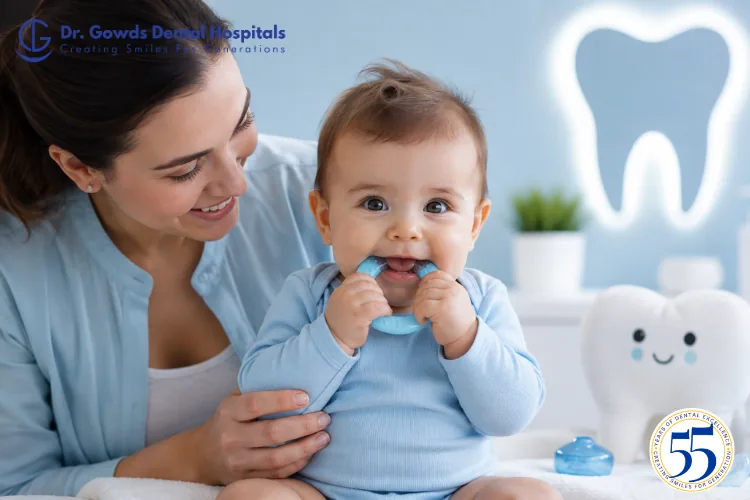
A baby’s first tooth is an important milestone, but the period leading up to tooth eruption can be challenging for both the child and parents. Babies may become more irritable, chew on objects, drool more than usual, or have difficulty settling during this stage.
This group of changes is commonly described as teething syndrome.
Teething occurs when a developing primary tooth moves through the gum and eventually becomes visible in the mouth. The process is normal, but it can cause temporary gum discomfort for some babies.
It is also important to distinguish ordinary teething symptoms from signs of illness. Not every symptom that occurs while a baby is teething is necessarily caused by tooth eruption.
At Dr Gowds Dental Hospitals, understanding the normal stages of primary tooth eruption can help parents recognize what to expect and when a child’s symptoms may require professional assessment.
Teething syndrome refers to the collection of signs and behaviors that may occur around the time a baby’s primary teeth begin erupting.
As a tooth moves through the gum tissue, the surrounding area can become sensitive or uncomfortable.
A baby may respond by:
The experience is different for every child. Some babies show very few noticeable symptoms, while others appear more uncomfortable.
Teething generally begins during infancy, but the timing varies.
Many babies develop their first visible tooth during the first year of life. Some children may begin earlier, while others may not have a visible tooth until later.
The first teeth commonly to appear are the lower central incisors, followed by the upper front teeth.
Primary teeth then continue to erupt over the following years.
The exact eruption schedule can vary between children, so parents should not be concerned simply because their baby’s teeth do not appear at exactly the same age as another child’s.
Teething can cause changes in a baby’s mouth and behavior.
The gum over an erupting tooth may appear:
A baby may repeatedly touch or rub the area.
Some babies drool more during the teething period.
Excess saliva can also irritate the skin around the mouth and chin.
Babies often explore their environment with their mouths.
During teething, chewing may provide counter-pressure against the gums and may temporarily make the area feel more comfortable.
Gum discomfort may make some babies more unsettled or fussy than usual.
Discomfort can sometimes make it harder for a baby to settle or remain asleep.
However, significant or prolonged sleep disturbance should not automatically be attributed to teething.
Chewing creates pressure against the gums.
That pressure may temporarily provide a soothing sensation when the gums feel tender.
This is why babies who are teething may try to chew on:
Parents should ensure that anything given to a baby for chewing is age-appropriate, clean, intact, and free from choking hazards.
Several simple measures may help relieve temporary gum discomfort.
Wash your hands and gently massage the baby’s gums using a clean finger.
The pressure may provide temporary relief.
A suitable teething ring that has been cooled according to the manufacturer’s instructions may provide a soothing sensation.
Avoid giving a baby objects that could break, splinter, or create a choking hazard.
A clean, cool, damp cloth may also provide something safe to chew on under appropriate supervision.
Some babies simply need additional reassurance and attention when they are uncomfortable.
Holding, soothing, and maintaining familiar routines can help the child settle.
Some traditional teething practices can be unsafe.
Avoid giving babies:
Teething jewelry should also be approached with particular caution because of potential choking and strangulation hazards.
Teething and tooth decay are completely different processes.
Teething is the normal eruption of primary teeth.
Tooth decay occurs when acids produced by bacteria damage the tooth structure.
A baby may develop a cavity soon after a tooth erupts if the tooth is repeatedly exposed to conditions that promote decay.
Frequent exposure to sugary drinks or foods, poor oral hygiene, and prolonged nighttime feeding practices can increase the risk of early childhood dental decay.
Therefore, the appearance of a baby’s first teeth should also mark the beginning of a consistent preventive dental routine.
At Dr Gowds Dental Hospitals, parents can seek professional guidance regarding their child’s developing teeth and oral health.
A pediatric dental assessment can help parents understand normal tooth eruption, establish appropriate oral hygiene practices, and identify early signs of tooth decay or other dental concerns.
Rather than treating every change in a baby’s behavior as teething, professional evaluation can help distinguish normal eruption-related discomfort from symptoms that require further attention.
Early dental guidance can also help establish healthy habits that continue as the child’s permanent teeth begin to develop.
Teething syndrome describes the temporary changes that may accompany the eruption of a baby’s primary teeth.
Tender gums, increased chewing, drooling, irritability, and changes in sleep can occur during this stage. However, not every symptom that appears while a baby is teething is caused by tooth eruption.
Fever, significant diarrhea, vomiting, breathing difficulties, dehydration, or unusual lethargy should not simply be dismissed as teething.
Once the first tooth appears, parents should also begin thinking beyond teething discomfort. Regular oral cleaning, appropriate feeding habits, fluoride use according to professional guidance, and early dental visits all help protect primary teeth.
With the right care, the teething stage can become an opportunity to establish good oral health habits from the very beginning.
Visit us at-
Dr gowds dental hospital Nanakramguda
Dr gowds dental hospital Gachibowli
Dr gowds dental hospital madhapur
Teething syndrome refers to the temporary signs and behaviors that may occur when a baby’s primary teeth begin erupting through the gums.
Common signs can include tender gums, increased chewing, drooling, irritability, and temporary changes in sleep.
Many babies begin developing their first visible teeth during the first year, but the timing varies between children.
A significant fever should not automatically be attributed to teething. A child with a persistent or high fever should be medically assessed.
Begin cleaning the teeth as soon as the first tooth appears, using an age-appropriate toothbrush and fluoride toothpaste according to professional guidance.
An early dental visit allows the dentist to assess developing teeth, discuss preventive care, and help parents establish healthy oral hygiene and feeding habits.
 Gachibowli Branch