
Schedule Appointment

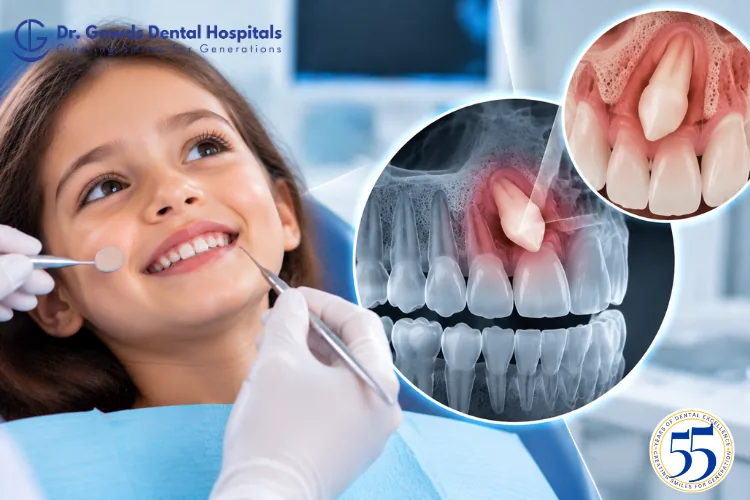
A tooth usually follows a natural path while developing and erupting into its correct position. However, sometimes a tooth may grow in an unusual direction or appear in a location where it does not belong. This condition is known as ectopic teeth.
An ectopic tooth can affect your bite, nearby teeth, oral hygiene, and overall dental health if it is not identified early. It is more commonly noticed in children and teenagers when permanent teeth begin to erupt, but adults can also experience this condition.
At Dr Gowds Dental Hospitals in Hyderabad, our dental specialists evaluate abnormal tooth growth using advanced diagnostic methods and provide personalized treatment options based on each patient’s needs.
If you notice delayed tooth eruption, crowded teeth, or unusual tooth positioning, early dental evaluation can help prevent future complications.
An ectopic tooth is a tooth that erupts or develops outside its normal position in the dental arch. Instead of moving into its expected location, the tooth may grow at an angle, become trapped, or emerge in an unusual area.
For example, an upper canine tooth may sometimes grow toward the palate (roof of the mouth) instead of coming down into its normal position. This is one of the most commonly observed forms of ectopic tooth eruption.
Ectopic teeth may not always cause immediate discomfort, but they can create problems such as:
Early diagnosis helps dentists decide whether monitoring, orthodontic treatment, or other procedures are required.
Several factors can contribute to a tooth growing in the wrong place. In many cases, it happens due to a combination of developmental and structural reasons.
One of the common reasons for ectopic tooth eruption is insufficient space in the jaw. When there is not enough room for a permanent tooth to come into position, it may follow an abnormal path.
This is often seen when:
Sometimes, the tooth itself may develop in an unusual position or direction. This can affect how it moves through the bone and gums during eruption.
Dental development patterns can sometimes run in families. Children with a family history of crowded teeth, delayed eruption, or orthodontic problems may have a higher chance of developing eruption-related issues.
Baby teeth act as natural guides for permanent teeth. If a baby tooth is lost too early or remains for too long, the permanent tooth may lose its normal eruption path.
Some ectopic teeth may not cause noticeable symptoms initially. Dentists often identify them during routine dental examinations or X-rays.
However, common signs may include:
If a permanent tooth does not appear within the expected age range, it may indicate that the tooth is trapped or growing in an abnormal direction.
An ectopic tooth can push nearby teeth out of alignment, causing crowding or changes in the bite.
Some people may experience:
In some cases, the tooth may appear:
Parents should consider a dental check-up if a child’s permanent teeth are not erupting normally.
Ectopic eruption can occur with different teeth, but some teeth are affected more frequently.
Ectopic canine teeth are among the most common examples. Canines play an important role in chewing and guiding the bite, so their correct position is important.
An ectopic canine may grow:
If left untreated, it may sometimes affect neighbouring teeth.
Wisdom teeth can also develop in abnormal positions due to limited space in the jaw.
They may become:
This can lead to discomfort, swelling, or difficulty maintaining oral hygiene.
Although less common, other teeth can also erupt outside their normal position due to developmental issues or lack of space.
A dentist usually begins with a clinical examination to check tooth development, alignment, and eruption patterns.
Diagnostic methods may include:
X-rays help dentists understand:
Advanced imaging techniques can provide a detailed view of tooth and jaw structures, helping dentists plan accurate treatment.
An orthodontist may assess:
Early diagnosis is especially important in children because treatment options may be simpler while the jaw and teeth are still developing.
Treatment depends on several factors, including the tooth’s position, age of the patient, available space, and impact on surrounding teeth.
In mild cases, dentists may recommend regular monitoring through dental check-ups and X-rays.
This approach may be suitable when:
Braces or orthodontic appliances may help guide an ectopic tooth into its correct position.
Treatment may involve:
In certain situations, removal may be recommended if the ectopic tooth:
The dentist will evaluate the benefits and risks before suggesting extraction.
If you or your child has a tooth growing in an unusual position, consult the dental experts at Dr Gowds Dental Hospitals for a detailed evaluation and personalised treatment plan.
Not all cases of ectopic teeth can be prevented because tooth development is influenced by genetics and natural growth patterns.
However, early dental care can help identify problems before they become complicated.
Helpful steps include:
A dental examination during childhood can help detect eruption problems at an early stage when correction may be easier.
Managing ectopic teeth requires accurate diagnosis and a personalised approach. At Dr Gowds Dental Hospitals, patients receive comprehensive dental care supported by experienced dental professionals and modern diagnostic facilities.
The hospital provides dental treatments across multiple locations in Hyderabad, including:
Nanakramguda, Gachibowli, Madhapur, koti
Whether it involves orthodontic correction, tooth alignment, or evaluation of abnormal eruption, the dental team focuses on providing suitable treatment based on each patient’s oral health needs.
Schedule a consultation with Dr Gowds Dental Hospitals in Hyderabad to get expert guidance for ectopic teeth and other dental concerns.
Ectopic teeth are teeth that develop or erupt in an abnormal position instead of their normal location in the dental arch. They may grow at an unusual angle, become trapped, or appear behind or outside the expected tooth line.
A tooth may grow in the wrong place due to factors such as lack of space in the jaw, delayed loss of baby teeth, abnormal tooth development, crowding, or genetic factors. A dental examination can help identify the exact cause.
Yes, ectopic teeth are more commonly noticed in children and teenagers when permanent teeth begin to erupt. Regular dental check-ups during childhood can help detect abnormal eruption patterns early.
In many cases, an ectopic tooth can be guided into its correct position with orthodontic treatment. However, the suitable option depends on the tooth’s position, available space, and impact on surrounding teeth.
Untreated ectopic teeth may cause problems such as tooth crowding, bite issues, difficulty cleaning, gum problems, or damage to nearby teeth. Early evaluation can help prevent complications.
Dentists diagnose ectopic teeth through a clinical examination and dental imaging such as X-rays. These tests help determine the exact position of the tooth and plan appropriate treatment.
You should consult a dentist if a permanent tooth does not erupt at the expected age, teeth appear unusually positioned, there is crowding, or your child experiences discomfort during tooth development.
Dr Gowds Dental Hospitals provides diagnosis and treatment for ectopic teeth and other dental alignment concerns across Hyderabad locations, including Gachibowli, Puppalguda, Madhapur, and Koti.
 Gachibowli Branch