

Schedule Appointment


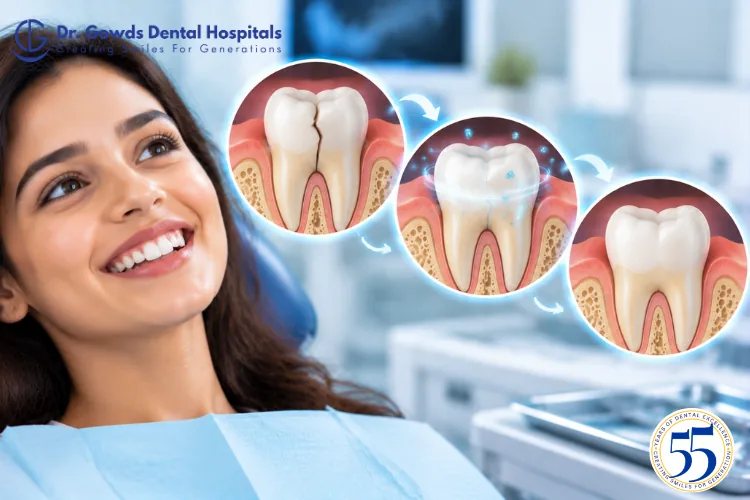
Have you ever wondered, “Can teeth regenerate?” after noticing a cavity, enamel damage, or a chipped tooth? Unlike some parts of the human body that can heal and repair themselves, teeth have very limited natural regeneration abilities. This often leaves people confused about whether damaged teeth can grow back or repair themselves without dental treatment.
The truth is that while teeth cannot fully regenerate like skin or bones, the body does have some natural repair mechanisms. Understanding what your teeth can and cannot repair can help you make better decisions about protecting your oral health.
At Dr Gowds Dental Hospitals in Hyderabad, our dental specialists focus on preserving natural teeth and providing advanced treatments to restore damaged teeth while helping patients maintain long-term oral health.
The short answer is no, adult teeth cannot completely regenerate themselves. Once permanent teeth are damaged, they cannot grow back like hair, skin, or nails because teeth do not contain the same regenerative cells found in other body tissues.
However, teeth do have a limited ability to repair minor damage, especially in the outer protective layer called enamel.
The body uses minerals from saliva, such as calcium and phosphate, to strengthen weakened enamel through a process called remineralisation. This process may help reverse very early signs of enamel weakening before a cavity develops.
However, once tooth structure is permanently lost due to decay, injury, or severe erosion, professional dental treatment is usually required.
The outer layer of your tooth, known as enamel, is the hardest substance in the human body. Despite its strength, enamel can lose minerals due to acids produced by bacteria, sugary foods, and acidic drinks.
The natural repair process involves:
This process can help strengthen weakened enamel, but it cannot rebuild a missing part of the tooth.
A tooth has three major layers:
Enamel is the protective outer layer of the tooth. It does not contain living cells, so it cannot grow back once it is lost.
However, early enamel weakening can sometimes improve through remineralisation.
Dentin is the layer beneath enamel. It contains tiny tubes and can respond to irritation by forming a protective layer called secondary or tertiary dentin.
This is the tooth’s natural defence mechanism, but it does not restore the original tooth structure.
The pulp contains nerves and blood vessels. If decay or injury reaches this area, it may cause pain, infection, or sensitivity and usually requires dental intervention.
Many people ask, “Why do humans not grow new teeth after losing adult teeth?”
The reason lies in human biology. Some animals, such as sharks and certain reptiles, continuously replace their teeth because their bodies have active tooth regeneration systems.
Humans typically develop two sets of teeth:
After permanent teeth develop, the biological signals responsible for creating new teeth become inactive.
Researchers are studying tooth regeneration therapies involving stem cells and genetic approaches, but these treatments are still under development and are not currently routine dental procedures.
A common question is, “Can enamel grow back?”
The answer is no. Once enamel is physically worn away or destroyed, the body cannot recreate it.
However, you can help protect and strengthen remaining enamel through:
Early enamel damage may be managed with preventive dental care before it progresses into bigger problems.
Tooth damage can happen due to several reasons, including:
Depending on the severity, dentists may recommend different treatments to restore function and appearance.
For small to moderate cavities, dentists remove the damaged portion and fill the area with a suitable restorative material.
When a tooth has significant structural damage, a dental crown can cover and protect the remaining tooth structure.
If decay reaches the inner pulp, root canal treatment can remove infection and help preserve the natural tooth.
Minor chips and cosmetic damage can often be repaired using tooth-coloured bonding materials.
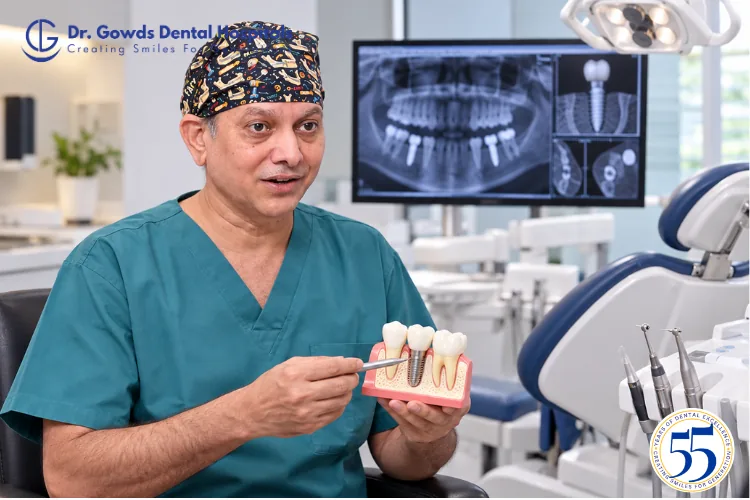
If a tooth cannot be saved and requires removal, dental implants can provide a replacement that functions similarly to a natural tooth.
Many people delay dental visits hoping that a damaged tooth will heal naturally. However, this approach can allow small problems to become more serious.
For example:
Unlike bones, teeth have limited healing capacity. Professional evaluation helps identify whether the tooth can be preserved and what treatment may be suitable.
Although teeth cannot regenerate completely, you can improve their strength and reduce damage risk with preventive care.
Preventive dental care is one of the best ways to preserve your natural smile for years.
Even when there is no visible pain, dental problems can develop silently. Early stages of tooth decay, enamel erosion, or gum problems may not always show obvious symptoms.
Regular dental check-ups help dentists:
At Dr Gowds Dental Hospitals, Hyderabad, advanced diagnostic methods and modern dental treatments help patients receive timely care based on their individual oral health needs.
Dental researchers worldwide are exploring ways to make true tooth regeneration possible. Scientists are studying:
The goal of these approaches is to stimulate the body to create new tooth structures. While research continues, these methods are not yet widely available as standard dental treatments.
Currently, the most reliable approach is preserving natural teeth through preventive care and advanced restorative dentistry.
If you are concerned about tooth damage, cavities, enamel loss, or missing teeth, consult the specialists at Dr Gowds Dental Hospitals in Hyderabad.
With branches in Nanakramguda, Gachibowli, Madhapur, koti, our dental team provides comprehensive solutions to help protect, restore, and maintain your natural smile.
Book your dental consultation today and take the first step towards healthier teeth.
No, adult teeth cannot completely regenerate themselves. However, early enamel weakening may improve through a natural process called remineralisation, where minerals from saliva help strengthen the tooth surface.
No, permanent teeth do not grow back after they are lost. Unlike some animals that continuously replace teeth, humans usually have only two sets of teeth: baby teeth and permanent teeth.
No, enamel cannot grow back once it is lost because it does not contain living cells. However, fluoride, good oral hygiene, and a healthy diet can help protect and strengthen existing enamel.
The treatment depends on the extent of damage. Options may include dental fillings, bonding, crowns, root canal treatment, or dental implants depending on the condition of the tooth.
Very early enamel changes may sometimes be managed through remineralisation, but established cavities do not heal naturally. Dental treatment is usually required to remove decay and restore the tooth.
Yes, researchers are studying stem cells and regenerative dentistry techniques to develop future tooth replacement solutions. However, these treatments are still being researched and are not currently common dental procedures.
Maintaining good oral hygiene, reducing sugar intake, using fluoride toothpaste, eating a balanced diet, and visiting a dentist regularly are effective ways to protect teeth.
You should consult a dentist if you experience:
 Gachibowli Branch