

Schedule Appointment


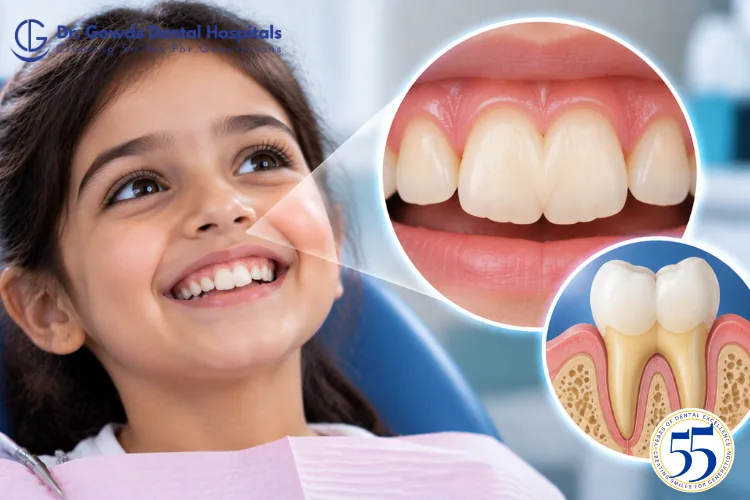
A child’s smile develops through a complex process, and sometimes unusual changes can occur during tooth formation. One such condition is fused teeth, where two developing teeth join together and appear as a single larger tooth. This rare dental condition can affect the appearance of the smile and may sometimes create challenges with spacing, tooth alignment, or oral hygiene.
Many parents notice a tooth that looks unusually wide or different from the surrounding teeth and wonder whether it is a normal variation or a dental concern. Understanding what fused teeth are, why they happen, and what treatment options are available can help parents make informed decisions.
At Dr Gowds Dental Hospitals, Hyderabad, our dental specialists provide comprehensive evaluation and personalised treatment options for developmental dental conditions in children and adults across our branches in Nanakramguda, Gachibowli, Madhapur, koti.
Fused teeth are a developmental dental condition where two separate tooth buds join together during tooth development, resulting in a single enlarged tooth structure. This joining process can occur before the tooth completely forms and may involve the crown, root, or both parts of the teeth.
The affected tooth may appear:
Tooth fusion most commonly affects primary teeth (baby teeth), but it can also occur in permanent teeth. The condition may be noticed during childhood when teeth begin erupting.
The exact reason why tooth fusion occurs is not always known. However, several factors may contribute to this developmental abnormality.
Possible causes include:
During early tooth formation, developing teeth may come into close contact and join together. This physical interaction can result in fusion.
Some dental developmental conditions may have a genetic component. A family history of unusual tooth development may increase the possibility of similar conditions.
Certain factors affecting tooth development during pregnancy or early childhood may influence dental formation, although a direct cause is not always identifiable.
Sometimes, tooth fusion happens as part of natural variations in dental development without any identifiable trigger.
Recognising fused teeth can help parents seek timely dental advice. Common visual signs include:
A dentist can confirm whether a tooth is fused through a clinical examination and dental X-rays.
A proper diagnosis is important because fused teeth can sometimes look similar to other dental conditions, such as gemination.
During an evaluation, a dentist may perform:
The dentist checks:
Radiographs help identify:
In children, dentists may monitor the tooth over time to understand how it affects the growth and alignment of other teeth.
Fused teeth and gemination are often confused because both can result in an unusually large tooth. However, they occur differently.
A dental examination and X-ray are usually needed to differentiate between these conditions accurately.
Not every case of fused teeth requires treatment. Some people have fused teeth without major complications. However, depending on the location and severity, fused teeth may contribute to certain dental concerns.
Possible issues include:
A groove or indentation on the fused tooth surface can collect food particles and bacteria, making cleaning difficult.
An enlarged tooth may affect the available space for neighbouring teeth and may contribute to crowding or bite problems.
Fused teeth can sometimes affect the normal eruption pattern of nearby teeth.
Because fused teeth may look different from surrounding teeth, some individuals may seek treatment for cosmetic reasons.
If decay reaches deeper areas of a fused tooth, treatment may require careful planning because the internal anatomy can be more complex.
CTA:
If your child has an unusually shaped tooth or you are concerned about tooth development, consult the dental experts at Dr Gowds Dental Hospitals, Hyderabad for accurate diagnosis and suitable treatment options.
The treatment approach depends on factors such as:
In mild cases where the tooth does not create problems, dentists may recommend regular check-ups to monitor development and maintain oral health.
If grooves or difficult-to-clean areas are present, preventive treatments may include:
If the fused tooth has shape-related or functional concerns, restorative procedures may improve appearance and chewing function.
If fused teeth affect alignment or spacing, orthodontic treatment may be considered to improve tooth position and bite.
In selected cases, procedures such as separation or removal of one part of the fused structure may be considered. This depends on the tooth anatomy and overall dental health.
A detailed examination helps determine the safest approach.
When a child has fused teeth, maintaining good oral hygiene becomes especially important. The joined area of the tooth may have grooves or uneven surfaces where plaque can accumulate.
Parents can support healthy teeth by encouraging:
Early dental visits allow dentists to monitor tooth development and address concerns before they become complicated.
A dental consultation is recommended if you notice:
A dentist can determine whether the fused tooth requires treatment or simple observation.
Identifying fused teeth early can help prevent potential complications. In children, dental development changes quickly, and monitoring the condition allows dentists to plan appropriate care at the right stage.
Early evaluation can help with:
At Dr Gowds Dental Hospitals, Hyderabad, advanced diagnostic methods and experienced dental specialists help evaluate developmental dental conditions and create personalised treatment plans.
Since fused teeth occur during tooth development, there is no guaranteed method to prevent them. However, maintaining good oral health during childhood and ensuring regular dental visits can help identify and manage any concerns early.
Parents can support healthy dental development by:
Fused teeth are a dental developmental condition where two separate developing teeth join together to form one enlarged tooth structure. The fusion can involve the crown, root, or both parts of the teeth.
Fused teeth are considered uncommon. They are more frequently seen in primary teeth, although they can also occur in permanent teeth.
Fused teeth are not always harmful. Some people may not experience problems, while others may develop issues such as tooth decay, spacing problems, alignment concerns, or difficulty maintaining oral hygiene.
Dentists diagnose fused teeth through a clinical examination and dental X-rays. Imaging helps identify the internal structure and determine whether two tooth structures have joined together.
In some cases, separation may be considered depending on the tooth structure, root formation, and overall dental condition. However, not every fused tooth requires separation.
Fused teeth occur when two separate tooth buds join together, while gemination occurs when one tooth bud attempts to divide. Dental examination and X-rays help differentiate between the two conditions.
Treatment depends on whether the fused tooth affects oral health, tooth alignment, appearance, or function. Some cases only require regular monitoring.
A pediatric dentist, general dentist, orthodontist, or specialist dental team can evaluate fused teeth and recommend appropriate management based on the patient’s needs.

 Gachibowli Branch