

Schedule Appointment


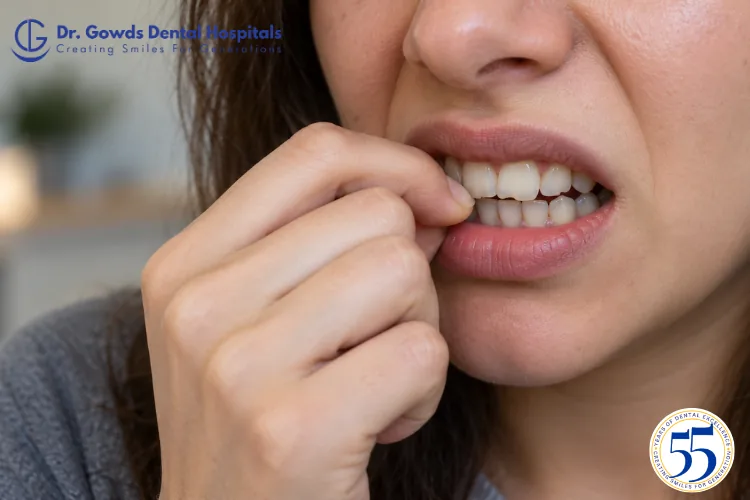
Nail biting can feel like a harmless habit, especially when you are stressed, bored, concentrating or simply not aware that you are doing it. But when it happens regularly, your teeth and jaw are repeatedly exposed to forces they do not need.
Over time, frequent nail biting may contribute to chipped or worn teeth, gum irritation and discomfort in the jaw muscles. The effects can be more concerning in children and people who already have dental problems or orthodontic appliances.
Understanding the nail biting effects on teeth can help you recognise potential problems early and take steps to break the habit.
If you have noticed tooth damage, gum irritation, changes in your bite or jaw discomfort, a dental examination can help determine whether nail biting or another underlying issue is responsible.
Looking for dental care in Hyderabad? Dr Gowds Dental Hospitals has branches in Nanakramguda, Gachibowli, Madhapur, koti.
Your fingernails may seem soft compared with many objects, but repeatedly biting them places concentrated pressure on the front teeth.
Occasional nail biting does not necessarily cause permanent dental damage. The concern is more relevant when the habit is frequent, forceful or continues for years.
Repeatedly biting hard nails can place excessive force on the edges of the front teeth. This may contribute to small chips or, in some cases, cracks, particularly if a tooth has already been weakened by previous damage, a large filling or other dental problems.
A chipped tooth may feel rough when you run your tongue over it. You may also notice a visible change in its shape.
Do not attempt to file or reshape a damaged tooth at home. A dentist can assess the extent of the damage and determine whether it needs monitoring, smoothing, bonding or another restoration.
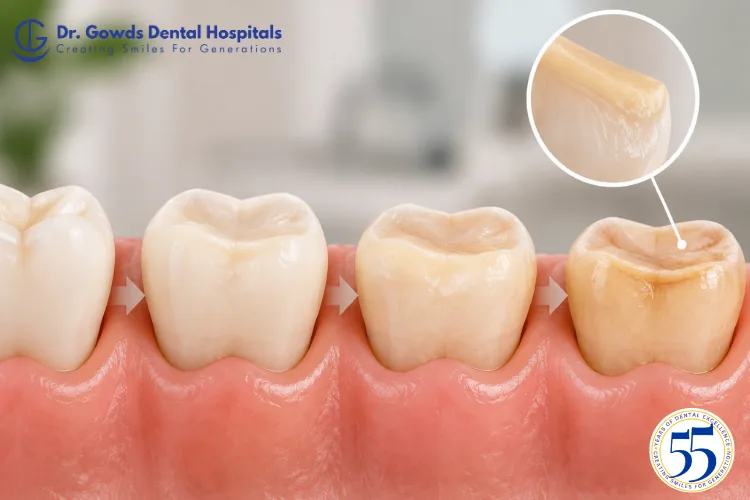
Another possible nail biting teeth damage concern is increased wear.
Normal chewing distributes forces across the teeth in a functional way. Nail biting repeatedly loads the front teeth in an unusual pattern. Over a long period, this may contribute to changes in the appearance of the tooth edges.
However, tooth wear has many possible causes, including teeth grinding, clenching, acidic foods and drinks and normal ageing. A dental examination is needed to determine the likely cause.
Enamel is the hard outer layer of the tooth. It protects the underlying dentine and helps teeth withstand everyday chewing.
Although nail biting does not automatically damage enamel, repeated mechanical stress can contribute to tooth wear or make existing damage worse.
If you already have sensitive or worn teeth, stopping nail biting is a sensible step towards reducing unnecessary stress on them.
Persistent oral habits may sometimes be associated with changes in tooth position or bite, particularly during childhood when the teeth and jaws are still developing.
This does not mean nail biting will make everyone’s teeth crooked. Genetics, jaw development, tongue habits, oral posture and other factors can also influence the bite.
If your teeth no longer seem to meet in the same way, an orthodontic or dental assessment can help identify what has changed.
Yes, repeated nail biting can irritate the gums.
A sharp or uneven nail can press against the gum tissue and cause minor trauma. Biting too deeply can result in tenderness, redness or small injuries.
Possible signs include:
There is also a hygiene concern. Fingernails can carry bacteria and other microorganisms, which can be transferred into the mouth when you bite them.
Keeping your hands and nails clean is important, but reducing the habit is a better long-term approach.
The connection between nail biting and jaw pain needs some context.
Nail biting does not automatically cause a temporomandibular disorder (TMD). However, repeated forceful biting requires the chewing muscles to work, and some people may experience muscle fatigue or soreness, particularly if they also clench or grind their teeth.
Possible symptoms can include:
The National Institute of Dental and Craniofacial Research explains that temporomandibular disorders can involve pain in the jaw muscles or joints and may affect jaw movement.
If you have persistent jaw pain, locking, significant difficulty opening your mouth or worsening symptoms, do not assume nail biting is the only cause. A dentist should assess the problem.
If you regularly bite your nails, watch for changes such as:
These symptoms are not specific to nail biting. Teeth grinding, clenching, trauma, enamel erosion and bite problems can cause similar signs.
That is why a professional examination is useful if symptoms persist.
Stopping a long-standing habit can be difficult. Instead of relying only on willpower, try to understand when and why you bite your nails.
Think about when nail biting usually happens.
Common triggers include:
Once you recognise your triggers, you can prepare an alternative response.
Regularly trimming your nails can make them less tempting to bite and can also make you more aware of the habit.
Keep nail clippers available rather than using your teeth to shorten or shape your nails.
If you usually bite your nails while working, watching television or studying, keep your hands busy with something harmless.
A stress ball, fidget object or another simple activity may help interrupt the automatic movement towards your mouth.
Avoid replacing nail biting with chewing pens, pencils or other hard objects, as these can also damage teeth.
When you notice your hand moving towards your mouth, pause for a few seconds.
Ask yourself:
“What am I feeling or doing right now?”
That small interruption can help you become more aware of an otherwise automatic habit.
For some people, nail biting is a persistent body-focused repetitive behaviour and can be difficult to stop without structured support.
If repeated attempts have not worked, speak with a healthcare professional about behavioural strategies that may help.
You do not need to wait for severe pain before getting your teeth checked.
Consider seeing a dentist if:
A dentist can examine your teeth, gums, bite and jaw and determine whether treatment is required.
If you are concerned about tooth wear, chips, gum irritation or jaw discomfort, Dr Gowds Dental Hospitals can assess your oral health and recommend appropriate care in Hyderabad.
Nail biting is common among children and may become more noticeable during periods of stress, boredom or change.
Occasional nail biting does not necessarily mean that a child will develop dental problems. However, persistent habits deserve attention, particularly if parents notice changes in tooth position, the bite or the condition of the gums.
Rather than repeatedly scolding a child, parents can try to identify the situations that trigger the habit and encourage alternative behaviours.
A dental check-up can also help determine whether the habit is affecting the developing teeth or bite.
If you wear braces, nail biting can put additional pressure on brackets and orthodontic wires.
This may increase the risk of:
If you have braces and find it difficult to stop biting your nails, tell your orthodontist. They may be able to suggest practical strategies to help you manage the habit during treatment.
The concern is not limited to the teeth.
Repeated nail biting can combine several potentially harmful factors: mechanical pressure on teeth, trauma to the gums and frequent transfer of microorganisms from the hands into the mouth.
It may also occur alongside other habits such as lip biting, cheek biting, teeth clenching or grinding.
If you have several of these habits, identifying and addressing the underlying trigger may be more useful than focusing on nail biting alone.
Nail biting may seem like a small habit, but frequent and forceful biting can put unnecessary stress on your teeth and surrounding tissues.
Possible nail biting effects on teeth include chips, tooth wear and irritation around the gums. Some people may also experience jaw muscle discomfort, particularly when nail biting occurs alongside clenching or grinding.
However, not every tooth or jaw problem in someone who bites their nails is caused by the habit. Other dental and jaw conditions can produce similar symptoms.
The best approach is to work on breaking the habit and have any persistent dental symptoms assessed early.
For dental care in Hyderabad, Dr Gowds Dental Hospitals has branches in Gachibowli, Puppalaguda, Madhapur and Koti.
Concerned about nail biting, tooth damage or jaw discomfort? Book a dental consultation with Dr Gowds Dental Hospitals in Hyderabad and get your teeth and oral health evaluated.
Frequent nail biting can place unnecessary pressure on the teeth and may contribute to chipped teeth, tooth wear or gum irritation. The risk depends on how often and forcefully the habit occurs.
Persistent oral habits may be associated with changes in tooth position or bite, particularly in children whose teeth and jaws are still developing. However, nail biting is only one possible contributing factor.
Forceful and repetitive biting may increase the workload of the chewing muscles and contribute to muscle soreness in some people. Jaw pain can have many other causes, so persistent symptoms should be professionally assessed.
Repeated mechanical stress from nail biting may contribute to tooth wear or aggravate existing dental damage. Other factors, including grinding, clenching and acidic foods and drinks, can also affect enamel.
Identify your triggers, keep your nails short, keep your hands occupied and pause when you notice the urge to bite. If the habit is persistent and difficult to control, professional behavioural support may be helpful.
Yes. Nail biting can put unnecessary pressure on orthodontic brackets and wires and may contribute to appliance damage. People wearing braces should avoid biting nails or other hard objects.
Yes. A dentist can determine whether the chip is superficial or whether there is deeper damage. Treatment depends on the location and extent of the damage.
Yes. Nail biting is a common childhood habit. Persistent biting should be monitored for gum irritation, tooth wear or changes in the developing bite.
 Gachibowli Branch