

Schedule Appointment

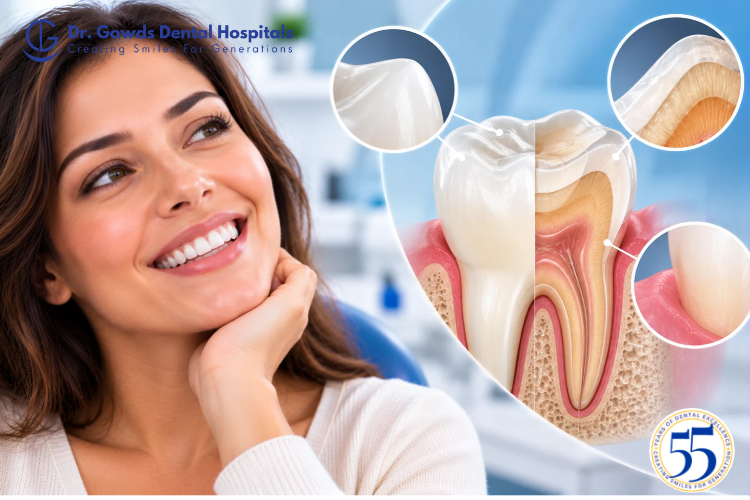
A tooth is more than just the visible part you see when you smile. It has different layers and structures that work together, and each part contributes to the tooth’s overall form and function.
This is where biomimetic dentistry comes into the conversation. The term refers to a dental approach that focuses on working with the existing tooth structure and designing restorations with the natural tooth in mind.
But what does preserving natural tooth structure actually mean? Does it involve a particular type of filling or procedure? And how is biomimetic dentistry different from other approaches to restoring teeth?
This guide explains the concept in simple terms so you can have a more informed conversation with your dentist.
Considering treatment for a damaged or restored tooth?
Biomimetic dentistry combines two ideas: “bio,” relating to life or living systems, and “mimetic,” meaning to imitate.
In dentistry, the concept focuses on understanding the natural tooth and considering its structure, shape, layers and function when planning restorative treatment.
Rather than thinking only about replacing a damaged part of a tooth, the approach considers the tooth as a complete structure.
Depending on the condition of the tooth and the treatment plan, biomimetic dentistry may involve techniques associated with:
Biomimetic dentistry is therefore better understood as an approach to treatment planning rather than one specific dental procedure.
The phrase preserving natural tooth structure may sound complicated, but the basic idea is straightforward.
When a tooth needs restoration, the dentist evaluates the existing structure and determines what can appropriately remain and what needs to be treated or replaced.
The aim is to avoid thinking of every damaged tooth in exactly the same way.
For example, two teeth may both have restorations that need attention, but their remaining structures may be completely different. The treatment approach can therefore depend on factors such as:
Preserving natural tooth structure does not mean that every part of every tooth can or should remain untouched. It means giving appropriate consideration to the existing tooth structure when planning treatment.
Natural teeth have a complex structure that cannot simply be described as a single solid material.
A tooth contains different layers, each with its own characteristics. The visible outer portion is supported by structures underneath it, creating the overall form of the tooth.
When part of a tooth is lost because of decay, wear, trauma or previous dental treatment, the remaining structure becomes an important part of treatment planning.
This is why tooth structure preservation is an important concept in modern restorative dentistry.
Instead of focusing only on replacing what is missing, the dentist can also consider:
Biomimetic dentistry is not necessarily a completely separate category of dentistry. It is more useful to think of it as a philosophy or approach that can influence restorative treatment.
A conventional restorative discussion may focus primarily on repairing or replacing the damaged portion of a tooth.
A biomimetic approach places additional emphasis on the relationship between the restoration and the remaining natural tooth structure.
The distinction can be understood simply:
Traditional way of thinking:
“What needs to be replaced or restored?”
Biomimetic way of thinking:
“What remains, what needs attention, and how can the restoration be planned around the existing tooth structure?”
The actual treatment still depends on the individual tooth and the dentist’s clinical assessment.
Biomimetic principles can be considered in different types of restorative dentistry. The specific treatment depends on the condition of the tooth.
When a tooth requires a filling, the dentist may consider the amount of remaining natural structure and the location of the restoration.
The restoration can be planned to follow the shape and appearance of the tooth while considering the surrounding structure.
Adhesive dentistry involves techniques used to bond restorative materials to tooth structure.
The type of material and bonding approach depends on the individual treatment plan.
Inlays and onlays are restorations designed for certain situations where a tooth requires more than a simple filling but does not necessarily require the same type of restoration as a fully covered tooth.
Whether one of these options is appropriate depends on the amount and condition of the remaining tooth structure.
Biomimetic thinking can also influence the way a dentist evaluates a tooth before deciding on a restoration.
Rather than selecting a restoration based only on the visible defect, the dentist can consider the tooth’s remaining structure and overall condition.
No. This is one of the most common misunderstandings about the term.
Biomimetic dentistry is not a single procedure like a filling, crown or dental implant.
It describes an approach to dental treatment that considers the natural structure and function of the tooth during restoration.
This distinction matters because there is no single “biomimetic treatment” that is suitable for every patient.
The appropriate treatment depends on the individual tooth, the amount of remaining structure and the dentist’s assessment.
Patients who are researching options for restoring damaged or previously treated teeth may come across the term biomimetic dentistry.
It may be worth discussing the concept with your dentist if you are considering treatment involving:
This does not mean biomimetic dentistry is automatically appropriate for every situation. A dental examination is needed to understand the condition of an individual tooth.
If you are considering a tooth restoration, asking the right questions can help you understand your options.
You can ask:
These questions can help you understand not just what treatment is being suggested, but also why it has been selected.
Want to discuss your restorative dental options? Dr Gowds Dental Hospitals has branches in Nanakramguda, Gachibowli, Madhapur, koti, Hyderabad, where you can discuss your dental concerns with the dental team.
Biomimetic dentistry is often discussed alongside conservative dentistry because both concepts place attention on the existing tooth structure.
Conservative dentistry generally focuses on addressing the dental problem while considering how much healthy structure can be retained.
Biomimetic dentistry takes this idea further by considering how the restoration relates to the natural structure and function of the tooth.
The terms are related, but they are not necessarily interchangeable. Your dentist can explain which approach is relevant to your specific treatment.
The process can vary depending on the tooth and treatment required, but the discussion may generally involve several stages.
The dentist examines the tooth and considers its existing condition.
The amount and location of the remaining natural tooth structure are considered when discussing treatment options.
Different restorative options may be evaluated based on the individual tooth and the desired treatment outcome.
The dentist selects an appropriate restorative approach and material based on the clinical situation.
The restoration is planned with the existing tooth structure in mind, including its shape and position.
This process is individualized rather than being a fixed formula for every patient.
The biggest takeaway from biomimetic dentistry is not a particular material or procedure.
It is the idea of looking at a tooth as a complete structure.
When a tooth needs restoration, there may be several factors to consider beyond simply replacing the missing portion. The remaining natural structure, the location of the affected area, the type of restoration and the individual patient’s dental situation can all influence treatment planning.
Understanding these principles can help patients have more meaningful conversations with their dentists.
Biomimetic dentistry focuses on considering the natural tooth when planning restorative dental treatment. At its core is the concept of preserving natural tooth structure wherever appropriate while designing treatment around the tooth’s existing form and condition.
It is not one particular procedure, and it does not mean the same treatment is suitable for everyone.
If you are considering a filling, restoration or other dental treatment, ask your dentist about the condition of your remaining tooth structure and the available options.
Looking for restorative dental care in Hyderabad? Visit Dr Gowds Dental Hospitals to discuss your dental concerns and treatment options.
Biomimetic dentistry is an approach to restorative dental treatment that considers the natural structure, shape and function of a tooth when planning a restoration.
Preserving natural tooth structure means considering what healthy or usable tooth structure remains and planning treatment around it rather than treating every tooth in exactly the same way.
Biomimetic dentistry is not one specific procedure. It is an approach to treatment planning that can be considered during different types of restorative dental care.
The two concepts are related because both can involve consideration of the existing natural tooth structure. However, they are not exactly the same term and may be used differently depending on the treatment context.
Biomimetic dental restorations are restorations planned with consideration for the remaining natural tooth structure and the natural form of the tooth. The appropriate restoration depends on the individual tooth.
Biomimetic principles can be considered when planning certain dental fillings and other restorations. The appropriate treatment depends on the condition and structure of the tooth.
You can ask how much natural tooth structure remains, what restoration options are available, why a particular option is being recommended and how the restoration will be planned around the existing tooth.
 Gachibowli Branch