

Schedule Appointment

When a dentist takes a dental impression, it may seem like a simple mould of your teeth. But the purpose goes far beyond creating a copy of your smile.
A dental impression records the shape and position of teeth and surrounding oral structures. This information can help dentists and dental laboratories create restorations, dentures, orthodontic appliances, mouthguards, and other customized dental devices.
At Dr Gowds Dental Hospitals, dental impressions may be part of different treatment processes depending on the patient’s individual dental needs.
Modern dentistry can use both conventional impression materials and digital scanning technology. The method selected depends on the procedure, clinical requirements, and available technology.
A dental impression is a negative reproduction of the surfaces inside the mouth.
Traditional impressions are made by placing a soft impression material into a tray and positioning it over the teeth. Once the material sets, it records the contours of the teeth and nearby oral structures.
The resulting impression can then be used to create a positive model or working replica.
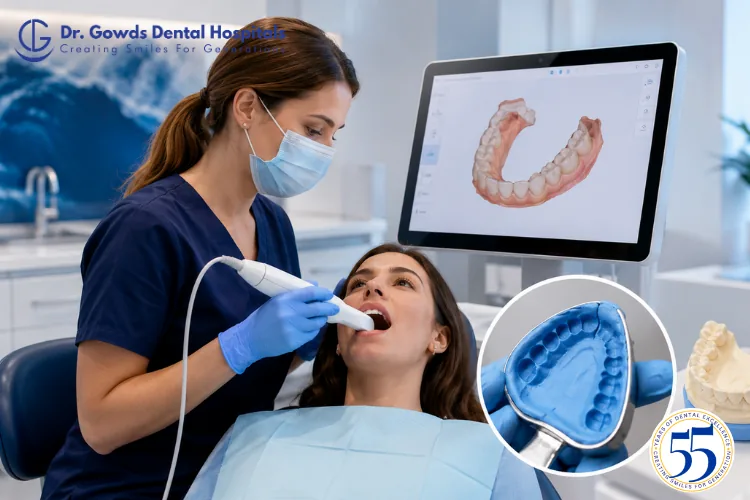
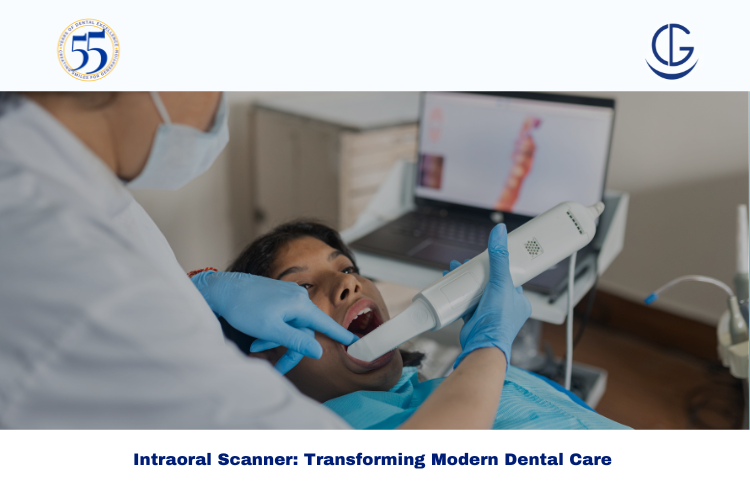
Digital dentistry approaches the same objective differently. Instead of using physical impression material, an intraoral scanner captures a series of images of the teeth and oral structures and combines them to create a three-dimensional digital model.
A dentist can see your teeth directly during an examination, so why is an impression necessary?
The answer is precision and customization.
A dental impression can provide a detailed record of the relationship between teeth and surrounding structures. This information can be used outside the patient’s mouth to design or fabricate a dental restoration or appliance.
Dental impressions may be useful for:
The exact need depends on the treatment being planned.
A properly taken impression can record more than the visible front surfaces of teeth.
Depending on the type of impression and the procedure, it can capture:
This information can help the dentist and dental laboratory create an appliance or restoration that fits the patient’s individual mouth.
The traditional impression procedure generally involves several steps.
The dentist chooses a tray that appropriately fits the patient’s dental arch.
The impression material is mixed according to the manufacturer’s instructions and placed into the tray.
The tray is carefully positioned over the teeth.
The patient may be asked to remain still while the material sets.
Once the material has sufficiently hardened, the dentist gently removes the tray.
The dentist examines the impression to make sure the required structures have been captured accurately.
If important areas are missing or distorted, the impression may need to be repeated.
Gagging is a natural protective reflex.
The sensation can be triggered when the impression tray or material comes close to sensitive areas toward the back of the mouth.
Several factors may influence the experience, including:
Relaxing the throat and breathing steadily through the nose may help some patients.
Your dentist can also discuss ways to make the procedure more comfortable.
Digital dental impressions use an intraoral scanner instead of conventional impression material.
The scanner is moved around the mouth while it captures multiple images of the teeth and surrounding structures.
Specialized software combines these images to create a three-dimensional digital representation.
The digital file can then be used for certain treatment planning and laboratory workflows.
Both methods have an important role in dentistry.
| Traditional Impressions | Digital Impressions |
| Use physical impression material | Use an intraoral scanner |
| Produce a physical impression | Produce a digital 3D model |
| Material sets inside the mouth | No setting material is required |
| May trigger gagging in some patients | Often more comfortable for patients who dislike impression material |
| Can be used for many restorative procedures | Useful for many digital restorative and orthodontic workflows |
The choice depends on the procedure, clinical requirements, equipment, and dentist’s assessment.
Digital scanning does not automatically make every procedure better. The appropriate method depends on the specific treatment.
Many patients find digital scanning more comfortable because there is no need to place a tray filled with setting impression material in the mouth.
This can be particularly useful for patients who:
However, the scanning process still requires the scanner to move around the mouth, and the experience can vary between patients and procedures.
Accuracy is important because the impression may be used to create a restoration or appliance that needs to fit precisely.
An inaccurate impression can result from:
Digital scans can also have limitations if certain areas are difficult for the scanner to capture.
For this reason, the dentist checks the quality of the impression or digital scan before proceeding.
Dental impressions are generally not painful.
Traditional impressions may cause temporary pressure or discomfort, especially in patients with a sensitive gag reflex.
Digital scanning usually involves less physical bulk but may still feel unfamiliar.
If you experience pain during an impression or scan, tell your dentist so the cause can be assessed.
Dental impressions are an important part of many dental procedures because they provide detailed information that cannot always be captured through a simple visual examination.
They can help dentists and dental laboratories create restorations and appliances that are customized to an individual’s teeth and oral structures.
Traditional impressions use physical materials to create a mould, while digital impressions use intraoral scanning technology to produce a three-dimensional digital model.
Neither method is universally required for every dental procedure. The appropriate approach depends on the treatment being planned, the patient’s oral condition, and the clinical requirements.
If your dentist recommends a dental impression, it is usually because an accurate record is needed to plan or create a customized restoration or appliance.
Visit us at-
Dr gowds dental hospital Nanakramguda
Dr gowds dental hospital Gachibowli
Dr gowds dental hospital madhapur
Dental impressions are detailed records of the teeth and certain surrounding oral structures. Traditional impressions use a physical material, while digital impressions use an intraoral scanner.
Dental impressions can be used to create customized crowns, bridges, dentures, orthodontic appliances, mouthguards, and certain implant restorations.
Dental impressions are generally not painful. Traditional impressions may cause temporary pressure or gagging in some patients.
The time varies depending on whether a traditional impression or digital scan is used and which areas of the mouth need to be recorded.
Digital dental impressions are three-dimensional digital records created by scanning the teeth and oral structures with an intraoral scanner
 Gachibowli Branch