

Schedule Appointment


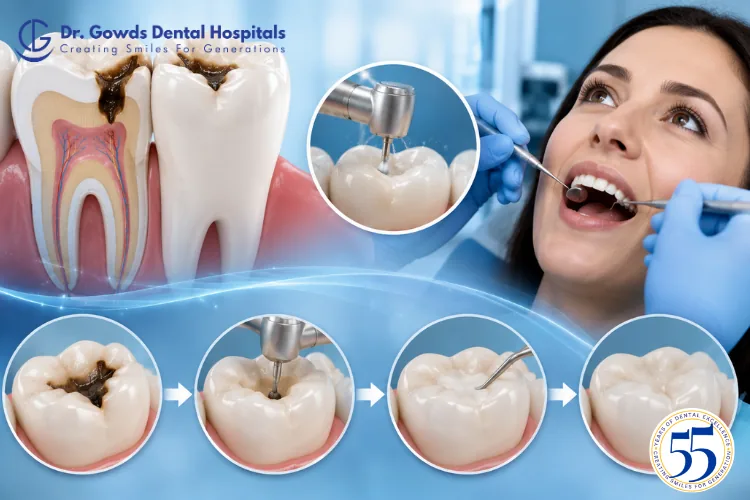
Tooth decay does not always begin with an obvious hole in the tooth. In many cases, the process starts much earlier with gradual mineral loss from the enamel. This early stage can be difficult to notice because it may not cause pain or obvious symptoms.
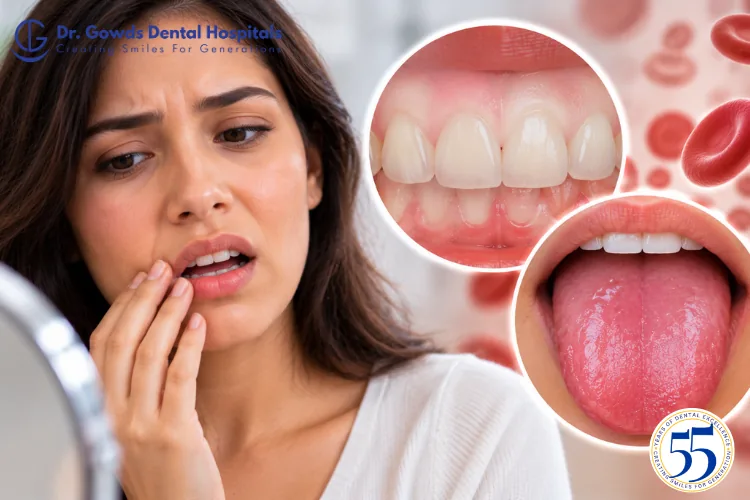
You may occasionally notice a white or chalky area on the tooth, while in other cases, early enamel changes may only be detected during a dental examination.
Understanding enamel decay treatment is important because early decay may be managed differently from an established cavity. When mineral loss is identified before the tooth surface breaks down, treatment may focus on controlling the decay process and supporting enamel remineralization.
At Dr Gowds Dental Hospitals, a dental examination can help determine whether enamel changes represent early decay, another type of enamel defect, or a more advanced cavity requiring restorative treatment.
Enamel decay is an early stage of dental caries in which minerals are gradually lost from the tooth’s outer protective layer.
Enamel is highly mineralized and provides protection to the more sensitive inner structures of the tooth. However, it is constantly exposed to acids produced when bacteria in dental plaque metabolize carbohydrates from food and drinks.
Repeated acid exposure can cause minerals to leave the enamel.
At an early stage, the enamel may still be intact even though mineral loss has already occurred. This is often referred to as a non-cavitated enamel lesion.
If the process continues, the enamel can become weaker and eventually break down, creating a cavity.
Enamel decay occurs when the balance between mineral loss and natural repair is repeatedly disrupted.
Several factors can contribute to this process.
Sugary and carbohydrate-containing foods can contribute to acid production by bacteria in plaque.
Frequent exposure means teeth may experience repeated acid attacks throughout the day.
Dental plaque contains bacteria that contribute to the production of acids.
Plaque can accumulate around the gum line, between teeth, and in grooves on the chewing surfaces of molars.
Fluoride helps strengthen enamel and supports its resistance to acid attacks.
Insufficient fluoride exposure can make teeth more vulnerable to decay.
When plaque is not removed effectively, bacteria remain in contact with tooth surfaces for longer periods.
Saliva helps neutralize acids and provides minerals that contribute to enamel protection.
Reduced saliva flow can therefore increase the risk of tooth decay.
No.
This distinction is important.
A tooth can experience mineral loss before a physical hole develops.
During this stage, the enamel surface may still be intact. A dentist may identify an early lesion even though there is no conventional cavity requiring drilling and filling.
This is one reason regular dental examinations are useful. Early changes can sometimes be managed before significant tooth structure is lost.
The progression of tooth decay can occur gradually.
Bacteria in plaque produce acids when they metabolize fermentable carbohydrates.
Repeated acid exposure causes minerals to leave the enamel.
The enamel may develop a chalky or white appearance while remaining intact.
If the factors causing decay continue, mineral loss can increase and the enamel becomes progressively weaker.
Eventually, the enamel surface can break down and a physical cavity forms.
The earlier the process is identified, the greater the opportunity to manage it without conventional restorative treatment.
Treatment depends on whether the enamel surface is intact and how active or advanced the decay is.
Fluoride is an important part of preventing and managing early tooth decay.
A dentist may recommend fluoride toothpaste or professional fluoride treatment based on the patient’s age and individual risk.
Fluoride can strengthen enamel and support remineralization of early lesions.
Effective plaque removal helps reduce the bacterial environment responsible for repeated acid attacks.
A dentist may recommend:
Consistent home care is an important part of enamel decay treatment.
Dental treatment is not limited to what happens at the clinic.
If teeth are repeatedly exposed to sugary foods and drinks throughout the day, acid attacks can continue.
Reducing the frequency of sugary exposures can help create better conditions for enamel protection and remineralization.
Saliva naturally helps neutralize acids and provides minerals that support the teeth.
Maintaining good hydration can support normal saliva function.
If a person experiences persistent dry mouth, the underlying cause should also be discussed with a healthcare or dental professional.
When susceptible pits and grooves contribute to decay risk, a dentist may recommend a dental sealant where appropriate.
Sealants can create a protective barrier over selected tooth surfaces and reduce the accumulation of food and plaque in deep grooves.
They are not required for every tooth or every patient.
Early enamel decay does not automatically require a filling.
If the enamel surface remains intact, the dentist may be able to manage the lesion with preventive and non-invasive measures.
A filling generally becomes relevant when decay progresses enough to create a cavitated defect or when sufficient tooth structure has been lost that restorative treatment is necessary.
The dentist may consider:
If a true cavity has formed, the damaged tooth structure may need to be restored.
Enamel decay does not always begin as a cavity. It can start with microscopic mineral loss while the tooth surface remains intact.
At this early stage, appropriate management may focus on controlling plaque and sugar exposure, improving fluoride use, supporting remineralization, and monitoring the affected tooth.
Once the enamel surface breaks down and a cavity forms, preventive measures alone may no longer be sufficient, and a filling or another restorative procedure may be required.
If you notice white or chalky areas on your teeth or have been told that you have early enamel decay, a dental examination can help determine the cause and stage of the condition.
At Dr Gowds Dental Hospitals, the dental team can assess enamel changes and recommend treatment based on the extent of tooth damage and individual oral health needs.
The earlier enamel decay is identified, the greater the opportunity to protect the natural tooth structure and prevent the problem from progressing.
Visit us at-
Dr gowds dental hospital Nanakramguda
Dr gowds dental hospital Gachibowli
Dr gowds dental hospital madhapur
Enamel decay is the loss of minerals from the outer layer of a tooth due to repeated acid attacks associated with dental plaque and dietary carbohydrates.
Not necessarily. Early enamel decay can occur while the tooth surface remains intact. A cavity forms when the tooth structure breaks down and develops a physical defect.
Treatment depends on the stage of decay. Fluoride, improved oral hygiene, dietary changes, and professional preventive care may be appropriate for early lesions. Cavitated decay may require a filling or another restoration.
Early enamel decay often causes no noticeable pain. Symptoms may develop when decay progresses deeper into the tooth.
They can. White or chalky areas may be associated with early mineral loss, although white spots can have other causes as well. A dental examination can help determine the reason.
No. When decay is detected before a cavity forms, it may be possible to manage it with preventive and remineralization-focused measures.
Brush twice daily with fluoride toothpaste, clean between your teeth, limit frequent sugary foods and drinks, maintain good hydration, and attend regular dental examinations.
 Gachibowli Branch