

Schedule Appointment

A damaged, worn, or missing tooth can affect much more than appearance. It can influence chewing, speech, bite balance, and the way the remaining teeth function. When dental restoration becomes more complex, a prosthodontist may be involved in planning and providing specialized care.
Prosthodontics is a branch of dentistry focused on restoring and replacing teeth and rehabilitating oral function. Depending on the patient’s condition, prosthodontic care may involve crowns, bridges, dentures, dental implants, veneers, or more comprehensive restorative treatment.
At Dr. Gowds Dental Hospitals, prosthodontic care is provided with attention to both function and appearance. Prof. Dr. M.S. Gowd, B.D.S., M.D.S., F.I.C.D. (USA), brings specialized prosthodontic expertise to the evaluation and management of complex restorative needs.
But when is seeing a prosthodontist actually necessary? And how is prosthodontic care different from routine restorative dentistry?
A prosthodontist is a dentist with advanced training in prosthodontics, the dental specialty concerned with restoring and replacing teeth.
Their work may involve patients who have:
A prosthodontist considers how individual restorations work together rather than looking at a single tooth in isolation.
Prosthodontic treatment can cover a wide range of restorative procedures.
Crowns can restore teeth that have lost significant structure because of decay, fractures, large restorations, or other damage.
Bridges can replace selected missing teeth by using adjacent teeth or other supporting structures.
Complete or partial dentures can replace multiple missing teeth and surrounding oral structures when appropriate.
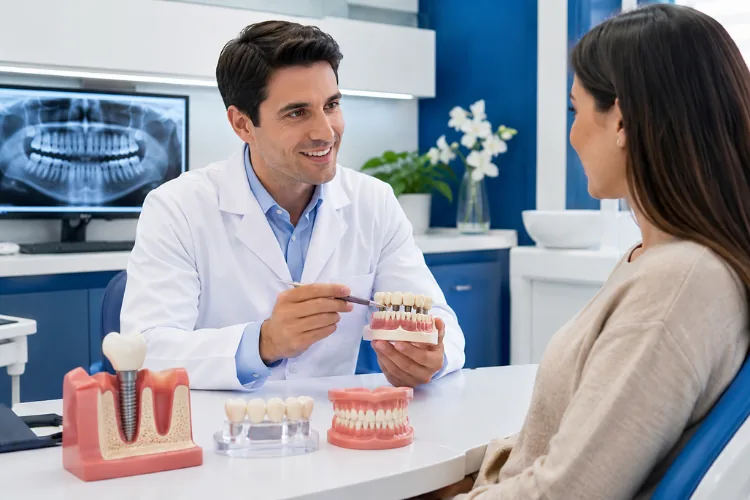
Prosthodontists can be involved in the restorative planning of implant-supported teeth. Implant treatment often requires coordination between surgical and restorative aspects of care.
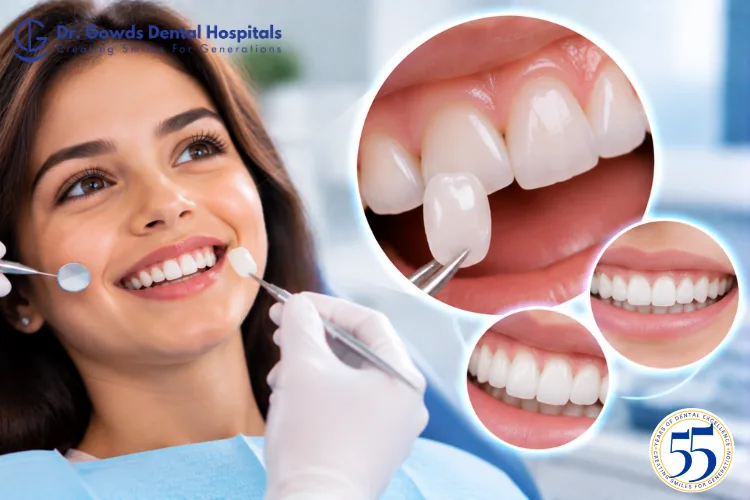
In selected cases, veneers can address specific concerns involving tooth shape, color, or surface appearance.
When multiple teeth have extensive damage, wear, missing restorations, or bite-related concerns, treatment may need to be planned across the mouth rather than one tooth at a time.
Not every dental problem requires a prosthodontist.
However, specialized prosthodontic evaluation may be useful when a patient has a complex restorative problem.
Losing several teeth can affect chewing and the stability of the remaining dentition.
A prosthodontist can evaluate different replacement options, such as:
The most appropriate solution depends on factors such as bone availability, gum health, remaining teeth, overall oral condition, and patient preferences.
A tooth that has lost substantial structure may require more than a simple filling.
Depending on the remaining tooth structure and the condition of the tooth, options may include a crown, onlay, or another restorative approach.
A prosthodontist can help determine how the tooth should be restored while considering its function within the overall bite.
Long-term tooth wear can change the shape and height of teeth.
Possible contributing factors include:
When multiple teeth are significantly worn, simply restoring one tooth may not address the overall problem.
A prosthodontic assessment can help identify the extent of wear and develop a comprehensive restorative plan.
Full-mouth rehabilitation refers to comprehensive treatment involving multiple teeth and, in some cases, multiple types of dental restorations.
It may be considered when a patient has a combination of:
Treatment must be carefully sequenced because changing one part of the bite can affect other teeth.
This is where prosthodontic planning becomes particularly important.
Dentures can change in fit over time.
Changes in the supporting gums and bone can affect how a denture sits.
Patients may notice:
A prosthodontist can evaluate whether the denture needs adjustment, relining, replacement, or whether an implant-supported option may be appropriate.
Dental implants involve both surgical and restorative considerations.
The implant is placed into the jawbone, but the final restoration must also function properly with the surrounding teeth.
Prosthodontic planning can help determine:
Complex implant cases may require collaboration between prosthodontists, implant surgeons, periodontists, oral surgeons, or other dental professionals.
A general dentist provides a broad range of preventive, restorative, and routine dental care.
A prosthodontist has additional specialized training focused on restoring and replacing teeth and managing complex restorative cases.
For example, a general dentist may restore a straightforward cavity with a filling.
A prosthodontist may become involved when a patient has extensive tooth loss, multiple failing restorations, severe tooth wear, complex implant restoration needs, or requires comprehensive rehabilitation.
This does not mean one type of dentist is universally better than the other. The appropriate professional depends on the complexity and nature of the dental problem.
No.
Although tooth replacement is a major part of prosthodontics, prosthodontists also manage severely damaged, worn, or aesthetically compromised teeth.
Treatment may involve restoring natural teeth with:
The appropriate restoration depends on the amount of remaining tooth structure and the functional demands placed on it.
Your first consultation may involve a detailed discussion about your dental concerns and treatment goals.
The dentist may ask about:
A clinical examination and appropriate diagnostic records can then be used to determine the available treatment options.
In complex cases, treatment may involve several stages rather than one procedure.
A prosthodontist specializes in restoring and replacing teeth while considering how the restoration fits into the overall function of the mouth.
Patients may benefit from prosthodontic evaluation when they have multiple missing teeth, severely damaged or worn teeth, complex denture concerns, extensive restorative needs, or implant-supported restoration requirements.
Prosthodontic treatment is not simply about making a replacement tooth look natural. The restoration also needs to work with the surrounding teeth, support comfortable chewing, and suit the patient’s individual oral condition.
If you have a complex restorative problem or are unsure which tooth replacement option is appropriate, a prosthodontic consultation can help clarify your choices.
At Dr. Gowds Dental Hospitals, Prof. Dr. M.S. Gowd, B.D.S., M.D.S., F.I.C.D. (USA) provides specialized expertise for patients requiring advanced restorative and prosthodontic care.
Visit us at-
Dr gowds dental hospital Nanakramguda
Dr gowds dental hospital Gachibowli
Dr gowds dental hospital madhapur
A prosthodontist is a dentist with advanced training in restoring and replacing teeth. Prosthodontics includes treatments involving crowns, bridges, dentures, dental implants, veneers, and complex restorative rehabilitation.
A prosthodontist may treat missing teeth, severely damaged teeth, extensive tooth wear, complex denture problems, multiple failing restorations, and certain comprehensive restorative cases.
No. There can be overlap, but prosthodontics focuses primarily on restoring and replacing teeth and oral function. A prosthodontist may also address aesthetic considerations as part of restorative treatment.
Consider a prosthodontic evaluation if your dentures are loose, uncomfortable, difficult to chew with, causing sore areas, or no longer fit properly.
The dentist examines your teeth, gums, bite, existing restorations, and missing teeth and may use diagnostic records to develop an individualized treatment plan.
Prof. Dr. M.S. Gowd, B.D.S., M.D.S., F.I.C.D. (USA) is associated with prosthodontic care at Dr. Gowds Dental Hospitals.
 Gachibowli Branch