

Schedule Appointment


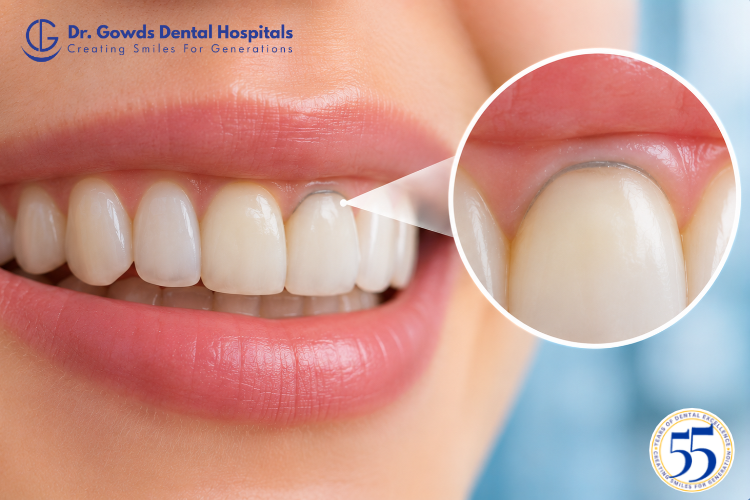
A grey line near the gums on a tooth can be easy to notice, particularly when it appears along the edge of a tooth, filling or crown. While it may simply be a change in colour or a visible restoration margin, the appearance alone does not tell you exactly what is causing it.
The location, texture, whether the line is changing and whether there has been previous dental work can all provide useful context. This guide explains some common reasons a grey line may appear near the gumline and what you can do when you notice one.
At Dr Gowds Dental Hospitals, patients in Hyderabad can discuss changes in tooth colour or appearance.
Noticed a new grey line near your gumline?
A grey line around the gumline is an appearance rather than a diagnosis. Several different factors can make this part of a tooth look grey, dark or shadowed.
If the tooth has previously received a crown, bridge or filling, the material used for the restoration can influence how the edge of the tooth looks.
Some older restorations may have a darker-looking margin. When the gumline changes position over time, the boundary between the natural tooth and restoration can also become more noticeable.
If the grey line is located exactly where a crown or filling meets the tooth, the dental restoration is one of the details a dentist may consider during an examination.
The gumline can collect surface deposits and stains, particularly when cleaning around the area is difficult.
The result may look like a grey, brown or darker line rather than a uniform change across the whole tooth. The appearance can vary depending on the tooth, the type of deposit and the individual’s oral hygiene routine.
A professional dental examination can help distinguish a surface colour change from other possibilities.
The visible boundary between the tooth and gum can change over time. When more of the tooth surface becomes visible, an existing restoration margin or difference in tooth colour may stand out more clearly.
This can be particularly noticeable around crowns and other previously restored teeth.
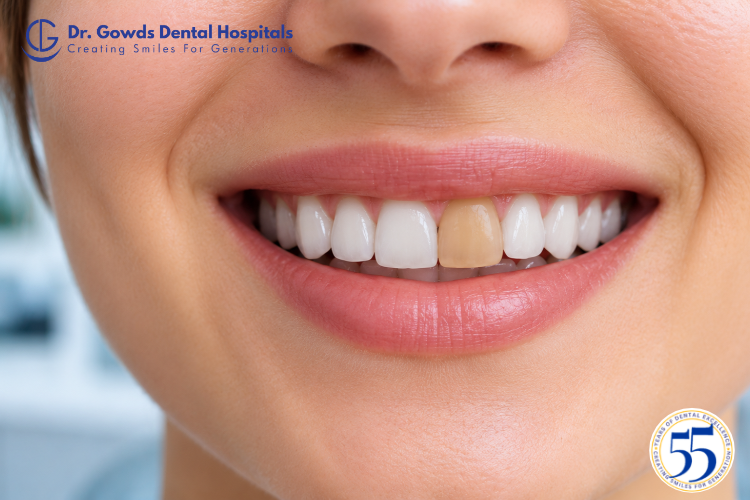
Sometimes the grey appearance is not limited to the gumline. You may notice that part or all of the tooth looks darker than neighbouring teeth.
A change in tooth colour can have different explanations, so colour alone is not enough to determine what is happening. A dentist can assess the tooth in context rather than relying only on its appearance.
A grey line near the gums around a dental crown is a common search concern because the edge of a crown can become more noticeable with time.
Several details can affect how the margin appears:
A grey margin does not automatically mean that a crown needs to be replaced. The restoration needs to be assessed based on its appearance, fit, surrounding tooth and gum condition.
Not necessarily.
A grey line on a tooth near the gums is limited to a particular area, often following the gumline or the edge of a restoration.
A grey tooth, on the other hand, refers to a broader change in the colour of the tooth.
This distinction can be useful when describing the problem to a dentist. Before your appointment, look at whether:
These observations can help provide a clearer picture during an examination.
If you notice a grey line on a tooth near the gums, avoid trying to remove it by scraping or picking at the tooth.
Instead, consider the following simple steps.
Continue your usual brushing and flossing routine, paying attention to the area where the tooth meets the gum.
Avoid aggressive brushing simply because the area looks darker. Excessive pressure can make cleaning uncomfortable and may not remove a mark that is part of the tooth or a dental restoration.
Think about whether the tooth has a:
This information can be useful when discussing the grey line with your dentist.
Make a note if the grey line becomes more noticeable, changes shape or colour, or appears alongside other changes in the tooth or surrounding gum.
A persistent or new change is worth discussing with a dental professional rather than trying to identify it from photographs alone.
Whitening products are designed for specific purposes and may not change the appearance of a single grey margin. Similarly, sharp objects should not be used to scrape the gumline or a dental restoration.
If the appearance is bothering you, professional assessment is a more appropriate starting point.
A grey line does not always indicate the same issue, which is why an examination can be useful when the cause is unclear.
Consider arranging a dental appointment if:
A dentist can look at the tooth and surrounding area and determine what further attention, if any, is appropriate.
There is no single way to prevent every type of grey line because the appearance can have different causes.
However, consistent everyday dental care can help you keep track of changes around the teeth and gumline.
Useful habits include:
The most important point is to notice changes early rather than trying to diagnose the cause from colour alone.
When you visit a dentist about a grey line around the gumline, the examination can focus on the tooth, the visible gumline and any existing restoration.
The dentist may consider:
The next step depends on what is found during the assessment. In some cases, the appearance may simply be monitored or professionally cleaned. In other situations, the dentist may discuss appropriate care for the tooth or restoration.
If you are unsure whether a grey mark is staining, a restoration margin or another change, speak with the dental team at Dr Gowds Dental Hospitals in Hyderabad.
A grey line near the gums on a tooth can have several possible explanations, including surface staining, a visible restoration margin or changes in the appearance of the tooth and gumline.
The most important point is that colour alone cannot identify the cause. Look at where the line appears, whether the tooth has previous dental work and whether the appearance is changing.
If you have noticed a persistent or unexplained grey line, a dental examination can provide a clearer answer than trying to identify it yourself.
Have you noticed a grey line near your gums? Book an appointment at Dr Gowds Dental Hospitals in Nanakramguda, Gachibowli, Madhapur, koti.
A grey line near the gumline can be related to surface staining, a visible dental restoration margin or a change in the appearance of the tooth or surrounding area. Colour alone cannot identify the exact reason.
A grey line may appear near the gumline for different reasons. Previous dental work, surface deposits and changes in the visible tooth area can all affect how the gumline looks.
A grey-looking margin around a crown can occur for different reasons and does not automatically indicate that the crown needs replacement. A dentist can assess the crown margin and surrounding tooth.
If only the area near the gumline looks grey, the appearance may be different from having an entirely grey tooth. Previous dental work, surface colour changes and the visible tooth margin are some details that may be considered during an examination.
Some dental fillings or older restorative materials can create a darker-looking area around their margins. The type and condition of the restoration can help explain the appearance.
No. Scraping the tooth or restoration with a sharp object is not a suitable way to determine what the mark is. It is better to have a persistent or unexplained mark assessed professionally.
Whether the appearance can be changed depends on what is causing it. Surface deposits may be managed differently from a visible restoration margin or a change within the tooth.
Consider a dental assessment when the grey line is new, persistent, changing, associated with a previous restoration, or difficult to identify. A dentist can examine the area and explain the appropriate next step.

 Gachibowli Branch