

Schedule Appointment


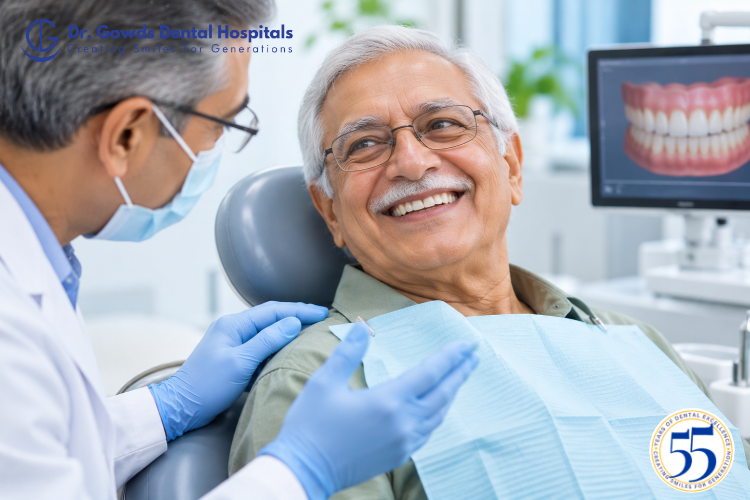
For many older adults, dental concerns do not involve just one tooth. Several teeth may require attention at the same time, making it difficult to know where to begin. This is where full mouth rehabilitation for seniors may be considered as a coordinated approach to addressing multiple dental needs.
But one question often comes first: Does age make full mouth rehabilitation unsuitable?
Age is an important part of the overall treatment discussion, but it is not the only factor considered when planning dental care. The condition of the teeth and gums, existing dental work, general health information, medications, treatment preferences, and ability to attend appointments may all be relevant when creating an individual treatment plan.
At Dr Gowds Dental Hospitals, seniors and their families can discuss their dental concerns with a dental team and understand the available treatment options before making decisions.
Considering full mouth rehabilitation for a senior family member?
Full mouth rehabilitation is a coordinated dental treatment plan that addresses several dental concerns across the mouth rather than focusing on just one tooth.
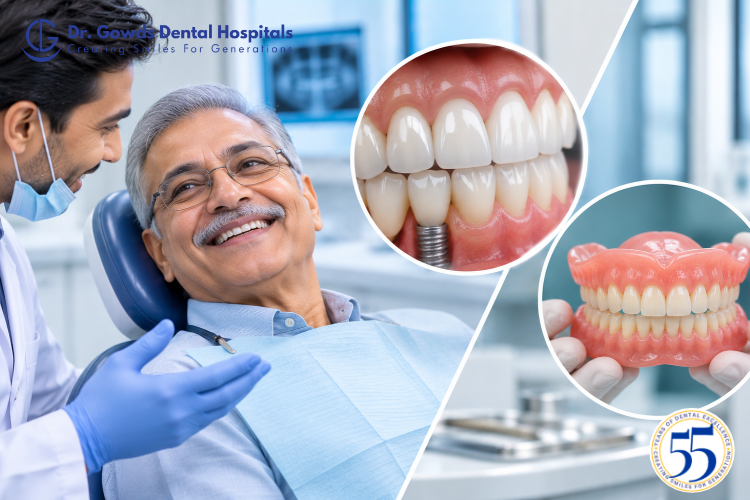
Depending on the individual situation, a treatment plan may involve different types of dental care, such as:
Not every patient will require all of these treatments. The exact combination depends on the dental assessment and the patient’s individual needs.
For seniors, the process is particularly important because treatment may need to be planned around existing dental work, previous procedures, personal preferences, and practical considerations such as appointment schedules.
One of the most common questions is whether there is a specific age at which full mouth rehabilitation is no longer considered.
There is no single age number that can determine an individual’s dental treatment plan. Instead, the dentist needs to understand the person’s overall dental situation and discuss which options are appropriate.
For an older adult, the consultation may consider:
This makes the consultation an important first step. Rather than deciding based on age alone, seniors and their families can discuss the available options and understand the proposed sequence of treatment.
Older adults may have several dental concerns that have developed at different times. One tooth may have an old restoration, another may be missing, while other teeth may require evaluation.
Treating every concern separately without considering the overall dental picture may make planning more complicated.
Full mouth rehabilitation takes a broader view of the mouth. The dental team can assess the different concerns together and organize treatment according to priority.
A senior may seek a comprehensive dental assessment when they have:
The important point is that full mouth rehabilitation is not a single procedure. It is a treatment-planning approach that may involve several procedures over a planned sequence.
The process usually begins with a detailed consultation rather than immediately starting treatment.
The dentist reviews the condition of the teeth, gums, existing restorations, missing teeth, and other relevant oral concerns.
The patient can also explain their priorities. For example, some seniors may be more concerned about replacing missing teeth, while others may want to address damaged restorations or understand their available options.
Once the dental concerns have been assessed, the dentist can discuss possible treatment options.
The plan may be organized into stages depending on the treatments involved.
A senior patient and their family may want to understand:
Having these questions answered can make the decision-making process clearer.
If treatment is planned, different procedures can be scheduled according to the agreed treatment sequence.
For complex dental care, the order of treatment matters. The dentist can explain which stages are planned first and what follows afterward.
After treatment, ongoing dental care remains part of the overall plan. Seniors should understand how to care for their teeth, restorations, dentures, or other dental work and when follow-up appointments may be needed.
When an older family member is considering full mouth rehabilitation, the decision should involve more than simply asking whether treatment is possible.
A practical discussion should cover the following.
Ask how many appointments may be required and whether treatment is expected to take place in stages.
Ask whether there are different ways to address the same dental concern. Understanding alternatives can help the patient make an informed choice.
Tell the dentist about previous dental procedures and existing crowns, bridges, dentures, or implants.
Provide the dental team with relevant information about current medications and health conditions. This helps the dental team consider the overall treatment situation.
Ask for a clear explanation of the proposed treatment stages and associated costs before beginning.
Find out what type of follow-up and daily care may be needed after each stage.
For seniors, discussing a staged treatment plan can be particularly useful.
A comprehensive plan does not necessarily mean that every procedure needs to happen at once. Depending on the individual treatment plan, different dental concerns may be addressed in a planned order.
A staged approach can also make it easier for the patient and family to understand what is happening at each step.
The dentist can explain which concerns require attention first, which treatments can follow later, and how the different stages fit into the overall plan.
If you are comparing dental treatment options for an older family member, Dr Gowds Dental Hospitals can help you understand the proposed treatment sequence, alternatives, appointments, and aftercare requirements during a consultation.
A little preparation can make a dental consultation more useful.
Before the appointment, seniors or their family members can prepare:
It can also be helpful for a family member or caregiver to attend the consultation if the patient would like additional support in remembering the information discussed.
Before agreeing to a treatment plan, consider asking:
These questions can help turn a complicated dental situation into a clearer treatment discussion.
When considering comprehensive dental treatment for an older adult, look beyond a single procedure.
A suitable dental hospital should provide an opportunity to discuss the patient’s complete dental situation, understand the proposed treatment sequence, ask questions, and compare available options.
For families in Hyderabad, Dr Gowds Dental Hospitals has branches in Nanakramguda, Gachibowli, Madhapur, koti, making it convenient to explore dental care options closer to home.
For seniors considering full mouth rehabilitation, age is only one part of the conversation.
The more important step is understanding the individual’s dental condition, treatment requirements, available options, practical considerations, and long-term maintenance needs.
A detailed consultation can help seniors and their families understand whether full mouth rehabilitation is appropriate for their situation and what a proposed treatment plan may involve.
If you are exploring full mouth rehabilitation for seniors in Hyderabad, contact Dr Gowds Dental Hospitals to discuss your dental concerns and available treatment options.
Full mouth rehabilitation may be considered for older adults who have multiple dental concerns. The appropriate approach depends on an individual’s dental assessment, treatment requirements, health information, preferences, and practical considerations.
Age alone does not provide enough information to determine whether a particular treatment plan is appropriate. A dental consultation is needed to assess the individual’s situation and discuss suitable options.
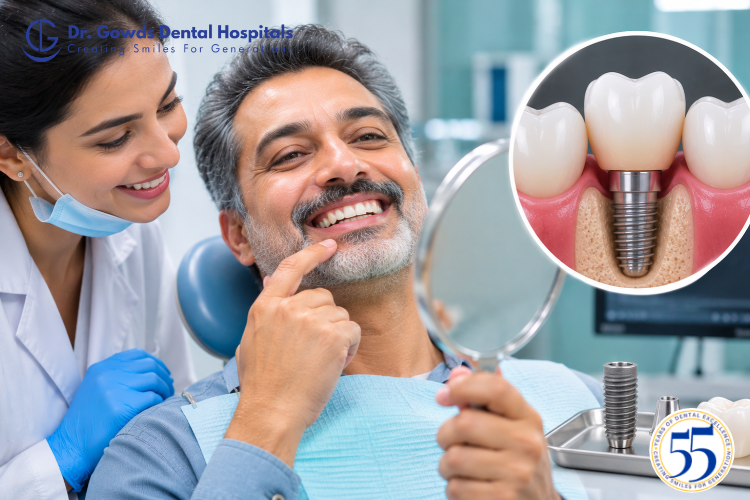
Depending on the dental requirements, a plan may include treatments such as crowns, bridges, dentures, implants, root canal treatment, and tooth replacement. The exact combination varies from patient to patient.
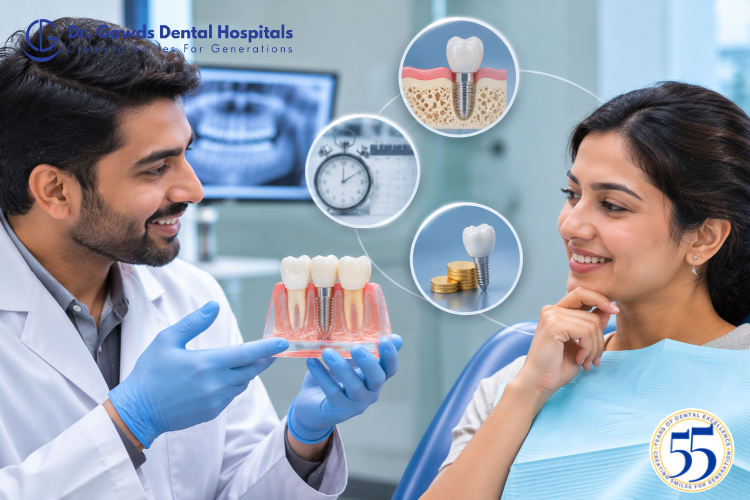
The treatment timeline depends on the number and type of procedures involved. Some treatment plans may be organized into multiple stages and appointments. The dentist can provide a more specific timeline after assessment.
Yes, treatment planning can be organized into stages depending on the individual’s dental requirements. The dentist can explain which concerns should be addressed first and how subsequent stages fit into the overall plan.
It can be useful to bring information about current medications, previous dental treatments, existing dentures or restorations, and a list of current dental concerns and questions.
No. Full mouth rehabilitation refers to a comprehensive treatment-planning approach for multiple dental concerns. Dentures may be one component of a treatment plan, but they are not synonymous with full mouth rehabilitation.
 Gachibowli Branch