

Schedule Appointment


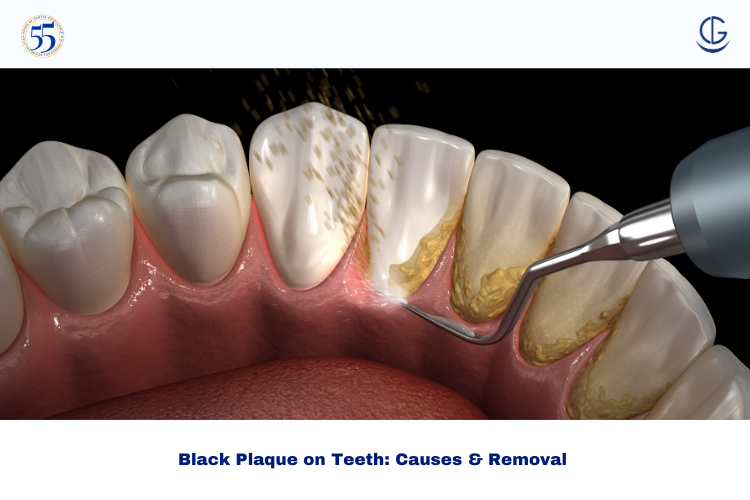
Not all dark deposits on teeth are cavities. In many cases, the problem is actually black plaque on teeth — a type of stubborn discoloration caused by bacteria, tartar buildup, iron compounds, or external staining.
At Dr Gowds Dental Hospital, dentists frequently treat patients with black plaque buildup, black tartar, and dark stains caused by chromogenic bacteria, smoking, poor oral hygiene, and dietary factors. While black plaque is usually not dangerous on its own, it can affect appearance, contribute to bad breath, and sometimes signal deeper oral hygiene issues.
This guide explains what black plaque on teeth is, what causes it, how dentists remove it, and when dark discoloration may indicate something more serious.
Black plaque on teeth refers to dark-colored bacterial deposits that accumulate on the tooth surface, especially near the gumline.
Unlike simple yellow plaque, black plaque often appears as:
In some cases, black plaque hardens into tartar (calculus), making professional cleaning necessary.
Several factors can contribute to black plaque formation.
One of the most common causes of black plaque on teeth is chromogenic bacteria.
These bacteria produce dark pigments by reacting with iron found in saliva. The result is a black line or dark stain that forms near the gumline.
Chromogenic bacteria are more common in:
Despite the appearance, this type of black plaque is usually not a sign of tooth decay.
Plaque that is not removed regularly can harden into tartar and trap external stains.
Over time, this buildup may appear:
Poor brushing and flossing habits increase plaque accumulation significantly.
Iron-containing medications and supplements can contribute to blackening of teeth.
Liquid iron supplements especially may stain teeth if oral hygiene is inadequate.
This type of staining is common in:
Smoking deposits tar and nicotine onto tooth surfaces.
Over time, these stains mix with plaque and tartar, causing dark brown or black discoloration.
Smoking also increases:
Dark-colored foods and beverages may contribute to black plaque buildup, especially when plaque is already present.
Common staining foods include:
These stains tend to adhere more strongly to rough plaque-covered surfaces.
When plaque hardens into tartar beneath the gums, it may appear black.
Black tartar is different from surface stains because it often develops below the gumline and may indicate gum disease.
Unlike soft plaque, tartar cannot be removed by brushing alone.
Black plaque itself is usually painless, but accompanying symptoms may include:
If pain or swelling is present, the problem may involve decay or gum infection rather than simple plaque.
Black plaque on teeth is not always harmful, but it should not be ignored.
In some cases, it is purely cosmetic. However, persistent plaque buildup increases the risk of:
Black tartar beneath the gums may also contribute to periodontal disease if untreated.
At Dr Gowds Dental Hospital, dentists use professional cleaning techniques to safely remove black plaque and tartar buildup.
Scaling removes plaque and tartar deposits from above and below the gumline.
Ultrasonic devices break down hardened tartar safely and effectively.
Polishing smooths the tooth surface and helps reduce future stain buildup.
If plaque extends below the gums, deeper periodontal cleaning may be necessary.
Specialized stain-removal systems may be used for stubborn surface discoloration.
Good oral hygiene and regular dental cleanings help reduce recurrence.
Patients prone to chromogenic bacterial staining may require more frequent cleanings.
Black plaque on teeth is a common dental issue caused by chromogenic bacteria, tartar buildup, smoking, iron supplements, and external stains. While some cases are mainly cosmetic, persistent plaque accumulation can increase the risk of gum disease, bad breath, and tooth damage if left untreated.
At Dr Gowds Dental Hospital, experienced dentists provide advanced plaque and tartar removal treatments using modern scaling and polishing techniques designed to restore cleaner, healthier teeth comfortably and safely.
If you notice black buildup near your gums or persistent tooth discoloration, an early dental evaluation can help identify the cause and prevent more serious oral health problems.
Visit us at-
Dr gowds dental hospital Nanakramguda
Dr gowds dental hospital Gachibowli
Dr gowds dental hospital madhapur
Black plaque on teeth is commonly caused by chromogenic bacteria, tartar buildup, smoking, iron supplements, and staining foods or drinks.
No. Black plaque is usually surface buildup or staining, while tooth decay involves damage to the tooth structure. However, both require dental evaluation.
Soft plaque may improve with brushing, but hardened black tartar usually requires professional dental cleaning.
Black plaque itself may be cosmetic in some cases, but plaque and tartar buildup increase the risk of cavities, bad breath, and gum disease.
Dentists remove black plaque using professional scaling, ultrasonic cleaning, polishing, and deep-cleaning procedures depending on the severity of buildup.


 Gachibowli Branch