

Schedule Appointment



Invisalign attachments are small tooth-coloured shapes bonded to certain teeth to help clear aligners move teeth more precisely. They are a normal part of many Invisalign treatments, usually do not cause significant pain, and are designed to be as discreet as possible.
Many patients are surprised when they learn that Invisalign treatment sometimes involves more than just clear aligners. If your dentist mentions attachments, buttons, or “bumps” on your teeth, you may wonder whether they’ll be noticeable or uncomfortable.
The good news is that Invisalign attachments are common, highly effective, and far less visible than most people expect.
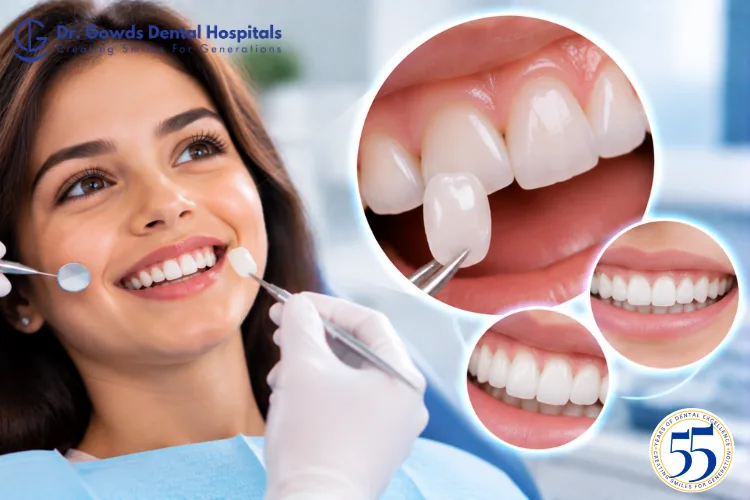
Invisalign attachments are small pieces of tooth-coloured composite resin bonded directly to specific teeth during treatment.
They act like tiny handles that allow the aligners to grip the teeth more effectively and apply controlled forces in precise directions.
Without attachments, certain tooth movements would be difficult or even impossible to achieve using clear aligners alone.
Think of attachments as additional anchor points that help your aligners do their job more efficiently.
Clear aligners work by applying gentle pressure to move teeth gradually. However, some movements require extra leverage.
Your orthodontist may recommend Invisalign attachments for:
Attachments make these movements more predictable and can help reduce overall treatment time.
Most Invisalign attachments are:
Depending on the movement required, attachments may be:
The exact size and shape are determined using Invisalign’s digital treatment planning software.
One of the most common concerns patients have is whether Invisalign attachments will be noticeable.
The honest answer is: they are slightly visible, but far less noticeable than traditional braces.
Several factors influence visibility:
Attachments on front teeth are naturally more noticeable than those placed on premolars or molars.
Larger attachments may be easier to see than smaller ones.
Because attachments are made from tooth-coloured composite resin, they generally blend well with natural teeth.
In bright lighting or close-up photographs, attachments may be visible, especially without aligners in place.
For most people, attachments are not obvious during everyday conversations.
To some extent, yes.
Orthodontists often try to place attachments strategically to minimize visibility whenever possible.
However, treatment effectiveness always comes first.
If an attachment is required on a front tooth to achieve a specific movement, your orthodontist may recommend keeping it there rather than compromising treatment results.
In many cases, attachments can be positioned on:
The exact placement depends on your individual treatment plan.
The attachments themselves do not hurt because they are bonded to the tooth surface.
However, you may experience mild discomfort from:
When attachments begin helping the aligners move teeth, temporary pressure or soreness may occur.
Attachments allow aligners to fit more tightly, which can make new trays feel snug for the first few days.
Some patients notice minor rubbing against the inside of the cheeks during the first week.
Most discomfort is temporary and improves as your mouth adapts.
For most patients:
The discomfort is generally much milder than what patients experience with traditional braces adjustments.
The process is quick, painless, and typically completed during a routine appointment.
Your teeth are cleaned and dried.
A special Invisalign template is used to position the attachments accurately.
Tooth-coloured composite material is placed into the attachment moulds.
A curing light hardens the material.
The attachments are polished and checked for accuracy.
The entire procedure usually takes less than an hour.
Yes, although it is uncommon.
Attachments may detach due to:
If an attachment comes off, contact your dentist or orthodontist.
Missing attachments can affect tooth movement and treatment progress.
Patients often find aligner removal slightly more difficult after attachments are placed.
Helpful tips include:
Most patients become comfortable with the process within a few days.
Yes.
Since aligners are removed before eating, attachments generally do not restrict your diet.
However, attachments can feel slightly rough initially.
Avoid habits such as:
These habits increase the risk of attachment damage.
The composite material itself can accumulate stains over time.
Common causes include:
Maintaining good oral hygiene helps keep attachments looking discreet throughout treatment.
Not every Invisalign patient requires attachments.
Minor alignment cases may be completed without them.
However, attachments are commonly recommended because they:
In many cases, attachments are one of the reasons Invisalign can successfully treat moderate and complex orthodontic problems.
At Dr. Gowds Dental Hospital, Invisalign treatment is planned using advanced digital smile analysis and customized treatment protocols.
Under the guidance of Prof. Dr. M.S. Gowd and an experienced orthodontic team, patients receive comprehensive assessments to determine whether Invisalign attachments are necessary and how they can be positioned for optimal results and aesthetics.
Every treatment plan is designed to balance effective tooth movement with patient comfort and smile appearance.
Our Branches:
Dr gowds dental hospital Nanakramguda
Dr gowds dental hospital Gachibowli
Dr gowds dental hospital madhapur
Invisalign attachments may be small, but they play a major role in helping clear aligners achieve accurate and predictable tooth movement. While they can be slightly visible and may cause temporary discomfort, most patients adapt quickly and find them far less noticeable than traditional braces.
If you’re considering Invisalign treatment and have concerns about attachments, an orthodontic consultation can help you understand exactly what your treatment will involve and whether attachments will be part of your personalized plan.
Invisalign attachments help aligners grip teeth more effectively and perform complex tooth movements such as rotations, bite corrections, and gap closure.
The attachments themselves do not hurt, but mild pressure or soreness may occur as teeth begin moving. This usually settles within a few days.
They are slightly visible up close but are far less noticeable than traditional braces because they are made from tooth-coloured composite material.
In some cases, attachments can be placed on less visible teeth or surfaces. However, placement is primarily determined by treatment requirements.
No. Some simple cases can be treated without attachments, while more complex tooth movements often require them for predictable results.
 Gachibowli Branch