

Schedule Appointment

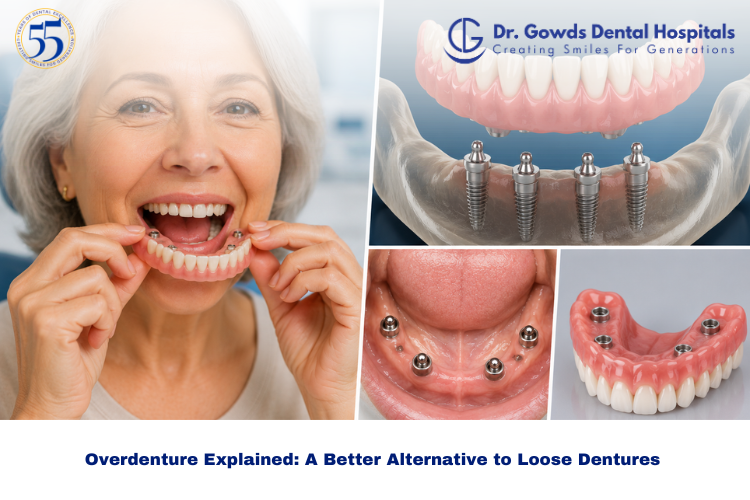
An overdenture is a removable dental prosthesis that fits over natural teeth, tooth roots, or dental implants for improved stability and function. It offers a more secure alternative to conventional dentures and is often recommended for patients who have lost multiple or all teeth.
For people struggling with loose dentures, difficulty chewing, or reduced confidence while speaking, an overdenture can provide a significant improvement in comfort and quality of life.
At Dr Gowds Dental Hospitals, our experienced dental specialists provide advanced overdenture solutions tailored to each patient’s needs, helping restore a natural-looking smile, improved chewing efficiency, and greater confidence.
An overdenture is a specially designed denture that attaches to remaining tooth roots or dental implants rather than resting entirely on the gums.
Unlike traditional dentures, which rely mainly on suction and soft tissue support, overdentures gain additional stability from underlying support structures.
This results in:
Overdentures are commonly used for both upper and lower arches.
The overdenture connects to supporting structures through specialized attachment systems.
Depending on the treatment plan, support may come from:
The denture can be removed for cleaning but remains secure during daily activities.
In some cases, a few healthy natural tooth roots can be preserved and modified to support an overdenture.
Benefits include:
However, the supporting teeth must remain healthy and disease-free.
An implant-supported overdenture is the most common modern overdenture option.
Dental implants are placed into the jawbone and act as stable anchors for the denture.
Benefits include:
Most lower overdentures are supported by two to four implants, while upper overdentures may require four or more implants.
In this system, implants are connected using a custom metal bar.
The overdenture snaps securely onto the bar.
Advantages include:
This option is often recommended for patients requiring maximum denture retention.
Locator attachments are among the most popular overdenture systems.
Small connectors attached to implants allow the denture to snap into place securely.
Benefits include:
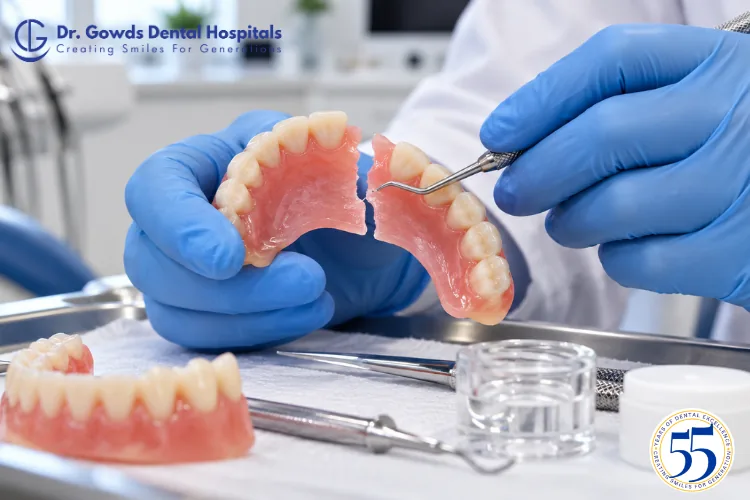
Many patients find traditional dentures frustrating because they can become loose over time.
An overdenture helps address these concerns.
The denture remains more secure during:
Patients can often enjoy a wider range of foods compared to conventional denture wearers.
Implants help stimulate the jawbone and reduce ongoing bone loss.
Less movement means fewer sore spots and less irritation.
Many patients feel more comfortable in social and professional situations.
| Feature | Overdenture | Traditional Denture |
| Stability | High | Moderate |
| Retention | Implant or tooth supported | Gum supported |
| Chewing Efficiency | Better | Lower |
| Bone Preservation | Better | Limited |
| Comfort | Improved | Variable |
| Denture Movement | Minimal | More common |
Many patients wonder whether they should choose an overdenture or a fixed implant bridge.
The best option depends on your oral health, bone availability, lifestyle, and treatment goals.
In many cases, yes.
Patients with moderate bone loss may still qualify for implant-supported overdentures.
Depending on the amount of available bone, your dentist may recommend:
Advanced imaging helps determine the most appropriate approach.
Your dentist will perform:
Dental implants are surgically inserted into the jawbone.
The implants integrate with the bone through osseointegration.
Locator or bar attachments are connected to the implants.
A custom overdenture is created and fitted securely.
The lifespan varies depending on:
Implants can last for many years when properly maintained.
The overdenture itself may require adjustments, relining, or replacement over time.
Patients often choose implant-supported overdentures because they offer:
For many patients, this treatment represents an excellent balance between function, comfort, and affordability.
An overdenture offers a practical and effective solution for patients seeking greater stability than traditional dentures without committing to a fully fixed implant bridge. By combining the benefits of dental implants with the convenience of a removable prosthesis, overdentures can dramatically improve chewing ability, speech, comfort, and confidence.
If you are struggling with loose dentures or missing teeth, a consultation with an experienced implant dentist can help determine whether an overdenture is the right option for restoring your smile and quality of life.
Visit us at-
Dr gowds dental hospital Nanakramguda
Dr gowds dental hospital Gachibowli
Dr gowds dental hospital madhapur
An overdenture is a removable denture that fits over natural tooth roots or dental implants for improved stability and function.
In many cases, yes. Overdentures provide better retention, improved chewing ability, and greater comfort compared to traditional dentures.
Most lower overdentures require two to four implants, while upper overdentures may require four or more depending on bone availability and treatment goals.
Yes. Implant-supported overdentures are designed to be removed by the patient for cleaning and maintenance.
With proper care and regular dental visits, implant-supported overdentures can provide many years of successful function. Implants themselves often last significantly longer than the denture component.
 Gachibowli Branch