

Schedule Appointment


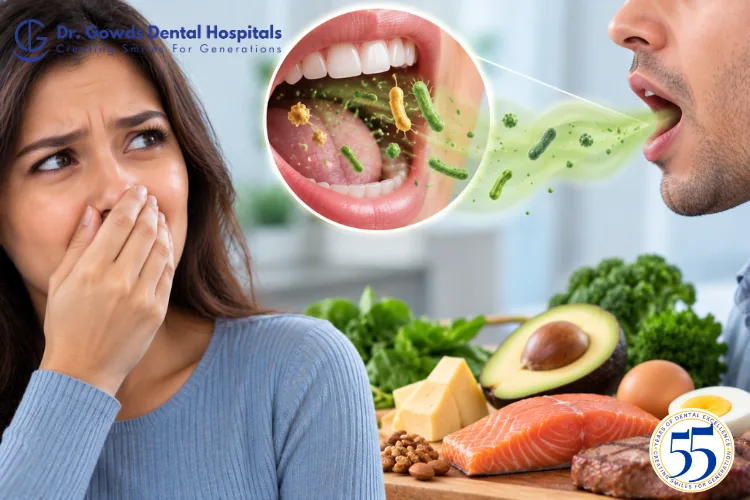
Starting a low-carb or ketogenic diet can bring changes you expect, such as weight loss or different energy levels. One change that may be less welcome is keto breath: a noticeable fruity, sweet or chemical-like smell on the breath.
Keto breath happens because the body begins using more fat for energy when carbohydrate intake is very low. This produces ketones, including acetone, which can be released through the lungs and change the smell of your breath.
At Dr Gowds Dental Hospitals in Hyderabad, we also recognise that not every case of bad breath is caused by diet. Plaque, gum disease, cavities, dry mouth and tongue bacteria can also cause persistent odour.
Keto breath is a temporary change in breath odour that can occur when the body enters ketosis. Ketosis is a metabolic state in which the body relies more heavily on fat and produces ketones for energy.
One of these ketones is acetone. Acetone can be exhaled through the lungs, which is why a person may notice a distinctive smell when following a strict ketogenic or very-low-carbohydrate diet.
People describe keto breath in different ways. It may smell:
The smell can be noticeable even when the teeth and gums are healthy.
When carbohydrate intake falls significantly, the body changes how it uses fuel. The liver produces ketone bodies, including acetone, as fat is broken down for energy.
The extra acetone can leave through the breath. This is the main reason low-carb diets can cause bad breath.
Keto breath is therefore different from ordinary halitosis caused by bacteria around the teeth, gums or tongue.
During the early stages of a ketogenic diet, changes in fluid balance may contribute to dehydration in some people. If you are not drinking enough water, your mouth can become dry.
Saliva helps wash away food particles and bacteria. When saliva decreases, odour-producing bacteria can become more noticeable. Dry mouth can therefore make keto breath seem stronger or contribute to bad breath for another reason.
Not necessarily.
Keto breath can occur when someone is in nutritional ketosis, but breath odour alone cannot reliably tell you how deeply you are in ketosis or whether a diet is producing a desired health result.
It is better to view the smell as one possible effect of a very-low-carbohydrate diet rather than as a measure of diet success.
Keto breath may become less noticeable as the body adapts, but several oral-care habits can help manage the odour.
Good hydration supports normal saliva production and helps prevent dry mouth. Keep water available throughout the day and pay attention to signs of dehydration.
The tongue can collect bacteria, food debris and other material that contributes to bad breath. Gently clean the tongue with a toothbrush or tongue cleaner as part of your daily oral-care routine.
Brush your teeth twice daily with fluoride toothpaste. Brushing removes plaque and food debris that can contribute to ordinary halitosis, even if ketosis is the original reason for the unusual smell.
Food trapped between teeth can feed bacteria and contribute to odour. Daily flossing or another dentist-recommended interdental cleaning method can help keep these areas clean.
Chewing sugar-free gum can stimulate saliva flow and may temporarily improve breath freshness, particularly when your mouth feels dry.
Mints and mouth fresheners may mask an odour without addressing its cause. If bad breath remains persistent, it is better to find out whether there is an underlying dental problem.
There is no fixed duration.
For some people, keto breath is most noticeable when they first reduce carbohydrates and may become less obvious as the body adapts. For others, the smell can continue while they maintain a very low-carbohydrate intake.
The duration can also be influenced by hydration, saliva production, oral hygiene and other causes of bad breath.
If the odour is persistent, very strong or accompanied by dental symptoms, do not automatically assume that the ketogenic diet is responsible.
The smell alone is not enough to make a diagnosis, but the context can provide clues.
Keto breath is commonly associated with a recent or ongoing very-low-carbohydrate diet and may have a fruity or acetone-like smell.
Dental-related bad breath is more often associated with plaque, gum disease, tongue bacteria, cavities, food trapping or poor oral hygiene. It may continue regardless of whether you are following a keto diet.
Other factors can include dry mouth, smoking, certain foods, some medicines and some medical conditions.
Consider a dental check-up if:
These signs may indicate a dental problem that needs treatment rather than simply a diet-related breath change.
Keto breath during nutritional ketosis is not the same thing as diabetic ketoacidosis (DKA).
However, a fruity or acetone-like breath smell can also occur in DKA, which is a serious medical emergency, particularly in people with diabetes. Warning symptoms can include very high blood glucose, excessive thirst, frequent urination, nausea, vomiting, abdominal pain, deep or rapid breathing, marked weakness or confusion.
If fruity breath occurs with these symptoms, seek urgent medical care rather than treating it as ordinary keto breath.
For people without diabetes, persistent bad breath should still be assessed if it does not improve with good oral hygiene and hydration.
The smell itself does not mean that the diet is damaging your teeth.
However, some behaviours or side effects associated with dieting can affect oral health. Dry mouth can reduce saliva’s protective role, while frequent acidic drinks or poor oral hygiene may increase the risk of dental problems.
If your diet has changed significantly, continue brushing with fluoride toothpaste, clean between your teeth, stay hydrated and maintain regular dental check-ups.
You do not necessarily have to abandon a low-carb diet because of keto breath. Instead, pay attention to both your overall health and your oral health.
A practical routine includes:
If you are searching for the best dental hospital in Hyderabad, look for a clinic that evaluates the possible oral causes of bad breath instead of simply masking the odour.
Keto breath is a common breath change associated with ketosis. The main reason is the production of ketones, particularly acetone, which can be exhaled through the lungs. Dehydration and dry mouth may make the smell more noticeable.
Good hydration and consistent oral hygiene can help. However, persistent bad breath should not automatically be blamed on a low-carb diet. Gum disease, cavities, plaque, tongue bacteria and dry mouth are common oral causes that may require professional care.
If you are in Hyderabad and want to find out whether your bad breath is diet-related or linked to an oral health issue, Dr Gowds Dental Hospitals can help assess the cause and recommend appropriate care. Visit the branch most convenient for you in Nanakramguda, Gachibowli, Madhapur, koti .
Keto breath can have a fruity, sweet, metallic or acetone-like smell. Some people compare it with the smell of nail-polish remover. The odour is associated with acetone, a ketone produced during ketosis.
Staying hydrated, cleaning your tongue, brushing twice daily, cleaning between your teeth and using sugar-free gum can help manage keto breath. The smell may also become less noticeable as your body adapts to ketosis.
Keto breath can occur during ketosis because the body produces ketones such as acetone. However, breath odour alone cannot confirm how deeply someone is in ketosis or whether a ketogenic diet is producing a particular health benefit.
There is no fixed duration. Keto breath may be strongest when a person first starts a very-low-carbohydrate diet and may become less noticeable with adaptation. It can persist while someone remains in ketosis.
Yes. Brushing removes plaque and food debris, but it does not stop acetone from being produced during ketosis. Dry mouth can also make the odour more noticeable.
Keto breath caused by nutritional ketosis is generally a breath-odour change rather than an emergency. However, fruity breath accompanied by symptoms such as vomiting, abdominal pain, excessive thirst, deep breathing or confusion can occur with diabetic ketoacidosis and requires urgent medical attention.
See a dentist if bad breath persists for several weeks, returns frequently or occurs with bleeding gums, tooth pain, swollen gums, persistent dry mouth, loose teeth or a persistent bad taste. These symptoms may point to an oral health problem rather than keto breath alone.
 Gachibowli Branch