

Schedule Appointment


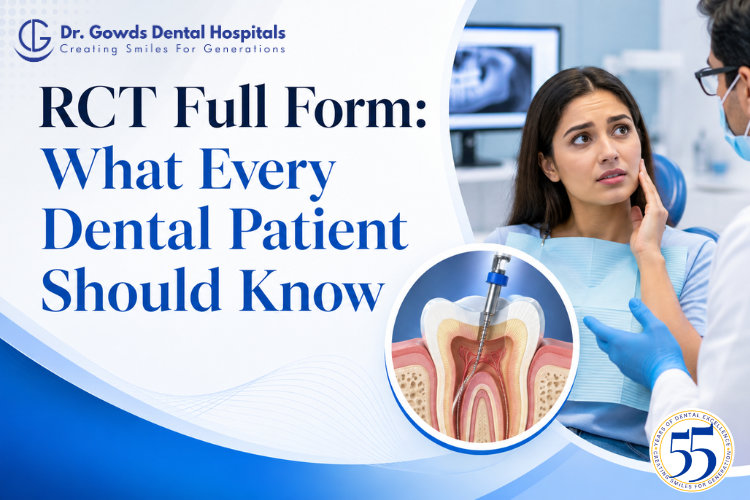
The RCT Full Form is Root Canal Treatment. It is a common dental procedure used to treat a tooth whose inner pulp has become infected or severely damaged due to deep decay, injury, or repeated dental procedures. The treatment removes the infected tissue, cleans the root canals, and seals the tooth to preserve it instead of extracting it. Understanding the meaning of RCT can help patients feel more informed and confident when discussing treatment options with their dentist.
At Dr. Gowds Dental Hospitals, our experienced dental team explains every treatment clearly, ensuring patients understand what RCT means, why it may be needed, and how it helps save natural teeth.
The RCT Full Form is Root Canal Treatment.
It is one of the most commonly performed procedures in modern dentistry and is designed to save a natural tooth that has been affected by infection or irreversible damage.
Many people hear their dentist say, “You need an RCT,” but may not know what the abbreviation actually means. Simply put, RCT is the short form of Root Canal Treatment, a procedure that removes infection from inside a tooth while preserving its outer structure.
To understand the RCT Full Form, it helps to know a little about tooth anatomy.
Each tooth has:
The pulp contains nerves, blood vessels, and connective tissue.
This pulp extends through narrow channels inside the roots of the tooth, known as root canals.
When infection reaches these canals, the dentist performs Root Canal Treatment—hence the name.
In dentistry, RCT refers specifically to the procedure performed to:
The purpose of RCT is not to remove the tooth but to save it.
Knowing the RCT Full Form is only part of the picture. Understanding why dentists recommend it is equally important.
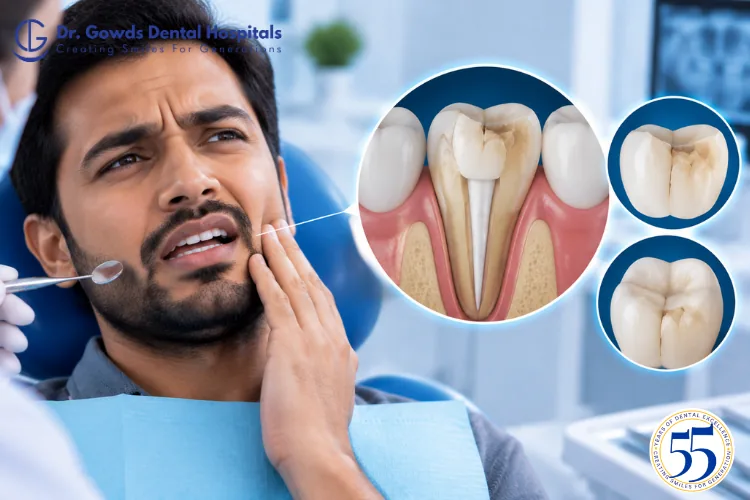
A dentist may advise Root Canal Treatment when the pulp inside the tooth has become inflamed or infected due to:
Without treatment, the infection can spread beyond the tooth and affect surrounding bone and gums.
Although the term Root Canal Treatment may sound intimidating, the procedure follows a systematic process.
The dentist will:
Modern RCT is designed to relieve pain caused by infection rather than create it.
Not every toothache requires Root Canal Treatment, but some symptoms may indicate damage to the pulp.
These include:
Sometimes, an infected tooth may not cause noticeable pain, which is why routine dental check-ups remain important.
Yes.
The terms Root Canal Treatment (RCT) and Root Canal Therapy are often used interchangeably.
Both describe the same procedure performed to remove infected pulp and preserve the natural tooth.
Some dental professionals prefer the term “Root Canal Therapy,” while many patients and clinics commonly use the abbreviation RCT.
Whenever possible, dentists aim to preserve natural teeth.
An RCT allows the infected tooth to remain in your mouth, helping to maintain:
Tooth extraction may become necessary if the tooth cannot be restored, but saving the natural tooth is generally the preferred option when clinically possible.
Many people misunderstand what RCT actually means.
False.
RCT is performed to save a tooth, not remove it.
Modern Root Canal Treatment is carried out under local anesthesia, making the procedure comfortable for most patients.
Not all toothaches require Root Canal Treatment.
Your dentist will perform an examination before recommending any treatment.
Although the pulp is removed, the tooth remains functional and continues to be supported by surrounding bone, gums, and ligaments.
Although not every case is preventable, you can reduce your risk by:
Preventive care often helps avoid deep decay and pulp infections.
Understanding the RCT Full Form is the first step toward making informed decisions about your dental health. RCT stands for Root Canal Treatment, a procedure that removes infection from inside a tooth while preserving the natural tooth whenever possible. Although the term may sound intimidating, modern RCT is a safe, predictable, and effective treatment that helps relieve pain and prevent tooth loss.
If your dentist has recommended an RCT or you are experiencing symptoms of a tooth infection, don’t delay seeking professional advice. At Dr. Gowds Dental Hospitals, our experienced team is committed to providing accurate diagnosis, clear guidance, and high-quality care to help you maintain a healthy smile.
Visit us at-
Dr gowds dental hospital Nanakramguda
Dr gowds dental hospital Gachibowli
Dr gowds dental hospital madhapur
The RCT Full Form is Root Canal Treatment, a dental procedure performed to remove infection from inside a tooth and preserve the natural tooth.
In dentistry, RCT refers to Root Canal Treatment, which treats infected or damaged dental pulp inside the tooth.
Yes. RCT is simply the abbreviated form of Root Canal Treatment.
A dentist may recommend RCT when the pulp inside the tooth is infected or severely damaged due to deep decay, trauma, or cracks.

 Gachibowli Branch