

Schedule Appointment


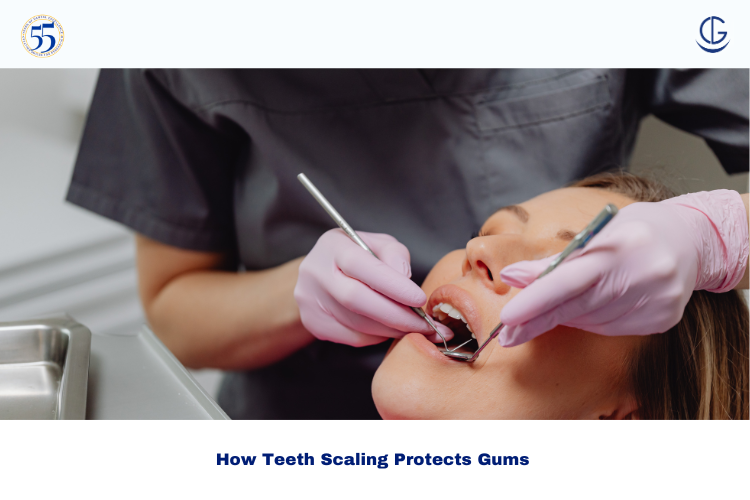
Scaling of teeth is one of the most important preventive dental procedures for maintaining healthy gums and clean teeth. Even with regular brushing, plaque and tartar gradually build up around the gumline and between teeth, leading to bad breath, bleeding gums, gum disease, and long-term oral health problems. At Dr. Gowds Dental Hospital, patients frequently ask whether scaling of teeth is painful, how often it should be done, and whether it damages enamel. The truth is that professional teeth scaling helps protect both your gums and teeth when performed correctly.
Teeth Scaling is a professional dental cleaning procedure that removes:
from the surface of the teeth and below the gumline.
Unlike regular brushing, professional scaling can remove hardened tartar that cannot be cleaned at home.
Dentists typically use:
to thoroughly clean the teeth and gums.
The primary goal of scaling of teeth is to prevent gum disease and maintain healthy oral tissues.
Plaque forms naturally on teeth every day.
If plaque is not removed properly, it hardens into tartar. Once tartar develops, brushing and flossing alone cannot remove it.
Tartar buildup may cause:
Scaling of teeth helps stop these problems before they become severe.
You may require scaling of teeth if you notice:
Some patients naturally develop tartar more quickly due to saliva composition, smoking, or oral hygiene habits.
Professional scaling of teeth offers several important oral health benefits.
One of the biggest benefits of scaling of teeth is preventing gum disease.
Tartar contains harmful bacteria that irritate the gums and trigger inflammation.
Removing these deposits helps:
Healthy gums are essential for long-term tooth stability.
Persistent bad breath is commonly linked to bacterial plaque and tartar buildup.
Scaling of teeth removes bacterial deposits responsible for unpleasant oral odour and improves overall oral freshness.
Bleeding gums are often a sign of gum inflammation.
Professional scaling removes the irritants causing inflammation, allowing the gums to heal naturally.
Mild bleeding during or after scaling is normal if the gums are already inflamed.
Even patients who brush regularly cannot fully remove tartar once it hardens.
Scaling of teeth helps clean areas that are difficult to reach with:
This significantly improves overall oral hygiene.
Advanced gum disease is one of the leading causes of tooth loss in adults.
By reducing bacterial buildup early, scaling of teeth helps protect the gums and supporting bone structures around the teeth.
The scaling of teeth procedure is usually simple and performed during a routine dental visit.
The dentist examines:
This helps determine the amount of cleaning required.
An ultrasonic scaler uses vibration and water spray to break apart tartar deposits.
This removes hardened buildup from:
In some cases, dentists use manual instruments for more precise cleaning in difficult areas.
After scaling, the teeth are often polished to:
For most patients, scaling of teeth causes only mild discomfort.
You may experience:
Patients with heavy tartar buildup or inflamed gums may feel slightly more discomfort during treatment.
If necessary, local anaesthesia may be used for sensitive patients.
Scaling of teeth is generally very safe, but some temporary side effects are common.
After tartar removal, teeth may feel temporarily sensitive to:
This usually improves within a few days.
Inflamed gums may bleed slightly during or shortly after scaling.
This improves as the gums heal and inflammation reduces.
Some patients experience mild soreness for 1–2 days after the procedure.
Maintaining good oral hygiene helps healing occur faster.
No — professional scaling of teeth does not damage healthy enamel.
This is one of the most common myths patients hear.
What people sometimes mistake for “damage” is:
In reality, scaling removes harmful bacterial deposits that would otherwise damage the gums and bone.
Most dentists recommend scaling of teeth every:
Some patients may require more frequent scaling if they have:
The ideal frequency depends on individual oral health needs.
When gum disease becomes more advanced, deeper cleaning procedures may be necessary.
This may include:
These treatments clean deeper below the gumline to remove bacterial infection around the tooth roots.
Early treatment is important because untreated gum disease can eventually lead to bone loss and tooth mobility.
Scaling of teeth can remove:
This may improve the appearance of the teeth and make them look cleaner.
However, it does not chemically whiten natural tooth colour like professional whitening treatments.
The cost of scaling of teeth depends on:
Routine scaling is generally one of the most affordable preventive dental procedures.
More advanced gum treatments may involve additional costs.
If you are experiencing bleeding gums, tartar buildup, bad breath, or gum sensitivity, the team at Dr. Gowd’s Dental Hospital can help assess your gum health and recommend the right professional cleaning and preventive dental care plan.
Visit us at-
Dr gowds dental hospital Nanakramguda
Dr gowds dental hospital Gachibowli
Dr gowds dental hospital madhapur
Most patients experience only mild discomfort or temporary sensitivity during scaling.
No. Professional scaling does not damage healthy tooth enamel.
Routine scaling usually takes around 30–60 minutes depending on tartar buildup.
Most patients benefit from scaling every 6 months.
Yes. Removing plaque and tartar helps reduce gum inflammation and bleeding.
Yes. Brushing alone cannot remove hardened tartar once it forms.
 Gachibowli Branch