
Schedule Appointment

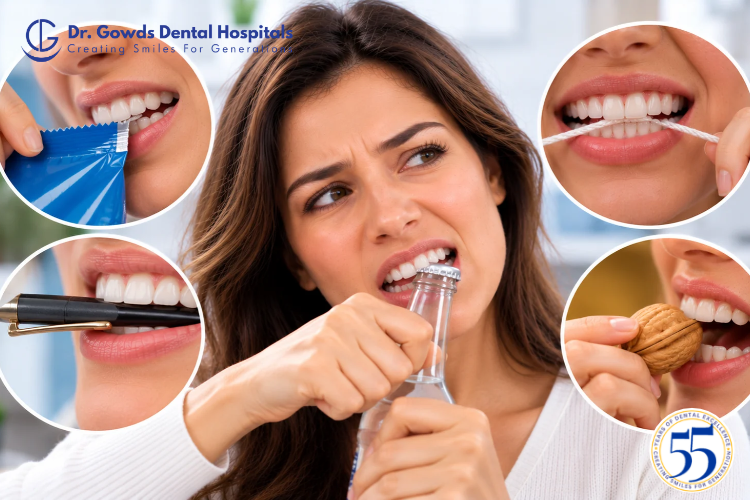
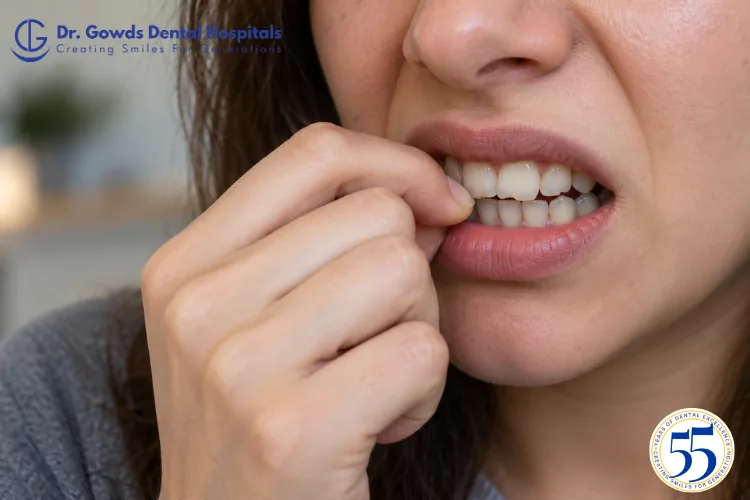
Opening a small packet with your teeth can feel like the quickest solution when scissors or a proper opener is not nearby. It may seem harmless, especially when it takes only a few seconds. But using teeth as tools puts them to work in a way they were never meant to be used.
Whether it is a food packet, plastic wrapper, bottle cap or thread, biting objects can place unnecessary pressure on individual teeth. At Dr Gowds Dental Hospitals in Hyderabad, we encourage people to think about simple everyday habits that can help protect their teeth over time.
The good news is that this habit is easy to change. Instead of reaching for your teeth, use the right tool for the job and avoid unnecessary pressure on your smile.
Noticed a chipped edge, rough tooth surface or other change after biting objects?
Using your teeth as tools is usually a habit rather than a deliberate decision. It often happens when something needs to be opened quickly.
Common examples include:
Because teeth are strong enough to bite through food, it can be tempting to assume they can handle other objects too. However, food and non-food objects behave very differently when force is applied.
A packet may also require an awkward biting angle, making the pressure less controlled.
When you use your teeth to open a packet, the force may be concentrated on one or two teeth instead of being distributed naturally while eating.
Biting an object often involves placing the edge of a tooth directly against something that is not designed to be bitten.
This can create unnecessary pressure on a small area. Repeating the habit may also make it easier to develop small changes to the tooth surface over time.
Some objects are much harder or less flexible than normal food. Bottle caps, plastic packaging, tags and other everyday items can require more force than expected.
The problem is not simply how hard the object feels. The angle, position and suddenness of the bite also matter.
A packet may suddenly tear while you are biting it. The unexpected movement can cause the teeth to meet abruptly or force the jaw into an uncomfortable position.
That is one reason why using teeth as tools is an unnecessary habit when a simple alternative is available.
Yes, using your teeth to open packets can contribute to tooth damage.
Enamel is the hard outer surface of a tooth. It protects the underlying tooth structure and forms the visible surface of your smile.
When teeth are repeatedly exposed to unnecessary pressure from non-food objects, problems such as:
may occur.
The exact effect can vary from person to person and depends on the object, amount of force and individual tooth condition.
The important point is simple: there is little benefit to putting your teeth through this extra stress when scissors, openers or your hands can do the job instead.
A small chip may seem like nothing more than a cosmetic change. You may even get used to the new shape of the tooth.
However, a chipped or rough edge can change how the tooth feels when you bite or run your tongue across it. It may also make you more aware of that tooth during everyday activities.
If you notice a new change after biting a packet, plastic object or another non-food item, it is better to have it looked at rather than continuing the same habit.
This does not mean every chipped tooth requires major treatment. The appropriate approach depends on what has happened and the condition of the tooth.
Opening packets with your teeth is only one example of treating teeth like tools.
Other habits worth avoiding include:
Some people unconsciously chew on pens or pencils while working or studying. Apart from being a non-food object, the repeated biting can put unnecessary pressure on the teeth.
Nail biting can become an automatic habit, particularly during periods of concentration or stress. Keeping your nails trimmed and finding another way to occupy your hands can help break the habit.
Using your teeth to hold keys, pins, clips or other objects may seem convenient when your hands are occupied. It is better to place the object down or use an appropriate alternative.
Bottle caps are designed to be opened using the correct method. Using teeth instead can put unnecessary force on individual teeth.
Plastic wrappers, tags, tape and food packets should be opened with your hands or suitable tools rather than your teeth.
The easiest way to stop using teeth as tools is to make the alternative just as convenient.
Keep simple items such as:
within easy reach.
For food packaging, look for the intended tear point or opening mechanism. If the packet is difficult to open, use a suitable tool instead of increasing the force of your bite.
A few extra seconds can be a better choice than turning an everyday task into an avoidable dental problem.
If you have noticed a chipped, rough or uncomfortable tooth after using it to open objects, you can contact Dr Gowds Dental Hospitals to discuss whether a dental evaluation is appropriate.
Good dental care is not limited to brushing and regular dental visits. Everyday habits also matter.
The simplest rule is also the easiest to remember: teeth are for eating, not opening, cutting or holding objects.
Many people do not realise how often they bite pens, nails, packaging or other objects. Becoming aware of the habit is the first step toward changing it.
If you regularly open packages at work, home or while travelling, keep the appropriate tool nearby. Convenience can make it easier to avoid reaching for your teeth.
If you are unsure whether your teeth can bite through something, do not use them to find out. Choose another method.
If you notice a new chip, rough edge or change in the way a tooth feels, avoid repeating the habit that may have contributed to it and consider getting the tooth checked.
It is easy to think of teeth as extremely strong because they handle everyday chewing. But strength does not mean they should be used for tasks such as cutting plastic, tearing packets or opening bottles.
The safest approach is simple: use the right tool for the right job.
Breaking the habit of using teeth as tools is a small change, but it can help you avoid unnecessary pressure on your teeth and protect your smile as part of your everyday routine.
Dr Gowds Dental Hospitals provides dental care across its Nanakramguda, Gachibowli, Madhapur, kotilocations.
Using teeth to open packets is best avoided. The biting force can be concentrated on individual teeth and may contribute to chips, cracks or changes to the tooth surface.
Yes. Repeatedly biting non-food objects can put unnecessary pressure on the tooth surface and may contribute to enamel or tooth damage.
Teeth are designed for biting and chewing food. Using them to open, cut, pull or hold non-food objects can expose them to unnecessary force.
It can. The amount of force, the object being bitten and the condition of the tooth can all affect what happens. If you notice a new chip after biting plastic, consider having the tooth examined.
Use scissors, a packet opener or another tool designed for the job. For bottles and other containers, use the appropriate opener rather than your teeth.
Habits such as biting pens, chewing on hard objects, opening bottles with teeth, biting packaging and holding objects between the teeth can put unnecessary pressure on them.
Stop using the tooth as a tool and arrange a dental evaluation if the change is noticeable or concerning. A dentist can assess the tooth and explain the appropriate next step.
Start by identifying when you do it most often. Keep scissors, openers or other suitable tools nearby so that using an alternative becomes easier and more convenient.
 Gachibowli Branch