

Schedule Appointment

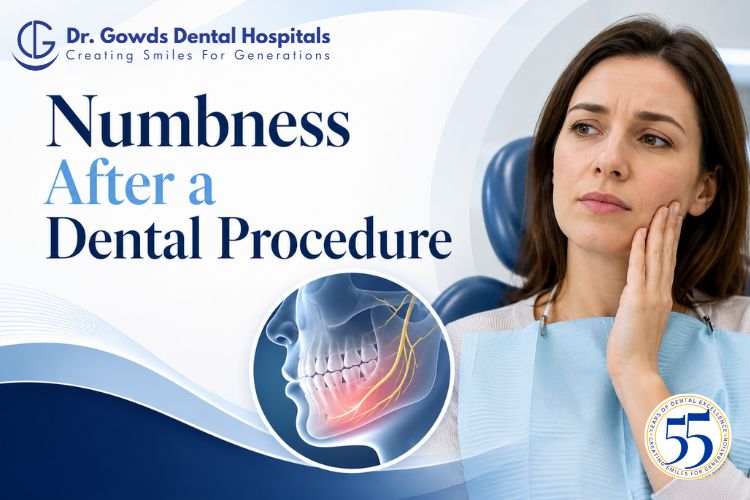
Numbness after a dental procedure is usually a normal and temporary effect of local anesthesia used during treatments such as fillings, root canals, tooth extractions, dental implants, and wisdom tooth removal. In most cases, the numbness wears off within 2 to 5 hours. However, if numbness lasts longer than expected, worsens, or is accompanied by pain, tingling, or difficulty speaking or eating, it may indicate irritation or injury to a nearby nerve and should be evaluated promptly by a dentist.
At Dr. Gowds Dental Hospitals, our specialists use advanced diagnostic techniques and precise anesthesia methods to minimize the risk of nerve-related complications while ensuring comfortable dental care.
During many dental treatments, dentists administer a local anesthetic to temporarily block pain signals from the treatment area.
The anesthetic prevents nerves from sending pain signals to the brain, allowing procedures to be completed comfortably.
As a result, patients commonly experience temporary numbness in the:
This temporary numbness is expected and gradually disappears as the anesthetic wears off.
The duration of numbness after a dental procedure depends on several factors.
These include:
Typical recovery times are:
| Procedure | Typical Duration of Numbness |
| Dental filling | 2–3 hours |
| Root canal treatment | 2–4 hours |
| Dental crown preparation | 2–4 hours |
| Tooth extraction | 3–5 hours |
| Wisdom tooth removal | 4–6 hours |
| Dental implant surgery | 3–5 hours |
Some patients may experience mild tingling for a short period after sensation begins to return.
Several dental treatments require local anesthesia.
Even routine fillings often require numbing to ensure patient comfort.
Root canal therapy typically involves local anesthesia because the procedure is performed close to the dental nerve.
Simple and surgical extractions commonly produce temporary numbness around the treatment area.
Wisdom tooth removal frequently requires anesthesia near major nerves, making temporary numbness more noticeable.
Implant surgery often involves local anesthesia to ensure a pain-free procedure.
Periodontal procedures also require local anesthesia around the gums.
Although numbness after a dental procedure is usually harmless, certain symptoms require professional evaluation.
Contact your dentist if:
Persistent numbness is uncommon but should never be ignored.
Several factors may contribute to prolonged numbness after a dental procedure.
Some anesthetics naturally last longer than others.
Patients with slower metabolism may also experience prolonged numbness without any complications.
During procedures close to major nerves, temporary irritation may occur.
This is more common after:
Most cases improve gradually over several weeks.
Swelling after surgery may place temporary pressure on nearby nerves.
As swelling decreases, sensation usually returns.
Although uncommon, a nerve may occasionally be stretched or injured during treatment.
The nerves most commonly involved include:
Inferior Alveolar Nerve
This nerve supplies sensation to:
Lingual Nerve
The lingual nerve provides sensation to:
Temporary injury is more common than permanent damage.
Treatment depends on the underlying cause.
Many cases of temporary nerve irritation improve naturally over several weeks or months.
Regular monitoring helps assess recovery.
Your dentist may recommend medications to reduce inflammation or manage nerve-related discomfort when appropriate.
If swelling or infection is contributing to nerve pressure, treating the underlying condition may improve symptoms.
In rare cases of significant or persistent nerve injury, referral to an oral and maxillofacial surgeon or another specialist may be recommended for further evaluation and management.
Until feeling returns:
Chewing while numb increases the risk of biting your lip, cheek, or tongue.
Choose foods that require minimal chewing.
Reduced sensation increases the risk of burns.
Avoid repeatedly touching or biting the numb area to check whether sensation has returned.
Carefully follow all instructions provided by your dentist after the procedure.
Although some numbness is an expected part of dental treatment, the risk of prolonged numbness can be minimized by:
Choosing an experienced dental team helps reduce the likelihood of complications.
Experiencing numbness after a dental procedure is usually a normal response to local anesthesia and typically resolves within a few hours. During this time, it’s important to avoid chewing, protect the numb area from accidental injury, and follow your dentist’s post-treatment instructions.
However, numbness that persists beyond the expected recovery period, especially if it is accompanied by tingling, burning, altered taste, or difficulty speaking or eating, should not be ignored. Although permanent nerve injury is rare, early evaluation can help identify the cause and guide appropriate management.
If you have concerns about lingering numbness after dental treatment, the experienced team at Dr. Gowds Dental Hospitals can provide a thorough assessment and personalized care to help ensure the best possible outcome.
Visit us at-
Dr gowds dental hospital Nanakramguda
Dr gowds dental hospital Gachibowli
Dr gowds dental hospital madhapur
Most numbness after a dental procedure lasts between 2 and 5 hours, depending on the type of anesthetic used and the treatment performed.
Yes. Temporary numbness is common after wisdom tooth surgery because anesthesia is administered near major nerves. However, numbness lasting longer than expected should be evaluated.
You should contact your dentist if numbness lasts more than 24 hours, worsens, or is associated with burning, persistent tingling, altered taste, or difficulty speaking or swallowing.
Nerve injury is uncommon, but it can occur during procedures performed close to major nerves, such as wisdom tooth removal or dental implant placement. Most cases are temporary and improve over time.
Avoid chewing, eat soft foods, stay away from very hot drinks, and be careful not to bite your lips, tongue, or cheeks until normal sensation returns. Regularly follow your dentist’s post-procedure instructions.
 Gachibowli Branch