

Schedule Appointment


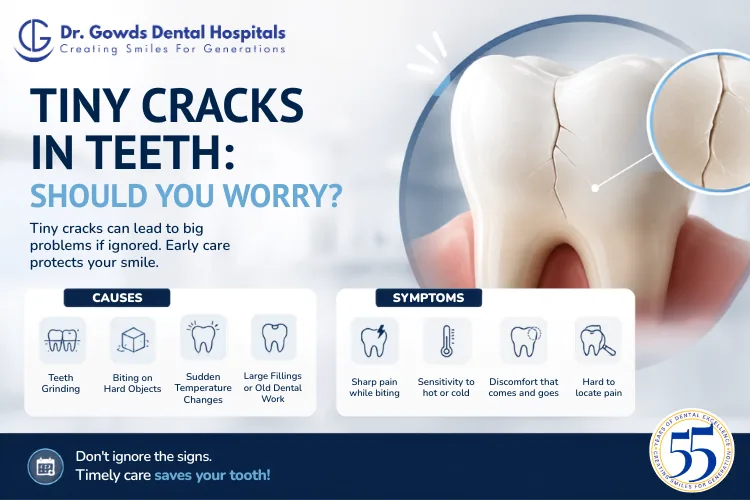
Noticing tiny cracks in teeth can be worrying, especially when they appear suddenly or become more visible under bright light. The good news is that not every visible line means a tooth is seriously damaged.
Some lines are superficial changes in the outer enamel known as craze lines. These are common in adults and may not cause symptoms. Other cracks can extend deeper into the tooth and may cause sensitivity, pain while chewing, or eventually lead to part of the tooth breaking.
The appearance of a crack alone is not enough to determine its severity. Its depth, location, symptoms, and effect on the tooth all matter.
At Dr. Gowds Dental Hospitals, a dental examination can help determine whether a visible enamel line is harmless or requires treatment.
Small cracks may appear as:
Some cracks are easy to see, while others can be difficult to detect without professional examination.
Craze lines are very small cracks limited to the outer enamel.
They are relatively common and often:
Craze lines are different from deeper cracks that extend into the dentin or pulp.
However, if a line is accompanied by pain or sensitivity, it should be evaluated rather than assumed to be harmless.
Several factors can contribute to enamel cracks and deeper tooth fractures.
Teeth experience thousands of chewing cycles throughout life.
Over time, repeated chewing forces can contribute to small enamel lines.
This is one reason craze lines are more frequently noticed in adults.
Biting down on very hard foods can place significant force on the teeth.
Examples include:
Repeated exposure to excessive forces can contribute to cracks.
Bruxism, or teeth grinding and clenching, can place excessive pressure on teeth.
Over time, this may contribute to:
People who grind their teeth during sleep may not realize they are doing it.
Rapid changes between very hot and very cold foods may cause repeated expansion and contraction of tooth structures.
Occasional exposure is unlikely to cause a serious crack by itself, but repeated temperature stress may contribute to existing enamel defects becoming more noticeable.
Large fillings or restorations can sometimes alter how chewing forces are distributed through a tooth.
A heavily restored tooth may therefore be more vulnerable to fracture, particularly when subjected to substantial biting forces.
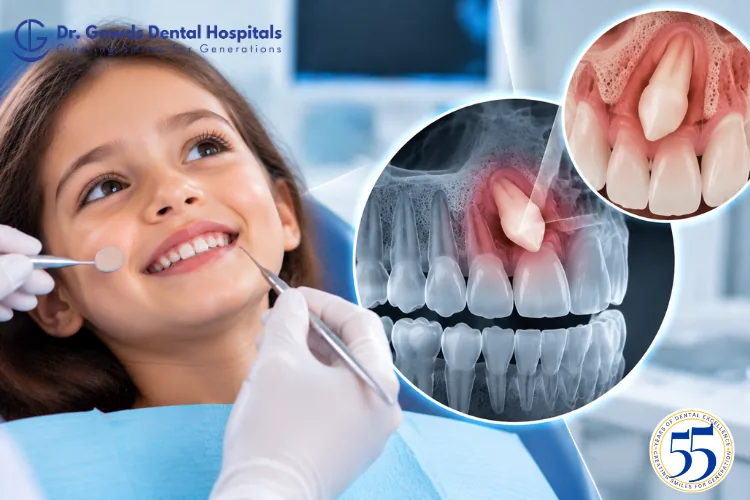
An accident, sports injury, fall, or direct impact to the mouth can cause a tooth to crack.
A crack caused by trauma may require prompt dental assessment, even when the tooth initially feels normal.
When a crack extends beyond the enamel, pressure from chewing can cause the cracked sections of the tooth to flex slightly.
This can irritate the tissues inside the tooth and produce pain.
Some patients notice discomfort particularly when they release their bite rather than when they first bite down.
This symptom should be evaluated by a dentist.
It depends on the type of crack.
These may not require treatment if they are simply craze lines and the tooth is healthy.
These can become more serious because the crack may extend into the dentin or pulp.
An untreated deeper crack can potentially lead to:
This is why persistent symptoms should not be ignored.
Dentists classify tooth cracks based on their location and extent.
These are superficial cracks limited to enamel.
They are often asymptomatic.
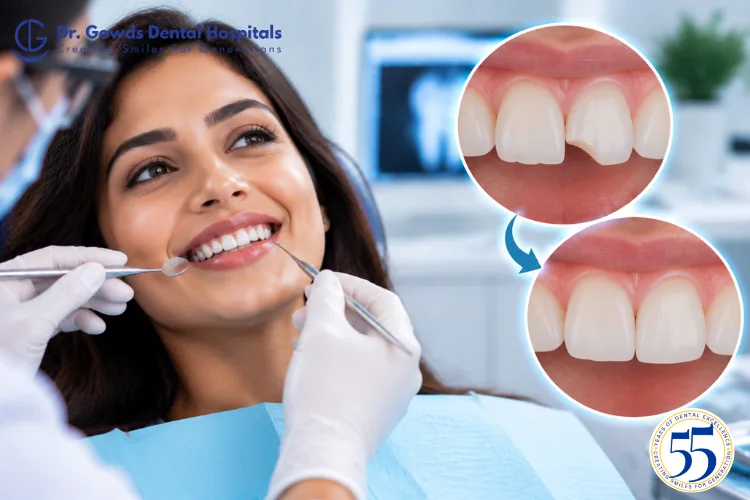
A portion of the chewing surface may break or crack, particularly around a large filling.
A crack may extend from the chewing surface toward the root.
The extent of the crack determines whether the tooth can be successfully restored.
A severely cracked tooth may eventually separate into distinct segments.
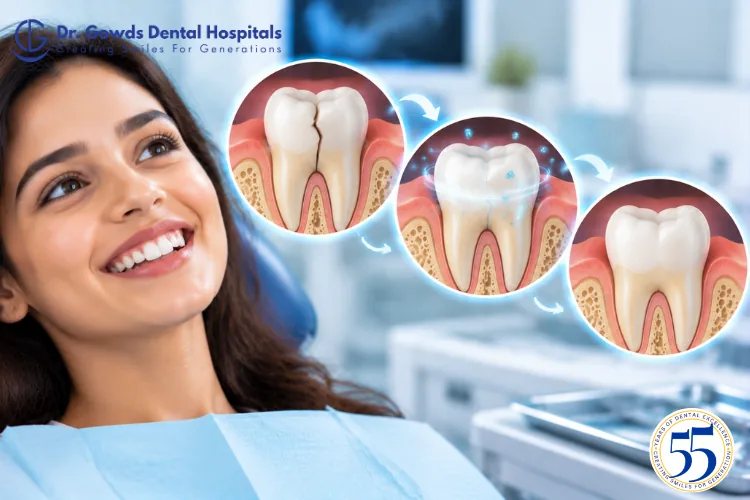
Treatment options depend on how much healthy tooth structure remains.
A crack can sometimes develop within the root.
These fractures may be difficult to detect and can be associated with localized gum swelling or infection.
You cannot prevent every enamel line, particularly those associated with normal aging.
However, you can reduce unnecessary stress on your teeth.
Ice can place excessive force on enamel and restorations.
Avoid using your teeth to open packages, cut materials, or hold objects.
If you grind or clench your teeth, discuss it with your dentist. A custom mouthguard may be recommended in appropriate cases.
Protective dental equipment can reduce the risk of traumatic tooth injuries during contact sports.
Routine examinations can identify weakened teeth, worn restorations, and other risk factors before they become more serious.
Tiny cracks in teeth are not always a reason for concern. Superficial craze lines are common and may simply reflect normal wear of the enamel over time. However, a crack accompanied by pain, sensitivity, chewing discomfort, or swelling may indicate deeper structural damage.
Because the appearance of a crack does not always reveal its depth, it is best to have a dentist assess any new or symptomatic crack.
If you notice hairline cracks in teeth or experience symptoms associated with a possible cracked tooth, consult the dental team at Dr. Gowds Dental Hospitals for an appropriate evaluation and treatment plan.
Visit us at-
Dr gowds dental hospital Nanakramguda
Dr gowds dental hospital Gachibowli
Dr gowds dental hospital madhapur
Small superficial enamel lines, known as craze lines, are relatively common, particularly in adults. They may not require treatment if the tooth is healthy and symptom-free.
Some superficial cracks may remain stable, while deeper structural cracks can progress. A dentist can determine whether monitoring or treatment is appropriate.
Front teeth can develop small enamel lines due to normal wear, biting forces, trauma, or habits such as using teeth to open objects. A dental examination can determine the cause.
Not always. Superficial craze lines may only require monitoring. Deeper cracks that cause symptoms may require restorative treatment.
Yes. A crack extending into deeper tooth layers can cause sensitivity to cold or other temperature changes, although cold sensitivity can also have several other causes.
A visible line is not necessarily dangerous. However, if it is new, associated with pain or sensitivity, or appears to be changing, have it evaluated by a dentist.
 Gachibowli Branch