

Schedule Appointment


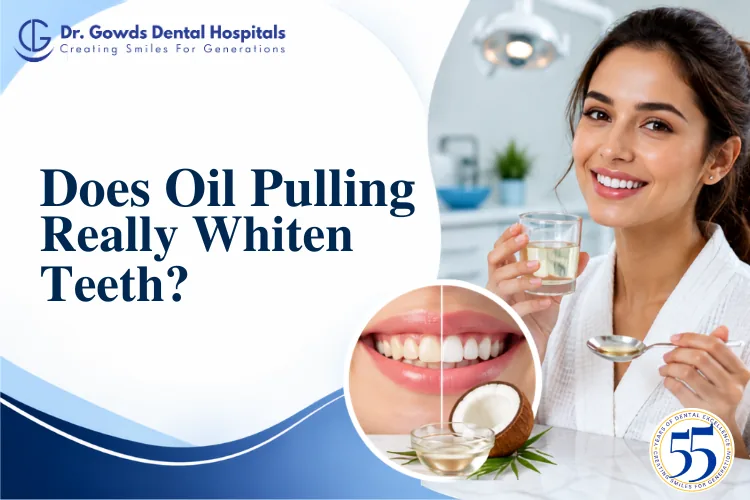
Oil pulling is a traditional oral-care practice that involves swishing edible oil around the mouth for a period of time before spitting it out. Coconut, sesame, and other edible oils are commonly used.
It has gained attention as a natural approach for improving oral cleanliness and making teeth appear brighter. This has led many people to ask: Does oil pulling actually whiten teeth?
The answer depends on what is meant by “whitening.”
Oil pulling may help reduce some debris and contribute to a cleaner-feeling mouth when used as part of an overall oral hygiene routine. However, it should not be considered a substitute for professional teeth whitening or routine brushing with fluoride toothpaste. It also cannot change the natural internal color of a tooth or reliably remove deeper discoloration.
Understanding the difference between cleaner-looking teeth, surface stain removal, and true tooth whitening is important before using oil pulling for cosmetic purposes.
Oil pulling involves placing a small amount of edible oil in the mouth and gently swishing it around the teeth and gums before spitting it out.
Commonly used oils include:
The practice is traditionally associated with oral hygiene.
People may use oil pulling because they believe it can help with:
However, oil pulling should be viewed as a supplementary practice rather than a replacement for established dental care.
Oil pulling should not be considered a proven teeth-whitening treatment.
Natural tooth color is determined by the structure of the tooth, including the enamel and dentin underneath it.
Swishing oil does not bleach the enamel or change the underlying color of dentin.
If teeth look slightly brighter after oil pulling, this may be related to removal of some loose debris or changes in the appearance of the tooth surface rather than true bleaching.
This distinction is important.
The terms “cleaning” and “whitening” are sometimes used interchangeably, but they are not the same.
Dental cleaning and daily oral hygiene remove plaque, food debris, and certain external deposits from the tooth surface.
Professional whitening treatments use peroxide-based ingredients to chemically lighten certain types of tooth discoloration.
Oil pulling does not work in the same way as a professional whitening treatment.
There are several possible reasons.
Swishing may help loosen some food particles and debris.
When the tooth surface is cleaner, the teeth may appear slightly brighter.
Oil pulling may contribute to oral cleanliness, but its effect should not be confused with professional removal of hardened tartar.
Someone who begins oil pulling may also become more conscious about brushing and other oral hygiene habits.
Improved overall oral care can make teeth look cleaner.
However, none of these effects mean that the natural color of the tooth has been bleached.
It depends on the type of stain.
Tooth discoloration can broadly be divided into extrinsic and intrinsic discoloration.
These occur on the outer surface of teeth.
Common causes include:
Some superficial deposits may become less noticeable when oral hygiene improves.
However, oil pulling should not be relied upon as a dedicated stain-removal treatment.
Intrinsic discoloration occurs within the tooth structure.
Possible causes include:
Oil pulling cannot bleach discoloration that originates inside the tooth.
A dentist can determine the cause of intrinsic discoloration and recommend an appropriate treatment.
Oil pulling may have some effect on oral microorganisms and plaque-related factors, but it should not replace mechanical plaque removal.
The most important daily methods for controlling plaque remain:
A toothbrush physically disrupts plaque from tooth surfaces, while fluoride provides additional protection against tooth decay.
No.
Floss and other interdental cleaning methods physically remove plaque and food debris from areas that a toothbrush cannot reach effectively.
Oil cannot reliably perform the same mechanical cleaning function between tightly contacting teeth.
Daily interdental cleaning remains important for maintaining gum health.
Edible oils themselves are not dental bleaching agents and are not generally used to chemically whiten enamel.
However, the way oil pulling is practised matters.
Aggressive swishing may be uncomfortable for some people, and swallowing large amounts of oil is not recommended.
Most importantly, oil pulling should not lead someone to reduce or stop brushing, flossing, fluoride use, or regular dental care.
Oil pulling should not be relied upon as a cavity-prevention method.
Tooth decay develops through a complex process involving bacterial acids, dietary carbohydrates, saliva, and the condition of the enamel.
Effective cavity prevention includes:
Oil pulling does not provide the same established protective role as fluoride.
If your main goal is to make your teeth visibly lighter, professional teeth whitening may be more appropriate than oil pulling.
A dentist can first determine the reason for discoloration.
Depending on the diagnosis, options may include:
Not every type of discoloration responds to whitening in the same way.
Oil pulling with an edible oil is generally considered a supplementary oral-care practice rather than a primary dental treatment.
However, it may not be suitable for everyone.
People who have difficulty controlling swallowing, for example, may need to avoid practices that involve keeping oil in the mouth for an extended period.
Children should not be encouraged to perform oil pulling without appropriate supervision and dental guidance.
If you choose to practise oil pulling, it should not replace established dental care.
A complete oral hygiene routine should still include:
Regular dental examinations should also be maintained.
Oil pulling for teeth may be used as a supplementary oral-care practice, but it should not be considered a replacement for brushing, fluoride, interdental cleaning, professional cleaning, or evidence-based teeth whitening.
Oil pulling may make the mouth feel cleaner and could potentially help reduce some surface debris, but it does not chemically bleach the enamel or reliably change the underlying color of teeth.
If your goal is a whiter smile, the first step is understanding why your teeth look discolored. Surface stains, intrinsic discoloration, enamel changes, and dental conditions require different approaches.
For persistent staining or a noticeable change in tooth color, a dental examination is a better starting point than relying solely on home remedies.
Visit us at-
Dr gowds dental hospital Nanakramguda
Dr gowds dental hospital Gachibowli
Dr gowds dental hospital madhapur
Oil pulling is not a proven tooth-whitening treatment. It may help the mouth feel cleaner and could remove some loose surface debris, but it does not bleach the natural color of the tooth.
There is no established timeframe because oil pulling is not a clinically established tooth-whitening method. Any perceived improvement may relate to surface cleanliness rather than actual bleaching.
Coconut oil does not chemically bleach tooth enamel. It may be used for oil pulling, but it should not be considered an alternative to professional or dentist-supervised whitening.
Oil pulling cannot reliably remove intrinsic yellow coloration. Yellow teeth can result from natural dentin showing through enamel, aging, staining, or other causes. A dentist can determine the reason for the color.
Oil pulling should not be relied upon to remove established coffee stains. Professional cleaning may be more appropriate for surface deposits, while whitening may be considered depending on the type of discoloration.
No. Oil pulling should not replace brushing with fluoride toothpaste. Brushing provides mechanical plaque removal and delivers fluoride to the teeth.
Oil pulling should not be relied upon to prevent cavities. Fluoride toothpaste, effective plaque removal, dietary habits, and regular dental care remain important for preventing tooth decay.
 Gachibowli Branch