

Schedule Appointment


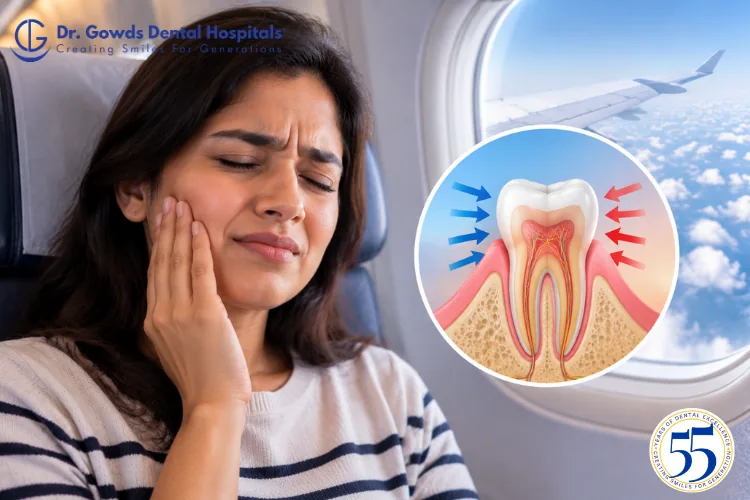
Have you ever experienced sudden tooth pain while travelling by air? You may notice a sharp ache, pressure sensation, or throbbing pain in your teeth during take-off or landing. This condition is commonly known as tooth squeeze or barodontalgia, a type of dental pain caused by changes in air pressure during flights.
Many travellers are surprised when a previously normal tooth starts hurting thousands of feet above the ground. In most cases, flight-related tooth pain is not caused by the flight itself but by underlying dental problems such as cavities, cracks, infections, or poorly sealed dental restorations.
Understanding why tooth pain during flights happens can help you prevent discomfort and identify when you may need professional dental care.
At Dr Gowds Dental Hospitals in Hyderabad, our experienced dental specialists provide comprehensive diagnosis and treatment for tooth-related problems, helping patients maintain healthy smiles before and after travel.
Planning a trip and experiencing dental discomfort?
Tooth squeeze, medically called barodontalgia, refers to tooth pain caused by changes in atmospheric pressure. The word “baro” means pressure, while “odont” refers to teeth.
During air travel, cabin pressure changes as the aircraft climbs and descends. Healthy teeth usually adjust without causing discomfort. However, if there is trapped air, inflammation, or damage inside a tooth, pressure changes can trigger pain.
This condition can occur during:
Although uncommon, tooth squeeze can be a warning sign that an existing dental issue needs attention.
Air pressure outside your body changes rapidly during a flight. While gases in your body cavities usually expand and contract naturally, problems occur when air becomes trapped inside a tooth.
A tooth affected by decay, infection, or previous dental treatment may contain small spaces where pressure cannot equalise properly. This pressure difference can stimulate nerves inside the tooth, causing pain.
One of the most common reasons for tooth pain when flying is untreated tooth decay.
A cavity can create a pathway for bacteria to reach deeper layers of the tooth. When pressure changes occur during a flight, the irritated nerve may react with sudden pain.
Signs that a cavity may be contributing to flight-related tooth pain include:
Teeth that have undergone procedures such as fillings, root canal treatment, or crowns may sometimes experience pressure-related discomfort.
Possible reasons include:
A dental evaluation can help identify whether a treated tooth is causing problems during air travel.
A cracked tooth may not always cause symptoms in daily life. However, pressure changes during flights can make the tooth more sensitive.
A crack can allow movement within the tooth structure, irritating the inner tissues and nerves.
Common signs of a cracked tooth include:
If you frequently experience tooth pain during flights, a dental examination can help detect hidden cracks or structural problems.
Dental infections can increase sensitivity to pressure changes.
An infection near the tooth root may cause:
Flying with an untreated dental infection may increase discomfort because pressure changes can affect the tissues surrounding the tooth.
Preventing airplane tooth pain starts with maintaining good oral health and addressing dental problems before travelling.
If you frequently travel by air, consider a dental check-up before your journey, especially if you have:
Early diagnosis can prevent unexpected pain during travel.
Untreated cavities can worsen over time and may cause discomfort during flights. Dental fillings or other recommended treatments can protect the tooth and reduce the risk of pressure-related pain.
Healthy teeth are less likely to develop problems that lead to flight-related pain.
Follow these basic habits:
A small toothache before a flight may become more noticeable during air travel. If you already experience discomfort, consult a dentist before your trip.
Occasional mild discomfort may not always indicate a serious problem. However, you should consult a dentist if:
A dentist can perform a detailed examination and recommend suitable treatment based on the cause.
Experiencing recurring dental pain while travelling? Consult the dental experts at Dr Gowds Dental Hospitals, Hyderabad, for personalised diagnosis and treatment options.
A dental professional may evaluate your condition through:
The dentist checks for:
X-rays help identify hidden issues such as:
These tests help determine whether the pain is related to tooth structure, nerves, or surrounding tissues.
Based on the findings, your dentist may recommend treatments such as fillings, root canal treatment, crown placement, or preventive care.
Many people worry about flying after dental procedures. In most cases, routine dental treatments do not prevent air travel.
However, your dentist may advise waiting before flying after certain procedures, especially if there is:
Always follow your dentist’s recommendations based on your specific condition.
Dental discomfort during flights can sometimes indicate an underlying oral health issue. Getting the right diagnosis before travel can help prevent unexpected pain.
Dr Gowds Dental Hospitals provides advanced dental care with experienced specialists and modern diagnostic facilities across Hyderabad.
Patients can visit our branches at:
Our dental team focuses on accurate diagnosis, personalised treatment plans, and comfortable patient care for various dental concerns.
Tooth pain during flights is usually caused by pressure changes affecting teeth with underlying issues such as cavities, cracks, infections, or previous dental treatments. This condition is known as barodontalgia or tooth squeeze.
During take-off and landing, cabin pressure changes quickly. If a tooth has trapped air, decay, inflammation, or structural damage, the pressure difference can trigger pain.
Tooth squeeze is usually not dangerous, but repeated episodes may indicate an untreated dental problem that requires evaluation by a dentist.
Maintaining good oral hygiene, treating cavities early, and having a dental check-up before travelling can help reduce the risk of tooth pain during flights.
Yes. Cavities can expose sensitive areas inside the tooth, making pressure changes during flights more likely to trigger pain.
Yes. If you already have tooth pain before travelling, a dental consultation can help identify and treat the cause before it becomes worse during a flight.
Barodontalgia is dental pain caused by changes in atmospheric pressure, commonly experienced during activities like flying or diving.
A root canal-treated tooth may sometimes experience discomfort during flights if there is inflammation, infection, or another issue around the tooth. A dentist can determine the cause.


 Gachibowli Branch