

Schedule Appointment

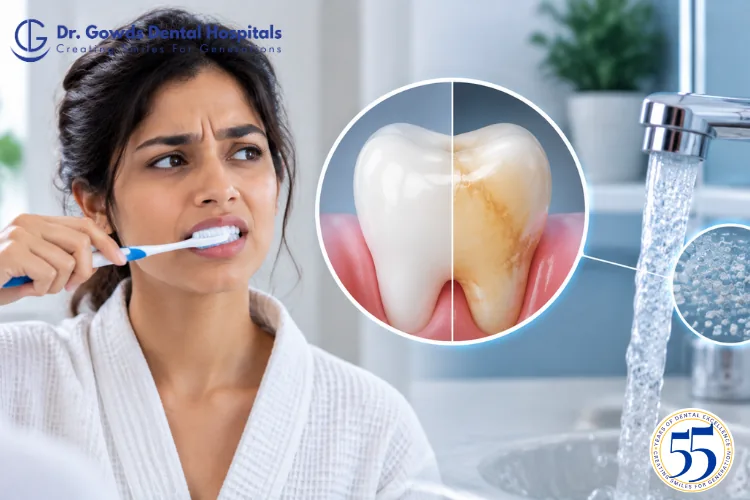
Water is essential for maintaining good health, including healthy teeth and gums. However, many people wonder whether the water they drink every day can affect their oral health. One common question dentists hear is: “Is hard water bad for your teeth?”
Hard water contains higher levels of naturally occurring minerals such as calcium and magnesium. While these minerals are not usually harmful, many people are concerned about whether long-term exposure to hard water can cause tooth stains, sensitivity, enamel damage, or other dental problems.
Understanding how hard water interacts with your teeth can help you make better decisions about your oral hygiene routine. At Dr Gowds Dental Hospitals in Hyderabad, our dental experts help patients understand everyday factors that influence oral health and provide personalized solutions for maintaining strong, healthy smiles.
Looking for expert dental guidance in Hyderabad? Visit Dr Gowds Dental Hospitals at Gachibowli, Puppalguda, Madhapur, or Koti for professional dental care and personalised advice.
Hard water is water that contains a higher concentration of dissolved minerals, mainly calcium and magnesium. These minerals enter groundwater when water passes through rocks and soil before reaching household supplies.
Hard water is generally considered safe for drinking, but it may create certain issues in daily life, such as:
When it comes to dental health, the impact of hard water depends on several factors, including mineral levels, oral hygiene habits, diet, and existing dental conditions.
The simple answer is: hard water is not usually harmful to healthy teeth.
In fact, minerals like calcium can contribute to maintaining strong enamel when present in appropriate amounts. However, hard water may indirectly affect dental health in certain situations.
Hard water contains minerals that can leave deposits on surfaces. Over time, some people may notice:
These deposits are usually related to mineral buildup rather than permanent tooth damage.
Regular brushing, flossing, and professional dental cleaning can help remove surface deposits and maintain a cleaner smile.
Tooth enamel is the hardest substance in the human body. Normal exposure to hard water does not typically wear down enamel.
However, enamel can weaken due to factors such as:
Maintaining good oral hygiene is more important than avoiding hard water alone.
Fluoride plays an important role in protecting teeth against cavities by helping strengthen enamel.
The effect of drinking water on dental health depends more on:
If you have concerns about your water quality, discussing them with a dental professional can help you understand your specific needs.
Many people associate hard water with sensitive teeth, but hard water itself is not considered a direct cause of tooth sensitivity.
Tooth sensitivity commonly occurs due to:
If you experience sharp pain while consuming hot, cold, or sweet foods, it is better to consult a dentist rather than assuming hard water is the reason.
One of the most noticeable concerns with hard water is staining.
Mineral-rich water may contribute to surface deposits, especially when combined with:
Professional dental cleaning can help remove stubborn stains and improve oral hygiene.
You do not necessarily need to stop using hard water. Instead, follow healthy dental habits to protect your teeth.
A strong oral care routine includes:
Staying hydrated supports saliva production. Saliva naturally helps protect teeth by:
Regular dental visits allow early detection of:
Preventive dental care can help avoid bigger problems in the future.
Need a professional dental check-up in Hyderabad? Consult the experienced dentists at Dr Gowds Dental Hospitals for complete oral health evaluation and advanced dental treatments.
Many households use water filters to improve taste and reduce mineral deposits. A water filtration system may help reduce certain impurities depending on the technology used.
However, water filtration alone cannot replace proper dental care.
Your oral health depends on:
If you are unsure about your water quality or its impact on your teeth, a dentist can guide you based on your oral condition.
Both hard and soft water can be safe for dental health when they meet quality standards.
Advantages:
Possible concerns:
Advantages:
Possible concerns:
The quality of water, fluoride content, and your oral hygiene routine are more important factors than hardness alone.
You should schedule a dental consultation if you notice:
Early dental evaluation can help identify problems before they become more complicated.
Maintaining good oral health requires expert guidance, advanced technology, and personalised care.
At Dr Gowds Dental Hospitals, patients receive comprehensive dental services including:
With branches located in Gachibowli, Puppalguda, Madhapur, and Koti, patients can access trusted dental care across Hyderabad.
Final CTA:
Looking for reliable dental care in Hyderabad? Book your consultation at Dr Gowds Dental Hospitals and get expert advice for maintaining healthy teeth and gums.
Hard water is generally not harmful to teeth. The minerals present in hard water usually do not damage enamel. However, mineral deposits may contribute to surface stains in some people.
Hard water itself does not directly cause yellow teeth, but mineral deposits combined with plaque, food stains, or poor oral hygiene may make teeth appear discoloured.
No, normal exposure to hard water does not damage tooth enamel. Enamel damage is usually caused by factors such as acids, cavities, and improper oral care.
Hard water is not a direct cause of tooth sensitivity. Sensitivity is commonly linked to enamel erosion, gum recession, cavities, or exposed tooth roots.
A water filter may improve water quality and reduce mineral deposits, but maintaining proper brushing habits and regular dental visits is more important for oral health.
Both hard and soft water can be safe for teeth. Dental health depends more on fluoride levels, oral hygiene habits, diet, and regular dental check-ups.
Brushing twice daily, flossing, limiting staining foods, and getting professional dental cleaning can help prevent and remove surface stains.
Patients looking for dental care in Hyderabad can consult experienced dentists at Dr Gowds Dental Hospitals, with branches in Gachibowli, Puppalguda, Madhapur, and Koti.
 Gachibowli Branch