

Schedule Appointment


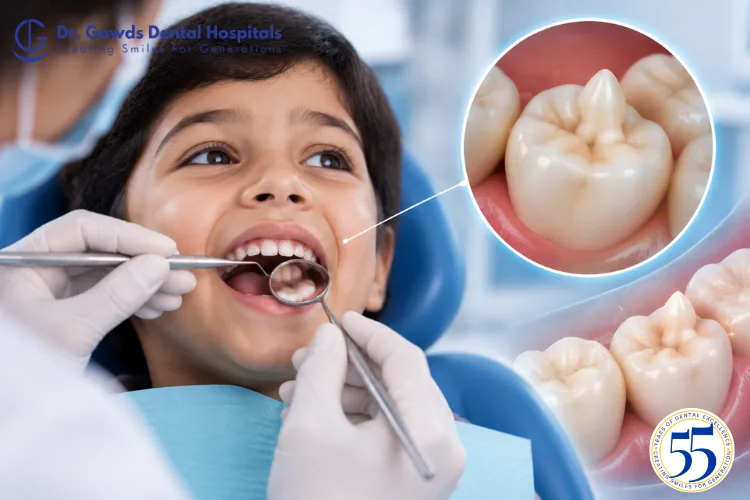
If you notice an unusual bump or projection on the chewing surface of a molar, you may wonder whether the tooth has developed an extra cusp.
A cusp is one of the raised areas that forms the chewing surface of a tooth. Some teeth naturally have more cusps than others, and variations in cusp shape and number can occur. An additional cusp is generally described as a supernumerary or accessory cusp.
An extra cusp on a molar does not automatically mean that something is wrong. In many cases, it is simply a variation in tooth anatomy. However, depending on its size, location, and relationship with the rest of the tooth, it can sometimes create areas where plaque or food becomes trapped, interfere with the bite, or become damaged.
At Dr Gowds Dental Hospitals, an unusual-looking molar can be examined to determine whether the additional cusp is simply an anatomical variation or whether it needs monitoring or treatment.
A cusp is a raised portion of the crown of a tooth.
Molars have multiple cusps because their broad chewing surfaces are designed to help break down food. The exact number and arrangement of cusps can vary between different teeth and among individuals.
An additional projection can therefore make a molar look as though it has an extra bump compared with neighboring teeth.
The dental term supernumerary cusp refers to an additional cusp of a dental crown. These variations can occur on teeth that already have cusps.
It can be.
Tooth anatomy is not identical in every person. Variations in the number, size, and arrangement of cusps are recognized features of dental morphology.
One familiar example is the cusp of Carabelli, an additional cusp or tubercle that can occur on the lingual side of the mesiopalatal cusp of an upper first molar.
Other accessory cusps can occur in different locations.
Therefore, seeing an additional bump on a molar does not automatically indicate disease or damage.
The important question is whether the extra structure is healthy and whether it is creating a problem.
Extra cusps are generally considered developmental variations in tooth morphology.
Teeth develop through complex biological processes that determine the shape and arrangement of the crown. Variations during development can result in additional cusp structures.
The exact cause is not always identifiable in an individual patient.
Genetic influences may also contribute to variations in tooth morphology. Research has identified familial patterns in some unusual cusp-development conditions, although an extra cusp in an individual tooth does not necessarily indicate an inherited disorder.
An extra cusp may appear as:
Some extra cusps are very small and may only be noticed during a dental examination.
Others can be prominent enough for the patient to see or feel with the tongue.
Often, no treatment is necessary.
However, an extra cusp can sometimes create clinical concerns depending on its anatomy.
Grooves or pits surrounding an accessory cusp can be difficult to clean.
Food particles and plaque may accumulate in these areas, potentially increasing the risk of tooth decay.
Studies describing accessory cusps have reported caries developing in grooves associated with these structures.
A large additional cusp can occasionally contact the opposing tooth earlier or more heavily than intended.
This may create an unusual contact during biting or chewing.
In some cases, an extra cusp can contribute to an occlusal interference, meaning the teeth do not meet in the expected way.
The effect depends on the cusp’s size, position, and relationship with the opposing teeth.
Like other parts of a tooth, an unusually prominent cusp is exposed to chewing forces.
Over time, the projection may experience wear.
Small amounts of wear may not cause any symptoms, but significant changes should be evaluated by a dentist.
A prominent cusp can be subjected to considerable force during chewing.
If it fractures, the underlying structure may become exposed or the tooth may become sensitive.
The risk depends on the size and anatomy of the cusp and the forces placed on the tooth.
If an accessory cusp becomes worn or fractured, sensitivity to cold, heat, sweets, or pressure may develop.
This does not mean that every extra cusp contains an exposed nerve or will eventually cause pain.
A dental examination is needed to determine what is happening inside the tooth.
No.
An extra cusp is an additional projection that forms as part of a tooth’s crown. It is different from having an additional or supernumerary tooth.
For example, a molar with an additional cusp is still one molar. The unusual feature is part of its tooth anatomy.
This distinction is important because an extra cusp can sometimes look unusual enough to make patients wonder whether another tooth is developing.
The cusp of Carabelli is a specific type of anatomical variation associated primarily with upper molars.
It is generally found on the lingual side of the mesiopalatal cusp of an upper first molar and can range from a subtle groove or tubercle to a more distinct cusp.
Not every extra cusp on a molar should be called a cusp of Carabelli.
The location and morphology of the additional structure determine how it is classified.
This is one reason why a dentist may use more general terms such as accessory cusp or supernumerary cusp when describing an unusual molar.
It can in certain situations.
The main concern is often not the extra cusp itself but the grooves, pits, or depressions around it.
These areas may be difficult to clean thoroughly, allowing plaque to remain on the tooth.
Over time, bacteria and acids associated with plaque can contribute to dental decay.
An extra cusp does not mean that a cavity will definitely develop. Good oral hygiene, fluoride exposure, diet, and professional dental care continue to play important roles.
The dentist begins with a visual and clinical examination.
They may assess:
If the anatomy is unusual or there is concern about the underlying tooth structure, dental X-rays may be recommended.
Imaging can help the dentist understand the internal anatomy and determine whether the additional structure has any relationship with the pulp.
Not necessarily.
If the cusp is healthy, does not interfere with the bite, and can be kept clean, the dentist may simply recommend monitoring it.
Removing an extra cusp is not automatically the appropriate treatment because unnecessary alteration of healthy tooth structure can create its own risks.
Treatment is considered when there is a specific clinical reason.
The treatment depends on the condition of the tooth.
If the extra cusp is harmless, the dentist may simply monitor it during routine examinations.
This allows the dentist to watch for changes in:
Routine dental surveillance is particularly relevant when an additional cusp creates unusual grooves or projections.
If deep grooves around the cusp are difficult to clean, a dentist may consider a preventive sealant when clinically appropriate.
The objective is to reduce plaque-retentive areas and make the surface easier to maintain.
The dentist will determine whether sealing is suitable based on the tooth’s anatomy and caries risk.
In selected cases, a dentist may consider carefully reducing a prominent cusp if it is causing a specific problem.
This should not be done casually.
Some developmental cusps may contain dentin or have a relationship with the pulp, so the internal anatomy must be considered before altering the structure.
If decay develops around an extra cusp, the affected area may require a filling or another restoration.
The treatment depends on the depth and extent of the decay.
If a fractured or severely damaged accessory cusp results in pulp involvement or infection, root canal treatment may sometimes be required.
This is not a routine treatment for an extra cusp. It is considered only when the tooth’s pulp has become significantly affected.
Not necessarily.
An extra cusp can remain completely symptom-free.
In fact, some accessory cusps are discovered incidentally during routine dental examinations.
However, the absence of pain does not mean the area should never be examined. A dentist can determine whether the surrounding grooves are collecting plaque or whether the cusp is affecting the bite.
If part of an extra cusp breaks, arrange a dental examination.
Until the tooth is assessed:
A dentist can determine whether the tooth needs smoothing, restoration, monitoring, or more extensive treatment.
Good preventive care is particularly important when the tooth has deep or unusual grooves.
Use fluoride toothpaste and clean all surfaces of the molars carefully.
Pay attention to the chewing surface rather than brushing only the outer sides of the teeth.
Frequent sugar exposure can increase the risk of decay.
Professional examinations can identify early decay, wear, or bite-related problems.
If the grooves are deep and difficult to clean, ask your dentist whether a sealant is appropriate.
Arrange a dental examination if:
A dentist can determine whether the extra cusp is simply an anatomical variation or requires treatment.
At Dr Gowds Dental Hospitals, an unusual molar can be evaluated based on its anatomy, condition, bite relationship, and surrounding oral health.
If an extra cusp is healthy and functioning normally, monitoring may be all that is required. If it creates plaque-retentive grooves, decay, sensitivity, fracture, or bite interference, the dentist can discuss appropriate preventive or restorative treatment.
The goal is to preserve healthy tooth structure while addressing any genuine risk associated with the unusual anatomy.
An extra cusp on a molar can look unusual, but it is not automatically a sign of a dental problem.
Extra or accessory cusps are recognized variations in tooth morphology. Some remain harmless throughout life, while others can create deep grooves, plaque-retentive areas, bite interference, wear, or fracture.
The key is to understand the specific anatomy of the tooth rather than assuming that every extra cusp needs to be removed.
If you notice an unusual bump on a molar, a dental examination can determine whether it is simply a harmless anatomical variation or something that should be monitored or treated.
With appropriate preventive care and regular dental checkups, many people with an extra cusp can maintain the tooth without major intervention.
Visit us at-
Dr gowds dental hospital Nanakramguda
Dr gowds dental hospital Gachibowli
Dr gowds dental hospital madhapur
An extra cusp is an additional raised structure on the crown of a tooth. On a molar, it may appear as an additional bump or projection on the chewing or side surface.
It can be a normal anatomical variation. Additional or supernumerary cusps are recognized variations in tooth morphology and do not automatically indicate disease.
It can sometimes increase the risk of decay if grooves or pits around the additional cusp trap plaque and food. However, having an extra cusp does not mean a cavity will definitely develop.
Not necessarily. The cusp of Carabelli is a specific additional cusp or tubercle associated with upper molars. Other extra cusps can occur in different locations and have different classifications.
No. If it is healthy, does not interfere with the bite, and can be maintained properly, monitoring may be sufficient. Treatment depends on the individual tooth.
Yes. A prominent additional cusp can be exposed to chewing forces and may wear or fracture. A broken cusp should be examined by a dentist.
It can contribute to pain if it fractures, develops decay around its grooves, interferes with the bite, or affects the underlying tooth structure. An asymptomatic extra cusp may never cause pain.
A large or unusually positioned cusp can sometimes create abnormal contact with the opposing tooth. A dentist can check the bite to determine whether the cusp is causing interference.
If decay develops around or within the affected area, a dentist may use a filling or another restoration depending on the extent of damage. A healthy cusp does not automatically need a filling.
Do not try to file or remove it yourself. Have the tooth examined by a dentist so its anatomy, bite, and surrounding grooves can be evaluated.
 Gachibowli Branch