

Schedule Appointment

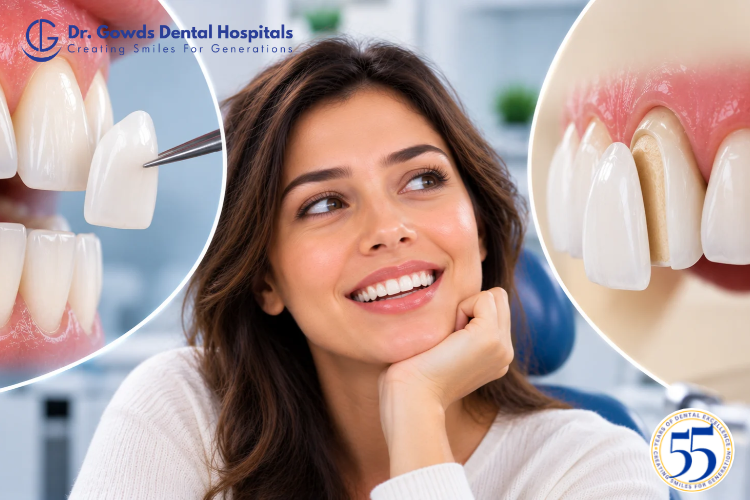
If you are considering veneers, one of the first questions you may have is simple: Do veneers damage teeth?
Veneers are designed to change the appearance of the visible surface of teeth, but the process can involve preparing the natural tooth before the veneer is placed. This makes it important to understand what preparation involves, how different types of veneers differ, and what questions you should ask before deciding.
The answer is not simply yes or no. The effect on your natural teeth depends on factors such as the type of veneer, the amount of tooth preparation required, how the veneer is planned and fitted, and how you care for your teeth afterwards.
At Dr Gowds Dental Hospitals, patients considering cosmetic dental treatments can discuss their individual concerns with a dental professional before deciding whether veneers are appropriate for them.
Considering veneers in Hyderabad?
A dental veneer is a thin covering placed over the visible front surface of a tooth. Veneers are generally considered when someone wants to change the appearance of selected teeth, such as their shape, colour or overall appearance.
The two commonly discussed categories are:
The process is not identical for every patient. Some teeth may require preparation before a veneer is placed, while the amount of preparation can vary depending on the planned result and the condition and position of the tooth.
This is why asking whether a particular veneer option requires tooth preparation is an important part of the consultation.
The question “Do veneers damage teeth?” is best answered by looking at how the treatment is planned rather than treating all veneers as the same.
A veneer itself is not simply placed on every tooth in exactly the same way. Depending on the case, the dentist may need to prepare the natural tooth so the veneer can be positioned appropriately.
For patients, the important questions are:
Understanding these points before treatment can help you make a more informed decision.
One of the biggest considerations when discussing veneers and natural teeth is preparation.
Traditional veneer treatment may involve removing a small amount of tooth structure to create space for the veneer. The exact amount depends on the individual tooth and the planned restoration.
Because natural tooth structure is involved, patients should understand what preparation is planned before agreeing to treatment.
Ask your dentist:
These questions are especially useful if you are comparing no-prep veneers vs traditional veneers.
A common mistake is assuming that all veneers require the same amount of preparation.
The starting position of the teeth, their shape, alignment, existing restorations and the desired appearance can all influence the treatment plan. A dentist needs to assess these factors before deciding how the veneers should be designed and placed.
Therefore, information found online about one person’s veneer treatment may not apply directly to another person’s teeth.
Some patients ask about sensitivity after veneer preparation or placement.
Sensitivity can be an important concern to discuss before treatment, particularly if you already notice sensitivity in your teeth.
Rather than assuming that veneers will or will not cause sensitivity, ask your dentist how the proposed preparation may affect your particular teeth and what to expect during the treatment process.
If you already experience tooth sensitivity, make sure this is mentioned during your consultation.
Yes, the treatment plan can involve the natural tooth structure, which is why preparation should be discussed carefully.
This is particularly relevant when considering whether veneers are reversible.
If tooth structure has been altered as part of preparation, the original tooth cannot simply be restored to its exact previous state by removing the veneer. The degree of preparation varies between cases, so patients should ask about this before treatment.
A useful consultation question is:
“How much of my natural tooth will need to be altered for these veneers?”
A clear answer can help you understand what you are choosing rather than focusing only on the final appearance.
The term no-prep veneers is often used for veneer approaches that require little or no conventional tooth preparation.
However, “no-prep” does not automatically mean that the option is suitable for everyone. The shape, position and appearance of the existing teeth still matter when planning the final result.
If you are considering this option, ask:
The goal should be to select an approach based on your teeth and treatment requirements rather than choosing a veneer type solely because it sounds less invasive.
Getting veneers is not the end of dental care. The condition of the natural teeth underneath and around the veneers remains important.
Good everyday oral care should continue after veneer treatment.
Patients should discuss:
Veneers are also not a replacement for general dental care. The natural teeth surrounding the veneers still require attention.
Before deciding on veneers, do not focus only on how the final smile is expected to look. Understanding the treatment itself is equally important.
Here are some practical questions to take to your consultation:
Getting clear answers can make the decision much easier.
If you are unsure whether veneers are right for you, a consultation at Dr Gowds Dental Hospitals can help you understand the available cosmetic dental options based on your individual dental needs.
Veneers are only one option used to change the appearance of teeth. Depending on the concern, other approaches may also be discussed.
For example, someone concerned about tooth colour may ask about whitening. Someone concerned about tooth position may discuss orthodontic options, while a tooth requiring a different type of restoration may need another approach.
This is why it is useful to identify the specific concern you want to address before choosing a treatment.
Instead of asking only:
“Should I get veneers?”
consider asking:
“What are the available options for the change I want to make?”
That approach allows the treatment plan to be based on your teeth and your goals rather than on a single cosmetic procedure.
There is no single veneer option that is suitable for every person.
The decision can depend on the appearance and condition of the teeth, the desired change, the amount of preparation involved and the patient’s expectations.
A dental consultation is therefore an important step before choosing veneers.
A professional assessment can help you understand:
The more clearly you understand these points, the easier it becomes to make a considered decision.
So, do veneers damage teeth?
The answer depends on the treatment approach and the preparation involved. Veneers are not all placed in the same way, and the amount of natural tooth preparation can vary from one case to another.
The most important step is to understand what will happen to your natural teeth before treatment begins.
If you are considering veneers, ask about tooth preparation, veneer material, alternatives, maintenance and how the proposed treatment will work with your existing teeth.
At Dr Gowds Dental Hospitals, patients in Hyderabad can discuss cosmetic dental concerns at our Nanakramguda, Gachibowli, Madhapur, koti branches.
Looking for veneers in Hyderabad? Schedule a consultation with Dr Gowds Dental Hospitals to discuss your smile goals and understand your available options.
Dental veneers are thin coverings placed over the visible front surface of teeth. They can be made from materials such as porcelain or composite and are used as a cosmetic dental option.
Veneers do not have the same treatment process in every case. Some veneer treatments involve preparation of the natural tooth, so it is important to understand how much preparation is planned before treatment.
Some veneer treatments involve enamel preparation, while the amount can vary depending on the teeth and the planned result. Ask your dentist exactly how much preparation is required for your case.
Veneers are not something patients should assume can simply be removed without consideration of the underlying tooth. If natural tooth structure has been altered during preparation, the treatment may not be reversible in the same way as an unaltered tooth.
Sensitivity is an important concern to discuss before veneer treatment, particularly if you already have sensitive teeth. Your dentist can explain what to expect based on the proposed preparation.
No-prep veneers are not automatically the better choice for everyone. Their suitability depends on the individual teeth, the desired appearance and the proposed treatment plan.
Continue regular oral hygiene and dental care. Ask your dentist about brushing, cleaning between the teeth, routine check-ups and any specific care instructions for your veneers.
That depends on what you want to change and the condition of your teeth. A dental consultation can help you compare veneers with other cosmetic or restorative options.
 Gachibowli Branch