

Schedule Appointment


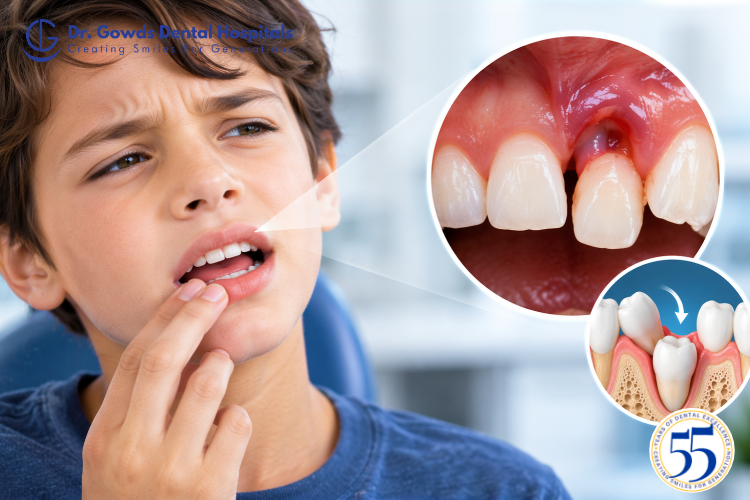
A tooth that suddenly looks shorter after a fall, collision, or blow to the mouth can be alarming. One possible dental injury is an intruded tooth, where the tooth has been pushed inward into the gum or socket.
If you are searching for what to do when a tooth is pushed into the gum, the first step is simple: do not try to force the tooth back into position yourself. A dental examination can help determine what has changed and what should happen next.
This guide explains what an intruded tooth means, what you can do immediately after an injury, what a dentist may check, and what to discuss during your visit.
An intruded tooth is a tooth that has been displaced inward following dental trauma. Instead of sitting at its usual height, it may appear shorter because part of the tooth has moved further into the surrounding tissues.
A dentist may also use the term intrusive luxation for this type of dental injury. It is different from a tooth that has been knocked out, loosened, or moved sideways.
You may notice:
The appearance alone cannot determine what should happen next. An examination is needed to assess the tooth and surrounding area.
A strong impact can move a tooth from its normal position. This can happen during:
The appropriate next step can vary according to the tooth involved, the person’s age, the extent of displacement, and the examination findings.
If you suspect an intruded tooth, avoid pulling, pushing, or repeatedly touching it. Trying to reposition the tooth yourself can disturb the injured area.
Do not use your fingers or deliberately bite down to move the tooth. Leave it in its current position until it can be assessed.
If there is dirt or debris in the mouth after the injury, gently rinse with water. Avoid vigorous rinsing around a visibly injured area.
Until the tooth has been assessed, avoid chewing directly on the affected area. Softer foods may be easier to manage if chewing is uncomfortable.
A tooth that has visibly changed position after an injury should be examined by a dental professional. The examination helps establish what has happened rather than relying only on appearance.
A visibly displaced tooth deserves prompt dental attention, particularly when the injury is accompanied by significant bleeding, severe pain, facial swelling, difficulty opening or closing the mouth, or a suspected jaw injury.
If the incident also involved a significant head or facial injury, or you have symptoms beyond the mouth, seek appropriate medical assessment.
Do not wait simply because the tooth does not look severely damaged. A change in position is worth having assessed.
A dental examination usually starts with a visual assessment of the injured tooth and surrounding tissues. The dentist may compare the affected tooth with nearby teeth and check how the teeth come together.
Depending on the situation, the evaluation may include:
The exact evaluation depends on the individual injury. Two teeth that appear similar after an accident may require different follow-up.
There is no single approach for every intruded tooth. The next step depends on factors such as the tooth involved, the degree of displacement, the person’s age, and the findings from the examination.
Depending on the situation, the dentist may discuss:
The purpose of the consultation is to understand the injury and decide on the next step based on the findings.
If you have noticed a tooth pushed into the gum after an injury, contact Dr Gowds Dental Hospitals to discuss a dental consultation at your preferred Hyderabad branch.
Useful information includes:
If you have a photograph showing the tooth immediately after the injury, you can show it to the dental team.
Dental trauma can cause several types of tooth displacement.
Intruded tooth: The tooth is pushed inward and may look shorter.
Loosened tooth: The tooth may have increased movement without being pushed deeper into the gum.
Sideways displacement: The tooth may appear tilted or moved from its normal position.
Knocked-out tooth: The tooth has been completely displaced from its socket.
Because these injuries can involve different structures, an examination is useful after a significant impact.
A tooth pushed into the gum after an injury can be unsettling, especially when the tooth suddenly looks shorter or partly hidden. This type of dental trauma is commonly described as an intruded tooth or intrusive luxation.
Do not try to push the tooth back yourself. Keep the area as undisturbed as possible and arrange a dental assessment so the tooth and surrounding tissues can be evaluated.
For patients in Hyderabad, Dr Gowds Dental Hospitals has branches in Nanakramguda, Gachibowli, Madhapur, koti. Contact your preferred branch to discuss an appointment and the next steps after a dental injury.
An intruded tooth is a tooth that has been pushed inward after an injury, making it appear shorter or partly hidden within the gum area.
Do not push or pull the tooth yourself. Keep the area undisturbed, avoid pressure on the tooth, and arrange a dental assessment.
The next step depends on the individual injury and the dental examination. A dentist can assess the tooth’s position and discuss the appropriate approach.
No. An intruded tooth has been pushed inward, while a knocked-out tooth has been completely displaced from its socket. Other injuries can involve loosening or sideways movement.
The dentist may check the tooth’s position, surrounding tissues, bite, injury history, and whether dental imaging is needed.
A visible change in the position of a tooth after an injury is a reason to arrange a dental assessment. Pain is not the only factor considered during an evaluation.

 Gachibowli Branch