

Schedule Appointment


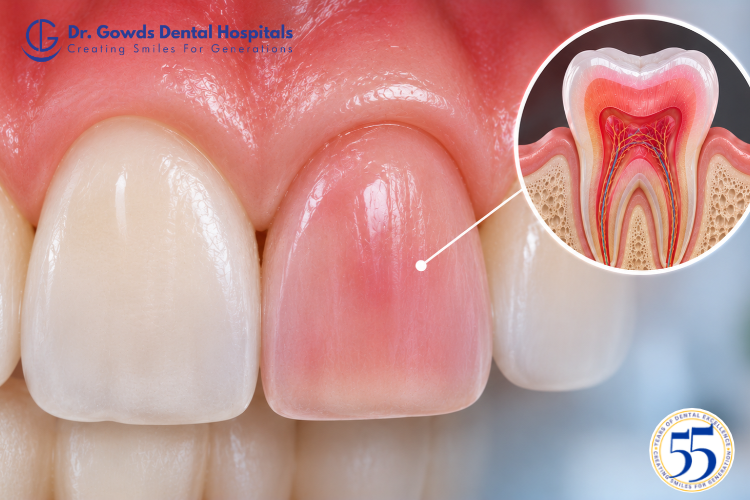
A pink tooth can be surprising, especially when the colour change appears after an injury or when a tooth already has visible decay. If you have noticed a tooth looking pink, you may wonder whether it is simply a surface stain or a sign that something has changed inside the tooth.
A pink tooth is a noticeable change in tooth colour that deserves attention rather than guesswork. The exact reason can vary, and the appearance alone is not enough to identify what is happening. In this guide, we explain why a tooth may look pink, how injury and decay can be relevant, what a dental examination may involve, and when it is sensible to arrange a check-up.
A pink tooth refers to a tooth that has developed a noticeable pink or reddish-pink shade compared with the surrounding teeth. The colour may be subtle or quite obvious, and it may appear across part of the tooth or affect a larger area.
Teeth are made up of different layers. The outer enamel is relatively translucent, while the layers underneath contain different structures and tissues. A change deeper within the tooth can sometimes affect how its colour appears through the outer surface.
This is why a pink tooth should not automatically be treated as an ordinary stain. A dentist needs to consider the tooth’s history, appearance and condition before deciding what the colour change means.
An injury to a tooth can be followed by a change in its appearance. This can happen after situations such as a fall, sports injury, accident or impact to the mouth.
The important point is that the colour change may not always appear immediately. A tooth that looked normal after an injury may look different later, which can make the change easy to overlook.
A pink colour after trauma does not provide enough information to determine the exact condition of the tooth. A dental examination can help distinguish a simple surface change from a change involving the inner structures of the tooth.
If you recently injured a tooth and later noticed a pink shade, make a note of when the injury happened and when the colour change appeared. This information can help the dentist understand the sequence of events.
It is also useful to mention whether the tooth has changed further in colour or appearance since the injury.
Decay can alter the appearance of a tooth in several ways. When a tooth has significant damage or a large area of decay, its normal appearance can change.
However, not every pink-looking tooth is caused by decay. A pink colour can have different explanations, so it is better not to assume that decay is the reason simply because the tooth has a cavity or damaged area.
If you have both visible decay and a pink tooth, professional assessment can help determine whether the two changes are related.
Surface stains are often linked with changes in the outer appearance of teeth. A pink-looking tooth may be different because the colour can appear to come from deeper within the tooth rather than sitting only on the surface.
This distinction cannot always be made reliably by looking in a mirror. A dental examination is the more useful way to understand an unexplained colour change.
Colour is only one part of the picture. When you notice a pink tooth, pay attention to any other changes around the same tooth.
You can note:
A dentist will first look closely at the tooth and the surrounding area. The examination may include questions about previous injuries, decay, dental work and when the colour change was first noticed.
The dentist may also compare the affected tooth with neighbouring teeth to understand how its colour and appearance differ.
Depending on what is seen during the examination, dental imaging may be considered to look at areas that cannot be assessed from the outside.
Not sure whether a pink tooth needs attention? Book a consultation at Dr Gowds Dental Hospitals and discuss the colour change with a dental professional rather than relying on self-diagnosis.
If a tooth suddenly looks pink, avoid trying to diagnose the cause from its colour alone. Do not assume that it is only a stain or that it will return to its usual appearance without being checked.
A practical approach is to:
The sooner the tooth is properly assessed, the clearer the next step can be.
A dental consultation is worth considering when:
You do not need to wait until you know what the problem is before asking a dentist. The purpose of a consultation is to understand the change and decide what, if anything, needs to be done.
There is no single answer because the appearance of a pink tooth depends on what is causing the colour change.
If the colour is related to a surface issue, it may be approached differently from a change involving the deeper parts of the tooth. This is why trying to correct the colour before understanding its cause may not address the underlying issue.
A dentist can assess the tooth and explain the available options based on what is found.
Good everyday dental care can help you monitor changes in your teeth and notice unusual changes earlier.
Helpful habits include:
A colour change can be easy to dismiss, particularly when there is little visible discomfort. But colour alone cannot tell you whether the change is superficial or related to something deeper.
Getting the tooth checked gives you a clearer understanding of what you are seeing. It can also prevent you from spending time trying home remedies or cosmetic solutions when the real issue has not yet been identified.
A pink tooth can appear after an injury, alongside decay, or for other reasons that are not obvious from the outside. The key is not to assume that every pink tooth has the same cause.
If you notice a change in tooth colour, pay attention to when it started, whether there was an injury or visible damage, and whether the appearance is changing. A dental examination can help you understand the situation and decide on the appropriate next step.
If you have noticed a pink tooth and want professional guidance, book a consultation at Dr Gowds Dental Hospitals. Patients in Hyderabad can visit the Nanakramguda, Gachibowli, Madhapur, koti branch for a dental assessment.
Not necessarily. A pink colour change can have different explanations, and the appearance alone cannot tell you what is happening. If the change is new or unexplained, a dental examination can provide clarity.
A tooth can look different after an injury, including developing a pinkish colour. The timing of the colour change and the nature of the injury are useful details for a dentist when assessing the tooth.
Decay can change the appearance of a tooth, but a pink colour should not automatically be attributed to decay. A dentist can assess whether the visible decay and colour change appear to be related.
Yes, it is reasonable to have an unexplained colour change checked even when there is no noticeable discomfort. Colour alone cannot show what is happening inside the tooth.
That depends on why the tooth looks pink. There is no single solution that applies to every pink tooth, so the cause should be understood before choosing an approach.
If the colour is coming from the surface, cleaning may affect the appearance, but it is not advisable to assume that every pink tooth is a surface stain. A persistent or unexplained colour change is better assessed by a dentist.
Make a note of when you first noticed the change and whether there was a recent injury, visible decay or dental procedure. Arrange a dental consultation so the tooth can be examined rather than trying to identify the cause from colour alone.

 Gachibowli Branch