

Schedule Appointment


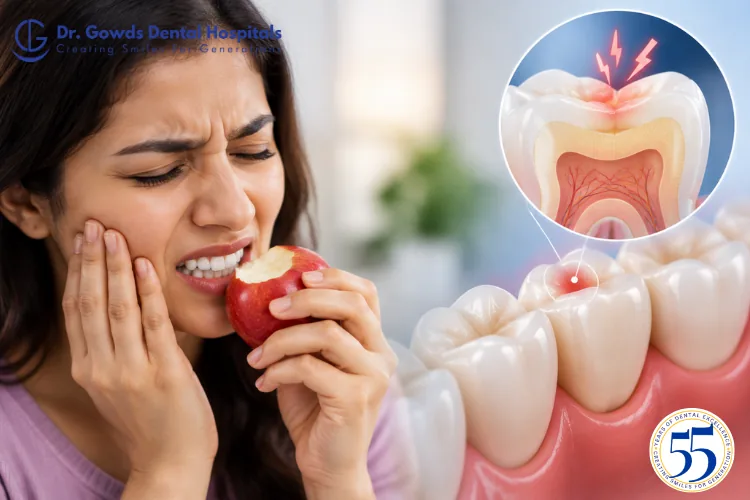
Experiencing sharp pain when biting down can be concerning, especially when the pain occurs suddenly while chewing food or putting pressure on a particular tooth.
Unlike general tooth sensitivity, which may occur after consuming something hot, cold, or sweet, pain associated with biting can sometimes point to a problem involving the tooth structure, dental restoration, pulp, surrounding tissues, or the way your teeth come together.
The exact cause cannot always be identified from the pain alone. A tooth that looks normal may still have an underlying problem, so persistent or recurring pain when chewing should be evaluated by a dentist.
Several dental problems can cause pain when biting down. Common causes include:
A cracked tooth is one possible cause of sharp pain while chewing.
A crack can allow different parts of the tooth to move slightly when pressure is applied. This may produce a brief, sharp sensation, particularly when biting on harder foods.
Some cracks are difficult to see with the naked eye and may not always be obvious on a routine dental X-ray.
Dental decay can weaken the tooth and eventually affect deeper layers.
Depending on how advanced the decay is, you may experience:
Not every cavity is easy to see, particularly when it develops between teeth.
A filling that is loose, fractured, worn, or damaged can cause discomfort when chewing.
You may notice that the tooth feels different when you bite down, or that food repeatedly gets caught around the restoration.
A dentist can examine the filling and determine whether it needs adjustment, repair, or replacement.
Sometimes a newly restored tooth may contact the opposing tooth more strongly than intended.
This can make the tooth feel tender when you bite down, particularly soon after receiving a filling.
If the restoration is interfering with your bite, a dentist may be able to make a minor adjustment.
A crowned tooth can become painful when biting for several reasons.
Possible causes include:
A dental examination is needed to determine which issue is responsible.
The tissues surrounding the root of a tooth can become inflamed or irritated.
When this happens, the tooth may feel tender when you bite down or when the dentist gently taps on it.
This type of discomfort can occur with certain dental injuries, inflammation inside the tooth, or other conditions affecting the supporting tissues.
An infection involving the inside of a tooth or surrounding tissues may sometimes cause pain when pressure is applied.
Other symptoms can include:
A dental infection should not be ignored because it can worsen without appropriate treatment.
Facial swelling accompanied by difficulty breathing or swallowing requires urgent medical attention.
Pain while chewing does not always originate from the tooth itself.
Problems affecting the gums and supporting tissues may cause tenderness around a tooth.
Possible signs include:
A periodontal examination may be necessary if the symptoms appear to involve the tissues around the tooth.
A tooth can become painful after an accident, fall, sports injury, or other impact.
Trauma may result in:
Even if the tooth looks intact after an injury, it may still require a dental examination.
Frequent grinding or clenching can place excessive pressure on teeth and the surrounding structures.
Over time, this may contribute to:
If you regularly wake up with jaw soreness or notice worn or damaged teeth, tell your dentist.
The timing and pattern of the pain can provide useful information during a dental examination.
For example, your dentist may ask whether the pain occurs:
These details can help narrow down the possible causes.
Some people notice a sharp sensation when they release their bite, rather than when they initially bite down.
Pain on release can occur with certain cracked-tooth patterns, but it is not enough on its own to confirm that a tooth is cracked.
Other dental conditions can produce similar symptoms, which is why proper examination is important.
Cracked teeth can produce different symptoms depending on the location and extent of the crack.
Possible symptoms include:
A crack may not always be visible during a basic examination. Dentists may use bite tests, magnification, dental imaging, and other diagnostic methods when a crack is suspected.
Yes.
Some dental problems may cause discomfort mainly when pressure is placed on the tooth. You may therefore feel normal when you are not eating but experience pain when chewing.
This does not necessarily mean the problem is minor. The underlying cause could involve the tooth structure, supporting tissues, bite, or other dental structures.
Your dentist will usually consider your symptoms along with the findings from an examination.
Depending on the situation, diagnosis may involve:
Your dentist may ask:
The dentist may inspect the tooth for:
Specific teeth may be tested during biting to determine which tooth reproduces the symptoms.
Gentle testing can help assess whether the tooth or surrounding tissues are tender.
If the dentist suspects inflammation or damage involving the pulp, additional tests may be used to evaluate the tooth’s response.
X-rays can help identify decay, bone changes, infections, and other problems.
However, not every crack or dental problem is visible on a conventional X-ray, so imaging is interpreted together with the clinical examination.
No.
Sharp pain when biting down does not automatically mean that a root canal is required.
Treatment depends on the underlying cause.
For example:
The appropriate treatment can only be determined after a proper dental assessment.
Treatment depends on what is causing the pain.
If a recently placed restoration is interfering with your bite, the dentist may adjust it.
If decay has damaged the tooth but the tooth can be restored, a filling or another restoration may be recommended.
A damaged or weakened tooth may require a crown or another type of restoration depending on the amount of remaining tooth structure.
If the pulp inside the tooth is significantly inflamed or infected and the tooth can be saved, root canal treatment may be recommended.
The treatment for a cracked tooth depends on factors such as the location and extent of the crack and how much healthy tooth structure remains.
Possible treatment may include a restoration, crown, root canal treatment when indicated, or extraction when the tooth cannot be predictably saved.
If the pain is related to gum or supporting-tissue problems, periodontal treatment may be necessary.
If you have recurring tooth pain when biting, consider the following until you can receive dental care:
Avoid repeatedly testing the painful tooth by biting hard objects, as this may increase irritation or damage.
Not every cause of biting pain can be prevented, but good oral care can reduce the risk of several dental problems.
Helpful habits include:
A tooth that hurts only when biting may be easy to ignore because the pain can disappear between meals.
However, recurring symptoms can indicate an underlying dental problem that needs attention. Getting the tooth examined can help identify the cause and determine the appropriate treatment before the problem becomes more complicated.
Do not rely only on how severe the pain feels. A relatively small amount of pain does not necessarily mean that the underlying problem is insignificant.
At Dr Gowds Dental Hospitals, tooth pain is evaluated based on the complete pattern of symptoms rather than the pain alone.
Depending on the findings, the dental team may assess:
Based on the diagnosis, appropriate restorative, endodontic, periodontal, or other dental treatment can be recommended.
Visit us at-
Dr gowds dental hospital Nanakramguda
Dr gowds dental hospital Gachibowli
Dr gowds dental hospital madhapur
Sharp pain when biting down should not be ignored if it persists or keeps returning. The cause may be something relatively simple, such as a bite problem or damaged filling, but it can also be associated with a cracked tooth, decay, inflammation, infection, or other dental conditions.
Pay attention to when the pain occurs, what triggers it, and whether you have other symptoms such as sensitivity, swelling, or fever. A dental examination can help identify the cause and guide the right treatment.
When it comes to tooth pain, finding the cause is the first step toward protecting the tooth and maintaining your oral health.
Pain when biting can have several causes, including a cracked tooth, tooth decay, a damaged restoration, bite problems, inflammation, infection, trauma, or problems involving the supporting tissues.
Some dental conditions produce symptoms primarily when pressure is placed on the tooth. A dental examination is needed to determine the specific cause.
It can be, particularly when the pain is sharp, intermittent, or occurs with specific biting movements. However, biting pain alone cannot confirm a crack.
Yes. A deeper cavity can cause pain or sensitivity when chewing, particularly if the decay has affected deeper parts of the tooth.
A recently restored tooth can sometimes feel sensitive or tender. If the tooth feels like it contacts the opposing tooth too early or the pain persists or worsens, the restoration should be checked by a dentist.
Not necessarily. Root canal treatment is considered when the pulp inside the tooth is significantly inflamed or infected and other findings support the diagnosis.
If the pain is persistent, recurrent, worsening, or associated with swelling or other symptoms, it is better to arrange a dental examination rather than repeatedly waiting for it to disappear.
Soft foods that require less chewing may be more comfortable temporarily. Avoid very hard, crunchy, or sticky foods that trigger pain until the tooth has been evaluated.
Some dental problems, including certain cracks and problems involving the pulp or supporting tissues, may not be obvious when you look at the tooth. A professional dental examination may be needed to identify the cause.
 Gachibowli Branch