

Schedule Appointment


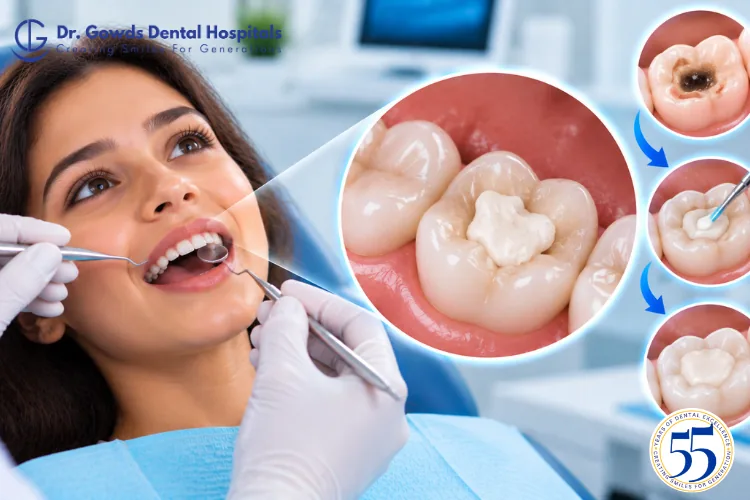
A temporary filling can feel reassuring because it covers a damaged tooth and often reduces sensitivity. But many patients wonder: is a temporary filling safe to leave in for a while, or should it be replaced as soon as possible?
The short answer is that a temporary filling is generally safe for the period your dentist recommends. It is designed as a short-term restoration, not usually as a permanent replacement. How long it can stay depends on why it was placed, the material used, the condition of the tooth and the treatment planned next.
At Dr. Gowds Dental Hospitals in Hyderabad, our dental team can assess a loose, worn or painful temporary filling and advise when it needs to be replaced or followed by permanent treatment.
Need a temporary filling checked?
A temporary filling is a dental material placed inside or over a tooth to protect it for a limited period. Unlike a permanent restoration, it is usually intended to be replaced, repaired or followed by another stage of treatment.
Dentists may use a temporary filling for several reasons, including:
Temporary filling materials are selected according to the treatment situation. Some are designed to be relatively easy for a dentist to remove during the next appointment.
Yes, a temporary filling can generally be left in safely for the period recommended by your dentist.
However, “temporary” is important. It does not mean the filling is designed to remain indefinitely.
There is no single number of days or weeks that applies to every patient. The appropriate duration depends on factors such as:
If your dentist has asked you to return for a follow-up appointment, it is important not to postpone it simply because the tooth feels normal.
Patients often search for a specific answer to how long can a temporary filling last, but there is no universal timeframe.
Some temporary restorations are intended to remain for a short period until the next appointment. Others may be used for a longer treatment interval when clinically appropriate.
The important point is that the expected lifespan of the material is not the same as the recommended time between your appointments.
A temporary filling can appear intact while the tooth underneath still requires treatment. Delaying the planned dental visit can allow a problem to progress without obvious symptoms.
If you were given a specific follow-up date, try to keep that appointment even if there is no pain.
Temporary fillings are designed with a different purpose from permanent restorations.
A dentist may choose a temporary material because it needs to provide protection now while allowing another treatment step to happen later. It may not have the same durability, strength, wear resistance or long-term sealing properties expected from a permanent restoration.
For example, after certain stages of root canal treatment, a tooth may receive a temporary restoration before the final restoration is placed. The American Association of Endodontists explains that teeth undergoing root canal treatment require appropriate restoration after treatment to protect them from further damage.
The final restoration may depend on how much tooth structure remains and the dentist’s assessment of the tooth.
Leaving a temporary filling beyond the period recommended by your dentist may increase the risk of problems.
Temporary materials may not withstand prolonged chewing as well as a permanent restoration. The filling can become worn, cracked or damaged.
If the material loses its seal or becomes displaced, food and bacteria can enter around the tooth.
A tooth that has already been weakened by decay, fracture or dental treatment may need stronger long-term protection.
A damaged or poorly sealed filling can allow bacteria to reach vulnerable areas of the tooth.
If the temporary restoration was placed as one stage of a larger treatment plan, postponing the next appointment can delay the treatment needed to protect the tooth.
This is why the NHS advises patients who have lost a filling or crown to arrange dental care rather than simply leaving the tooth untreated. NHS: Lost fillings and crowns
In many cases, you can eat after receiving a temporary filling, but your dentist may recommend precautions depending on the tooth and material.
For example:
Your dentist may give different instructions if the temporary filling was placed as part of root canal treatment or another procedure.
A temporary filling can occasionally become loose or fall out. If this happens, do not assume that the tooth is fine simply because you do not have pain.
Over-the-counter temporary dental filling materials may provide short-term protection in some situations, but they should not be considered a substitute for professional dental treatment.
The NHS also recommends seeking dental advice when a filling has been lost. NHS: Lost fillings and crowns
A temporary filling should be reviewed or replaced according to the treatment plan provided by your dentist.
Contact your dentist sooner if you notice:
Do not wait for severe pain before contacting a dentist. Some dental problems can progress even when symptoms are mild.
A temporary filling is commonly associated with root canal treatment because treatment may involve multiple stages or require a temporary seal before the final restoration.
The temporary material helps seal and protect the treated tooth between appointments. However, the tooth may still require a permanent restoration once the planned root canal treatment has been completed.
The final restoration can be particularly important because a tooth that has undergone root canal treatment may need additional protection depending on the amount of remaining tooth structure.
If you have a temporary filling following root canal treatment, follow your dentist’s instructions about eating, follow-up appointments and the final restoration.
The main difference is the purpose and expected duration of the restoration.
| Feature | Temporary Filling | Permanent Filling |
| Main purpose | Short-term protection or part of staged treatment | Long-term restoration |
| Expected duration | Limited and treatment-dependent | Designed for longer-term use |
| Removal | Often easier to remove when needed | Usually intended to remain |
| Strength | Depends on material and situation | Generally selected for long-term function |
| Follow-up | Often requires a planned review | May require routine dental checks |
Neither option is automatically “better” in every situation. A dentist chooses the appropriate restoration based on the condition of the tooth and the treatment being performed.
If you have had a temporary filling for longer than expected, Dr. Gowd’s Dental Hospitals can assess the tooth and determine whether you need a replacement, permanent filling or another form of restoration.
A temporary filling itself is not usually an emergency simply because it is temporary. However, certain symptoms require prompt dental attention.
Seek urgent dental care if you develop:
These symptoms can indicate a significant dental infection or another condition requiring urgent assessment.
Until your dentist completes the planned treatment, a few simple habits can help protect the restoration.
Brush twice a day with a fluoride toothpaste and clean between your teeth as recommended by your dental team.
Avoid putting unnecessary pressure on the treated tooth, particularly if your dentist has advised you to protect it.
This is one of the most important steps. A temporary restoration is often part of a larger treatment plan.
Pain, sensitivity, movement, a broken filling or swelling should be reported to your dentist.
So, is a temporary filling safe to leave in for a while? Generally, yes, when it is left in for the period recommended by your dentist. The concern is not that every temporary filling becomes unsafe after a fixed number of days. The concern is leaving it in longer than intended without professional review.
If your temporary filling has become loose, fallen out, started causing pain or has simply been in place longer than expected, arrange a dental examination.
For patients in Hyderabad, Dr. Gowds Dental Hospitals provides dental care across Nanakramguda, Gachibowli, Madhapur, koti . Contact the nearest branch to schedule an appointment and have your tooth assessed.
A temporary filling can be safe for the period recommended by your dentist. The appropriate duration varies depending on the material, tooth condition and reason it was placed. Do not assume that every temporary filling can safely remain for the same amount of time.
There is no universal timeframe. Some temporary fillings are intended for a short period, while others may remain during a longer treatment interval. Your dentist should determine when it needs to be replaced or followed by a permanent restoration.
You can often eat after receiving a temporary filling, but your dentist may recommend avoiding hard or sticky foods and chewing on the opposite side. Follow the specific instructions provided for your tooth.
Contact your dentist as soon as possible. Keep the area clean and avoid chewing on the affected tooth if it is uncomfortable. A dentist can determine whether the filling needs to be replaced or whether further treatment is required.
A temporary filling is generally not intended to serve as a permanent restoration. Even if it remains intact, the tooth may still require a permanent filling, crown or another restoration depending on the treatment plan.
Mild sensitivity can occur after dental treatment, but persistent, severe or worsening pain should be evaluated by a dentist. Pain when biting, swelling or increasing sensitivity may indicate that the tooth needs further assessment.
Yes. Keeping the area clean is important. Brush gently around the treated tooth and follow any specific oral-care instructions provided by your dentist.
Not necessarily in every case. The next step depends on why the temporary filling was placed. Some teeth may need a permanent filling, while others may require a crown or additional treatment.
 Gachibowli Branch