

Schedule Appointment

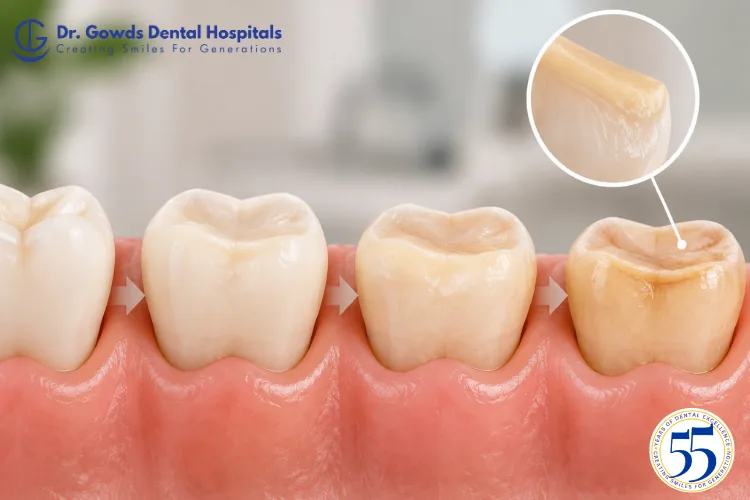
As we grow older, our teeth naturally go through changes. Small signs of wear, such as slight flattening of chewing surfaces or minor colour changes, can happen over many years of eating, chewing, and daily use. However, not all tooth wear is a normal part of ageing.
Tooth wear with age can sometimes indicate problems like enamel damage, teeth grinding, acid erosion, or bite-related issues that may require professional attention. Understanding the difference between normal ageing changes and warning signs can help you protect your teeth and maintain a healthy smile.
At Dr Gowds Dental Hospitals, Hyderabad, our dental specialists focus on identifying the cause behind tooth wear and providing personalised solutions to protect your natural teeth and restore function when needed.
If you notice increased tooth sensitivity, changes in your bite, or teeth becoming shorter over time, schedule a dental consultation at Dr Gowds Dental Hospitals across Nanakramguda, Gachibowli, Madhapur, koti for an expert evaluation.
Tooth wear refers to the gradual loss of tooth structure due to factors other than cavities or injury. The outer protective layer of the tooth, called enamel, can slowly reduce over time because of repeated pressure, friction, or chemical exposure.
Unlike tooth decay, which is caused by bacteria, tooth wear happens due to mechanical or chemical processes affecting the tooth surface.
The three main types of tooth wear include:
Attrition occurs when teeth rub against each other repeatedly. This commonly happens during:
People who grind their teeth during sleep may notice:
Abrasion happens when external forces gradually damage the tooth surface.
Common causes include:
This type of wear often appears near the gum line and may increase tooth sensitivity.
Dental erosion occurs when acids weaken and dissolve the enamel layer.
Sources of acid exposure can include:
Erosion can make teeth appear thinner, smoother, or more transparent over time.
Some degree of tooth wear is expected as people get older. Teeth experience thousands of chewing cycles every day, and minor changes can occur naturally.
Normal age-related tooth changes may include:
However, significant tooth structure loss is not something that should simply be accepted as ageing.
Healthy ageing does not mean losing the ability to chew comfortably or experiencing constant sensitivity.
Excessive tooth wear can affect your smile, comfort, and oral health. It is important to consult a dentist if you notice:
When enamel becomes thinner, the inner layer called dentin may become exposed. This can lead to discomfort while consuming:
Visible reduction in tooth length may indicate advanced wear. Shorter teeth can affect:
Tooth wear can alter how your upper and lower teeth meet.
You may notice:
Worn teeth are more vulnerable to fractures because less protective enamel remains.
Signs of bruxism-related tooth wear include:
While ageing contributes to natural changes, several factors can accelerate tooth wear.
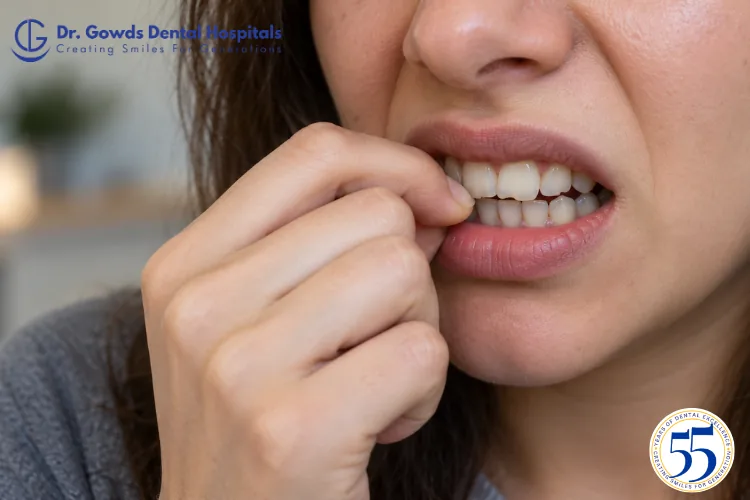
Bruxism is one of the most common reasons for excessive tooth wear. Many people grind their teeth unknowingly, especially during sleep.
Stress, sleep disorders, and bite problems can contribute to this habit.
Frequent exposure to acidic foods can weaken enamel.
Common examples include:
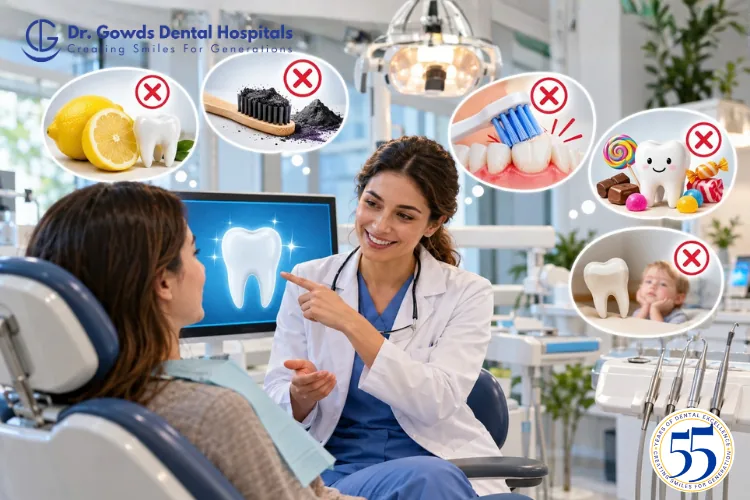
Brushing too hard does not clean teeth better. Instead, it may gradually damage enamel and gum tissue.
Dentists usually recommend:
When teeth do not meet properly, some areas may experience excessive pressure during chewing, leading to uneven wear.
Ageing, certain medications, and medical conditions can reduce saliva flow.
Saliva helps:
Dry mouth can increase the risk of enamel damage.
A dentist does not evaluate tooth wear only by appearance. A complete assessment helps identify the cause and severity.
The evaluation may include:
The dentist checks:
Your dentist may assess how your teeth come together during chewing and resting positions.
Photos, digital scans, or X-rays may help monitor changes and plan treatment.
Early diagnosis can prevent minor wear from becoming a major dental problem.
CTA:
Experiencing worn-down teeth or increasing sensitivity? Visit Dr Gowds Dental Hospitals in Hyderabad for a detailed dental evaluation and personalised treatment plan to protect your smile.
The treatment for tooth wear depends on the severity, underlying cause, and overall oral health. A dentist will first identify why the wear is happening before recommending the right approach.
When tooth wear is mild, preventive steps can help slow further damage.
Recommendations may include:
Small lifestyle changes can make a significant difference in protecting teeth over time.
If tooth wear is caused by bruxism, a custom-made night guard may be recommended.
A night guard helps:
It does not eliminate the cause of grinding but helps prevent further damage.
For moderate tooth wear, dentists may restore lost tooth structure using materials that match the natural appearance of teeth.
These treatments can help:
When significant tooth structure is lost, dental crowns may be considered to protect and strengthen weakened teeth.
Crowns can help restore:
In cases where multiple teeth are severely worn, full mouth rehabilitation may be recommended.
This comprehensive approach focuses on restoring:
The treatment plan is customised based on each person’s dental condition.
Although some tooth changes are natural, many causes of excessive tooth wear can be prevented.
Follow daily habits such as:
To protect enamel:
If you suspect grinding or clenching, consult a dentist. Early management can prevent long-term tooth damage.
Regular dental check-ups help identify early signs of tooth wear before they become complex problems.
Professional evaluation is especially important if you notice:
Many people confuse worn teeth with cavities, but they are different conditions.
| Tooth Wear | Tooth Decay |
| Caused by friction, pressure, or acid exposure | Caused by bacteria producing acids |
| Usually affects tooth surfaces gradually | Creates cavities or holes in teeth |
| May cause sensitivity and flattening | May cause pain and infection |
| Requires identifying the wear cause | Requires removal of decay and restoration |
A dental examination helps determine the exact cause and appropriate treatment.
You should schedule a dental consultation if you experience:
Early attention can help preserve more natural tooth structure and prevent complicated treatments later.
Tooth wear with age is not always a reason for concern. Mild changes can be a natural result of years of chewing and daily use. However, rapid or excessive wear may indicate an underlying issue that needs attention.
Understanding the difference between normal ageing changes and harmful tooth wear helps you take timely action.
At Dr Gowds Dental Hospitals, Hyderabad, our experienced dental team provides comprehensive care to diagnose tooth wear, identify its cause, and recommend suitable treatment options. With branches in Gachibowli, Puppalguda, Madhapur, and Koti, patients can access advanced dental care closer to home.
Final CTA:
Looking for expert care for worn teeth in Hyderabad? Visit Dr Gowds Dental Hospitals for personalised dental evaluation and treatment options designed to protect your smile for years to come.
Mild flattening of tooth surfaces and gradual colour changes can occur naturally over many years. However, noticeable shortening, sensitivity, or damage may indicate excessive tooth wear that requires dental attention.
Teeth may become shorter due to enamel wear caused by grinding, clenching, acidic foods, incorrect bite patterns, or other factors. A dentist can identify the exact cause and recommend suitable treatment.
Yes. Maintaining good oral hygiene, avoiding excessive acid exposure, using proper brushing techniques, managing teeth grinding, and having regular dental check-ups can help reduce tooth wear.
Yes. When enamel becomes thinner, the inner dentin layer may become exposed, leading to sensitivity when consuming hot, cold, or sweet foods.
No. Tooth enamel does not regenerate naturally. However, dentists can restore worn teeth using treatments such as bonding, crowns, or other restorative procedures depending on the condition.
Yes. Regular teeth grinding or clenching can create excessive pressure on teeth, causing flattening, cracks, and enamel loss over time.
You should consult a dentist if you notice increased sensitivity, visible changes in tooth shape, cracks, bite changes, or difficulty chewing.
Yes. Full mouth rehabilitation can help restore severely worn teeth by improving bite function, tooth structure, and overall oral health.
 Gachibowli Branch