

Schedule Appointment


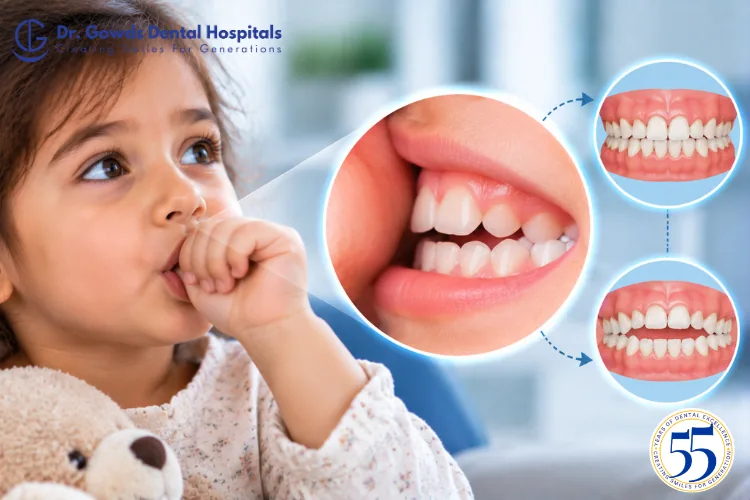
Thumb sucking is a common habit among infants and young children. Many children suck their thumb as a way to feel relaxed, fall asleep, or comfort themselves during stressful situations. In most cases, this habit naturally reduces as children grow older. However, prolonged thumb sucking can affect the development of teeth, jaw structure, and overall dental alignment.
Understanding the thumb sucking effects on teeth can help parents identify potential concerns early and take the right steps to protect their child’s oral health. At Dr Gowds Dental Hospitals, Hyderabad, our dental specialists guide parents with preventive care and orthodontic solutions to support healthy teeth development in children.
If your child continues thumb sucking beyond the early years or you notice changes in their bite or teeth position,
Thumb sucking is a natural reflex seen in babies and toddlers. Sucking helps infants feel calm and secure because it is associated with feeding and comfort.
Children may continue this habit due to:
Occasional thumb sucking at a young age usually does not create major dental concerns. The impact depends on factors such as:
The longer and more frequently a child sucks their thumb, the higher the chance of changes in tooth alignment and jaw development.
The pressure created by thumb sucking can gradually influence the position of developing teeth and the shape of the mouth. Since children’s bones are still growing, continuous pressure may affect normal dental development.
One of the common thumb sucking effects on teeth is an open bite.
An open bite occurs when the upper and lower front teeth do not meet properly when the mouth is closed. This may happen because the thumb pushes against the front teeth and prevents them from moving into their normal position.
Possible effects include:
Long-term thumb sucking may cause the upper front teeth to move forward. This condition is sometimes called protruding or flared front teeth.
Children with this alignment issue may experience:
The habit can also influence the growth pattern of the upper jaw. Continuous thumb pressure on the roof of the mouth may contribute to changes in the shape of the palate.
This may result in:
Dental alignment plays an important role in speech development. Significant changes caused by prolonged thumb sucking may affect how children position their tongue while speaking.
Some children may experience difficulty pronouncing certain sounds clearly.
Many children stop thumb sucking naturally between the ages of 2 and 4. If the habit continues after permanent teeth begin developing, parents should pay closer attention.
A dental evaluation may be helpful if:
Early evaluation allows dentists to monitor growth and recommend solutions before major alignment issues develop.
Not every child who sucks their thumb requires dental treatment. The effect varies depending on the child’s growth pattern and the intensity of the habit.
A dentist usually evaluates:
In some cases, simply helping the child stop the habit may allow teeth to naturally improve as they continue growing.
However, if significant alignment changes have occurred, orthodontic guidance may be recommended.
Stopping thumb sucking should be approached with patience and encouragement. Punishing or scolding a child may increase stress and make the habit harder to break.
Parents can try these approaches:
Praise your child when they avoid thumb sucking. Positive reinforcement helps children feel motivated.
Observe when your child sucks their thumb most often.
Common triggers include:
Finding alternatives during these situations can help reduce the habit.
For younger children, comfort items like a soft toy or bedtime routine may replace thumb sucking.
A simple reminder can help older children become aware of the habit without creating embarrassment.
If the habit continues despite efforts at home, a pediatric dentist can provide guidance based on your child’s dental development.
Yes, many dental alignment problems caused by thumb sucking can be managed, especially when identified early.
Treatment depends on the child’s age and the severity of the changes.
Possible approaches include:
The first step is usually helping the child stop the habit.
Dentists may monitor tooth movement and jaw growth as the child develops.
If thumb sucking has caused significant alignment problems, orthodontic treatment may be recommended to improve tooth position and bite function.
Early orthodontic evaluation can help parents understand the best treatment approach for their child.
Regular dental visits allow dentists to identify developing concerns before they become complex problems.
A child’s dental check-up can help:
At Dr Gowds Dental Hospitals, Hyderabad, experienced dental professionals provide child-friendly dental care and guidance for maintaining proper teeth alignment and oral health.
Visit our branches in Nanakramguda, Gachibowli, Madhapur, koti for expert dental consultation.
Prolonged thumb sucking can affect the position of developing teeth and jaw growth. It may contribute to problems such as open bite, protruding front teeth, narrow upper jaw, and bite alignment issues, especially when the habit continues after permanent teeth begin developing.
Many children naturally stop thumb sucking between the ages of 2 and 4 years. If the habit continues beyond the age of 5 or affects the developing teeth, parents should consider consulting a dentist for guidance.
No, thumb sucking does not always cause crooked teeth. The effect depends on how often the child sucks their thumb, how strongly they suck, how long the habit continues, and the child’s natural dental development.
Parents can help children stop thumb sucking by using positive encouragement, identifying triggers, offering comfort alternatives, and creating gentle reminders. Avoiding punishment or criticism can make the process easier for the child.
Yes, prolonged thumb sucking during the development of permanent teeth can influence their position and may contribute to alignment problems. Early dental monitoring can help identify and manage these changes.
Yes, dental issues caused by thumb sucking can often be managed with appropriate treatment. Depending on the child’s age and condition, treatment may include habit correction, monitoring, or orthodontic care.
A dental visit is recommended if your child continues thumb sucking after the early years, has changes in teeth position, difficulty biting, or visible changes in jaw development. A dentist can evaluate growth and suggest suitable guidance.
Parents looking for guidance on thumb sucking and teeth alignment can consult Dr Gowds Dental Hospitals in Hyderabad, with branches at Gachibowli, Puppalguda, Madhapur, and Koti, for professional dental evaluation and child-friendly care.


 Gachibowli Branch