

Schedule Appointment


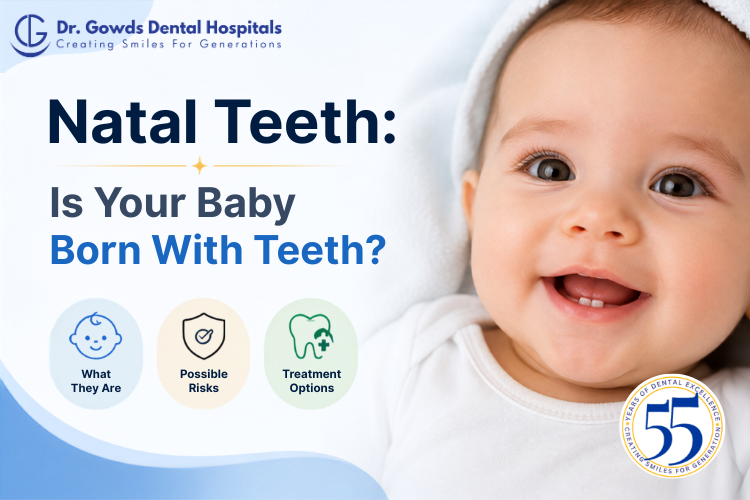
Natal Teeth are teeth that are already present when a baby is born. Although uncommon, they are usually not a cause for alarm. Most natal teeth are part of the baby’s normal set of primary (milk) teeth that have erupted much earlier than expected. In some cases, they may be loose, interfere with feeding, or cause irritation to the baby’s tongue or the mother’s breast during breastfeeding. A pediatric dentist can assess whether the tooth should be monitored or removed.
At Dr. Gowds Dental Hospitals, our pediatric dental specialists carefully evaluate babies born with natal teeth and provide personalized guidance to ensure safe feeding and healthy oral development.
Natal Teeth are teeth that are visible in a baby’s mouth at birth.
Normally, a baby’s first milk tooth appears around 6 months of age. However, a small number of babies are born with one or more teeth already erupted.
Natal teeth most commonly appear in the lower front jaw and are usually part of the baby’s natural primary teeth rather than extra teeth.
Although the terms sound similar, they are different.
Both conditions are uncommon and require evaluation by a dentist to determine whether treatment is necessary.
Natal teeth are rare.
They occur in approximately 1 in every 2,000 to 3,000 births, making them an uncommon but well-recognized condition.
Most babies with natal teeth are otherwise healthy and develop normally.
The exact cause of Natal Teeth is not always known.
Several factors may contribute, including:
A family history of babies born with natal teeth increases the likelihood of the condition.
Sometimes the developing tooth is located closer to the gum surface than usual, causing it to erupt early.
Certain hormonal factors during pregnancy may contribute to early tooth eruption.
Variations in fetal development can occasionally result in natal teeth.
In rare cases, natal teeth may be associated with certain genetic or developmental syndromes. However, most babies with natal teeth do not have any underlying medical condition.
Yes.
Although uncommon, Natal Teeth can be completely normal.
In most cases:
A dental examination helps determine whether the tooth is healthy and stable.
Many natal teeth do not cause complications.
However, some babies may experience:
Sharp edges may cause discomfort for the mother during breastfeeding.
The baby may also have difficulty latching properly.
A loose or sharp natal tooth can rub against the underside of the baby’s tongue, causing sores or ulcers.
This condition is sometimes referred to as Riga-Fede disease.
Some natal teeth have poorly developed roots and may be very mobile.
A loose tooth should be evaluated promptly because of the small risk of it becoming dislodged.
Babies with painful tongue ulcers or unstable teeth may feed less effectively.
Not every baby with Natal Teeth requires treatment.
The dentist may recommend observation if:
Regular monitoring is often sufficient.
Removal may be recommended if the tooth:
The decision is always made after a careful clinical evaluation.
In most cases, Natal Teeth do not affect the development of future teeth.
If the natal tooth is part of the normal primary dentition and is removed, the child may naturally have one fewer milk tooth until the permanent successor erupts later in childhood.
Regular dental monitoring ensures normal development.
Parents can help protect their baby’s oral health by:
Gently wipe the gums and teeth with a clean, damp cloth after feeding.
Monitoring Feeding
Watch for difficulty breastfeeding or bottle-feeding.
Checking for Tongue Sores
Look for redness or ulcers beneath the tongue.
Avoiding Home Remedies
Never attempt to remove or loosen a natal tooth yourself.
Scheduling a Dental Visit
A pediatric dental examination is recommended soon after the tooth is noticed.
Natal Teeth are uncommon but are usually a normal variation in early tooth eruption. While many babies experience no problems, some may develop feeding difficulties, tongue irritation, or loose teeth that require professional evaluation.
The good news is that most natal teeth can be managed successfully with regular monitoring, and only a small number require removal. Early assessment by a pediatric dentist helps ensure your baby’s comfort, safety, and healthy oral development.
If your newborn has a tooth at birth or within the first few weeks of life, schedule a consultation at Dr. Gowds Dental Hospitals. Our pediatric dental team will assess your baby’s oral health and recommend the most appropriate care.
Visit us at-
Dr gowds dental hospital Nanakramguda
Dr gowds dental hospital Gachibowli
Dr gowds dental hospital madhapur
Natal Teeth are teeth that are already present when a baby is born. They are usually early-erupting primary (milk) teeth.
Yes. Although rare, natal teeth are generally considered a normal developmental variation. A dentist should examine them to determine whether any treatment is needed.
No. Stable natal teeth that do not interfere with feeding or cause injury are often left in place and monitored regularly.
Many babies can breastfeed successfully. However, if the tooth causes discomfort for the mother or difficulty for the baby, a dentist can recommend appropriate management.
No. In most cases, Natal Teeth are part of the baby’s normal primary (milk) teeth rather than permanent teeth.
 Gachibowli Branch