

Schedule Appointment

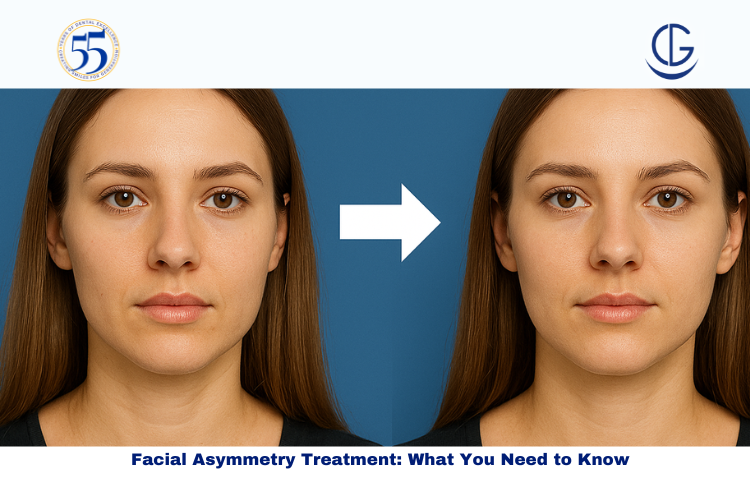
Facial asymmetry refers to visible differences between the left and right sides of the face. Mild asymmetry is common and may not require treatment. However, when the difference is noticeable, progressive, associated with an uneven bite, jaw imbalance, TMJ symptoms, dental alignment problems or functional concerns, a professional evaluation can help identify the underlying cause.
At Dr Gowds Dental Hospitals in Hyderabad, facial asymmetry is assessed from a dental, orthodontic and jaw-alignment perspective. Treatment recommendations depend on the source of the asymmetry. Some patients may benefit from orthodontic or dental correction, while others may require TMJ management, bite correction, non-surgical treatment or referral for surgical evaluation.
The goal is not simply to make the face look more symmetrical. The first step is to understand why the asymmetry is present and whether it is related to the teeth, bite, jaw position, facial growth, muscles or another underlying factor.
Facial asymmetry occurs when one side of the face differs in shape, size, position or proportion from the other. These differences may involve the jaw, chin, cheeks, lips, dental midline, smile, eyes or overall facial balance.
A small degree of asymmetry is normal in most people. Treatment is usually considered when the imbalance is significant enough to affect appearance, bite, chewing, jaw function or confidence.
Facial asymmetry may be present from childhood, develop during growth or become more noticeable over time because of dental, skeletal, muscular or functional changes.
For a broader explanation, read our guide on why your face may look asymmetrical.
There is no single cause of facial asymmetry. The underlying reason can differ from one patient to another.
Common causes may include:
One side of the upper or lower jaw may develop differently from the other side. This can affect the position of the chin, dental midline and overall facial balance.
An uneven bite, crossbite or jaw relationship can make the face appear asymmetrical and may also affect chewing or jaw function.
Crowding, tooth position and dental midline discrepancies can contribute to an uneven smile or the appearance of facial imbalance.
Temporomandibular joint problems may be associated with jaw deviation, muscle imbalance, clicking, pain or changes in the way the jaw moves.
Learn more about TMJ and facial asymmetry.
Dental alignment and bite problems can sometimes contribute to an uneven lower face or jawline.
Read more about facial asymmetry caused by teeth and bite.
Differences in facial growth during childhood or adolescence may lead to one side developing differently from the other.
Previous injuries to the jaw or facial bones can sometimes lead to asymmetry.
Habitual chewing patterns, muscle imbalance or altered jaw function may contribute to the appearance of asymmetry in some patients.
For a complete overview, visit our guide to the causes of facial asymmetry.
Facial asymmetry should be assessed based on both appearance and function.
During an evaluation, the dentist or specialist may examine:
Depending on the case, evaluation may also include clinical photographs, dental X-rays, orthodontic records or other imaging where appropriate.
The purpose of the assessment is to determine whether the main source of the asymmetry is dental, skeletal, muscular, TMJ-related or caused by a combination of factors.
Treatment depends entirely on the cause and severity of the asymmetry. There is no single treatment that is suitable for every patient.
Possible treatment approaches include the following.
Orthodontic treatment may help when facial asymmetry is related to dental alignment, bite imbalance or differences in tooth position.
Orthodontic treatment can help improve:
However, orthodontics cannot correct every type of skeletal facial asymmetry. A detailed assessment is necessary before deciding whether orthodontic treatment alone is suitable.
You can also read about orthodontic jaw alignment and treatment considerations.
Braces may be useful when the asymmetry is partly caused by tooth position or bite imbalance.
They may help correct dental midline discrepancies, crossbites and uneven bite relationships. In more complex skeletal cases, braces may be used as part of a broader treatment plan.
Learn more about braces for facial asymmetry.
Clear aligners may help selected patients with tooth-position or bite-related asymmetry.
They may be suitable for mild to moderate orthodontic corrections, but they are not appropriate for every type of facial or jaw asymmetry.
Patients with significant skeletal asymmetry may require a different treatment approach.
Read our detailed guide on whether Invisalign can help facial asymmetry.
An uneven bite can affect both function and facial balance.
Treatment may focus on:
The appropriate method depends on the patient’s age, bite pattern and severity of the problem.
When facial asymmetry is associated with jaw-joint problems, the treatment plan may focus on improving jaw function and reducing stress on the TMJ.
Management may vary depending on the cause and symptoms.
Patients with jaw pain, clicking, limited movement or deviation during opening may benefit from a TMJ-focused assessment.
In some cases, dental restoration or bite correction may help improve the appearance of an uneven smile or dental asymmetry.
This may be relevant when asymmetry is associated with:
Some types of facial asymmetry may be managed without surgery.
Non-surgical treatment may include:
The appropriate option depends on whether the asymmetry is mainly dental, muscular, functional or skeletal.
For more information, read about non-surgical facial asymmetry treatment.
Significant skeletal facial asymmetry may require evaluation by an oral and maxillofacial surgeon.
Surgery may be considered when the asymmetry is caused by a major difference in jaw position, skeletal growth or facial structure.
Surgery is not required for every patient. The need for surgical treatment depends on the severity of the asymmetry, functional problems, bite relationship, jaw position and treatment goals.
The correct treatment depends on the source of the asymmetry.
For example:
This is why facial asymmetry should not be treated based on appearance alone.
The most important step is identifying whether the asymmetry is related to the teeth, bite, jaw, TMJ, muscles, facial growth or skeletal structure.
Treatment time varies depending on the type of correction required.
Minor dental corrections may take less time, while orthodontic treatment, bite correction or jaw-related treatment may take several months or longer.
The treatment period may depend on:
A realistic timeline can only be estimated after a proper evaluation.
For more details, see our facial asymmetry treatment timeline.
The cost of facial asymmetry treatment depends on the cause and type of treatment required.
Factors that may influence cost include:
Because facial asymmetry can have different causes, there is no single price that applies to every patient.
A treatment estimate can be provided after evaluation and diagnosis.
You can read more about facial asymmetry treatment cost.
Consider professional evaluation if you notice:
Sudden facial weakness or drooping, especially when associated with difficulty speaking, weakness, numbness or other neurological symptoms, requires urgent medical assessment rather than routine dental treatment.
If you are unsure whether your facial asymmetry is normal or needs evaluation, you can also read our guide on when to worry about facial asymmetry.
A facial asymmetry consultation usually begins with understanding what concerns you most.
The evaluation may include:
You can explain when you first noticed the asymmetry, whether it has changed over time and whether you have any functional symptoms.
The dentist or specialist may evaluate facial proportions, chin position, jaw balance and smile symmetry.
The position of the teeth, dental midline and bite relationship are examined.
Jaw movement, TMJ symptoms and functional problems may be checked.
Photographs, X-rays or scans may be recommended depending on the findings.
Once the likely cause is identified, suitable treatment options can be discussed.
The expected duration and estimated cost can then be explained based on the recommended treatment.
At Dr Gowds Dental, facial asymmetry assessment focuses on understanding the relationship between the teeth, bite, jaw and facial proportions.
A treatment plan is developed only after identifying the likely cause of the asymmetry.
Depending on the case, treatment may involve dental correction, orthodontics, bite management, TMJ-related care or referral for more advanced jaw treatment.
The treatment approach is individualized because facial asymmetry can vary significantly from one patient to another.
Early evaluation can be useful when facial asymmetry is associated with growth, bite problems or jaw development.
In younger patients, identifying a developing bite or jaw imbalance may help determine whether early orthodontic monitoring or intervention is appropriate.
In adults, evaluation can help distinguish between dental, skeletal and functional causes and identify realistic treatment options.
The appropriate specialist depends on the underlying cause of the facial asymmetry.
An orthodontist may be appropriate when the problem involves:
An oral and maxillofacial surgeon may be involved when there is:
Some patients with significant dentofacial discrepancies may need coordinated treatment involving both orthodontics and oral and maxillofacial surgery.
TMJ symptoms, muscular problems, or sudden neurological facial asymmetry may require a different type of evaluation depending on the symptoms and suspected cause.
The degree of correction depends on the cause and severity of the asymmetry.
Some dental and bite-related problems may improve significantly with orthodontic or dental treatment.
More complex skeletal asymmetry may require combined orthodontic and surgical treatment.
Mild natural asymmetry may not need treatment at all.
The realistic goal is to improve facial balance, function and bite where appropriate rather than assume that perfect symmetry can always be achieved.
Changes in facial appearance after orthodontic or dental treatment can have several possible explanations, including tooth movement, bite changes, growth, muscle activity, TMJ-related symptoms, or natural facial changes over time.
A noticeable new change should be evaluated rather than assumed to be treatment “relapse.”
If you previously had braces or aligners, the assessment may include retainer use, current tooth position, bite relationships, jaw movement, and TMJ-related symptoms.
Long-term follow-up depends on the type of treatment received. After orthodontic treatment, retainers may be prescribed to help maintain tooth position. Patients may also need periodic review of their bite, jaw function, or treatment result.
Stability varies depending on the original cause of the asymmetry, growth, treatment type, tooth movement, and other individual factors. Follow the retention and review plan recommended for your case.
If you are concerned about an uneven jaw, facial imbalance, bite problem, asymmetrical smile or changes in facial symmetry, a professional evaluation can help identify the underlying cause.
At Dr Gowds Dental Hospitals in Hyderabad, the treatment approach is based on your individual dental, orthodontic and jaw findings.
Book a consultation to discuss your concerns and understand the treatment options that may be suitable for you.
Visit Dr Gowd’s Dental Hospitals in Nanakramguda, Gachibowli, Madhapur, koti.
Yes, some forms of facial asymmetry can be improved. The treatment depends on whether the problem is related to the teeth, bite, jaw, TMJ, muscles or skeletal structure. Mild asymmetry may not require treatment, while more significant cases may benefit from orthodontic, dental, non-surgical or surgical treatment.
The appropriate specialist depends on the cause. A dentist or orthodontist can assess dental and bite-related asymmetry, while significant skeletal asymmetry may require evaluation by an oral and maxillofacial surgeon.
Braces or clear aligners may help when the asymmetry has a dental or bite-related component, such as tooth-position differences, midline discrepancies, crowding, or selected bite problems. They cannot correct every skeletal or non-dental cause.
Clear aligners may help selected dental and bite-related cases. They are not suitable for every type of jaw or skeletal asymmetry, so an orthodontic assessment is necessary.
Yes. Some patients may benefit from orthodontics, aligners, bite correction, dental treatment, TMJ management or other non-surgical approaches. Surgery may be considered when the asymmetry is mainly skeletal and significant.
Treatment duration varies depending on the cause, severity, and type of treatment required. Learn more about the facial asymmetry treatment timeline.
The cost varies based on diagnosis and treatment. Braces, aligners, bite correction, dental procedures, TMJ treatment and surgery can have very different costs. An accurate estimate requires evaluation.
Yes. Dental midline differences, crossbites, uneven bite relationships and tooth alignment problems can contribute to the appearance of facial asymmetry in some patients.
A small degree of asymmetry is normal in most people. Evaluation may be useful when asymmetry is pronounced, worsening, associated with jaw pain or bite problems, or causing significant concern.
No. Mild natural asymmetry may not require treatment. Treatment is generally considered when there are functional concerns, significant bite or jaw problems, progressive asymmetry or a strong cosmetic concern.
Evaluation may include facial and smile assessment, bite examination, jaw movement evaluation, photographs, digital scans, and X-rays when clinically appropriate.
Discomfort depends on the type of treatment. Orthodontic treatment may cause temporary pressure or soreness, while other procedures have different recovery expectations.

 Gachibowli Branch